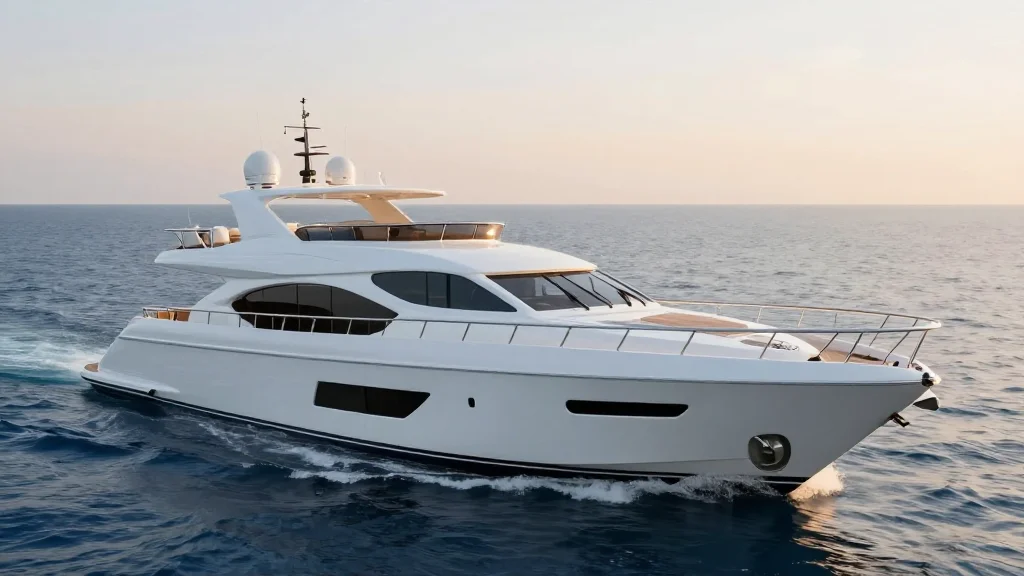
Four Seasons I Yacht Launches with 95 Suites, Redefining Luxury at Sea

Companies Mentioned
Why It Matters
Four Seasons’ entry into the super‑yacht market represents a strategic diversification that could reshape luxury hospitality’s growth pathways. By extending its service ethos onto a vessel, the brand not only taps into a lucrative niche of affluent travelers but also sets a new standard for experiential travel that blends land‑based hotel excellence with maritime adventure. The move may prompt other luxury hotel chains to explore similar expansions, intensifying competition for high‑net‑worth clientele and accelerating innovation in personalized, destination‑agnostic experiences. The yacht also illustrates how legacy brands can leverage their heritage to create fresh revenue streams while reinforcing brand equity. If Four Seasons I proves profitable and garners strong repeat demand, it could validate a model where ultra‑luxury hospitality is no longer confined to static properties, but becomes a mobile, highly curated experience that adapts to guests’ evolving expectations of exclusivity and service.
Key Takeaways
- •Four Seasons I, a 207‑meter yacht, launched on March 20, 2026.
- •The vessel offers 95 ocean‑front suites, each with private terraces.
- •Designed by Tillberg Design and Martin Brudnizki Design Studio.
- •Features 11 restaurants, including rotating Michelin‑starred chefs.
- •First‑year itinerary includes 32 voyages, 52 sailings, 130 destinations.
Pulse Analysis
Four Seasons’ maritime venture is more than a brand extension; it is a calculated bet on the convergence of luxury hospitality and experiential travel. Historically, hotel groups have flirted with cruise partnerships, but few have committed to a purpose‑built yacht that mirrors the brand’s service DNA. By limiting capacity to 95 suites, Four Seasons sidesteps the economies of scale that dominate traditional cruise operators, instead betting on premium pricing and ultra‑personalized experiences to drive margins. This approach aligns with a broader shift among affluent consumers who prioritize uniqueness and intimacy over volume.
From a competitive standpoint, the yacht raises the bar for service intensity at sea. The one‑to‑one staff ratio, rotating chef program, and transverse marina concept could force rivals—such as Aman, Ritz‑Carlton, and even boutique cruise lines—to rethink their own offerings. However, the model also carries risk: operating a 207‑meter vessel with such a low passenger count demands high fare levels and consistent occupancy to cover costs. The brand’s ability to translate its hotel loyalty base into repeat yacht bookings will be a key indicator of success. If Four Seasons I sustains strong demand, it may pave the way for a fleet of similarly sized vessels, effectively creating a new sub‑segment of ultra‑luxury, service‑driven yachting.
Looking forward, the yacht’s performance will likely influence how other luxury hospitality players allocate capital. A successful debut could accelerate investment in mobile luxury platforms—whether yachts, private jets, or pop‑up resorts—while a faltering start may reinforce the notion that the sea remains a niche playground for a handful of specialist operators. Either way, Four Seasons I has already shifted the conversation about where and how luxury experiences can be delivered.
Four Seasons I Yacht Launches with 95 Suites, Redefining Luxury at Sea
Comments
Want to join the conversation?
Loading comments...