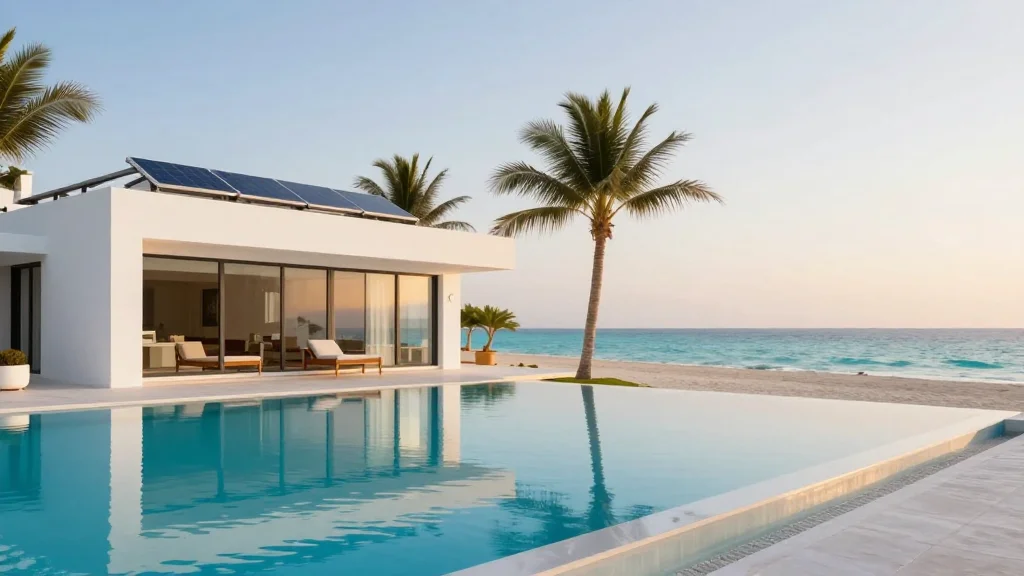
Four Seasons Welcomes First Guests to Red Sea Joint‑Venture Resort on Shura Island

Companies Mentioned
Why It Matters
The Four Seasons‑Red Sea Global joint venture signals a shift in luxury hospitality toward collaborative, sustainability‑driven projects in emerging markets. By anchoring its brand in a region earmarked for massive tourism growth under Saudi Vision 2030, Four Seasons positions itself to capture a new segment of high‑net‑worth travelers seeking exclusive, environmentally conscious experiences. The partnership also sets a precedent for other luxury operators, suggesting that joint‑venture models may become the preferred route for entering markets where local partners control land and regulatory frameworks. Beyond the immediate revenue potential, the resort’s emphasis on marine conservation and renewable energy could redefine luxury standards, prompting competitors to integrate similar sustainability commitments. If successful, the Shura Island property may catalyze a wave of high‑end developments across the Red Sea, reshaping the global luxury hospitality map and diversifying the region’s economic base beyond oil.
Key Takeaways
- •Four Seasons Resort & Residences Red Sea opened on May 20, welcoming its first guests.
- •The property is the first joint‑venture luxury resort for Four Seasons in the Red Sea region.
- •Developed with Red Sea Global, the 1,200‑room resort blends ultra‑luxury service with sustainability goals.
- •The opening aligns with Saudi Vision 2030’s push to grow high‑value tourism.
- •The joint‑venture model may become a template for future luxury projects in emerging markets.
Pulse Analysis
Four Seasons’ entry into the Red Sea via a joint‑venture marks a strategic inflection point for ultra‑luxury hospitality. Historically, the brand has expanded through management contracts that preserve brand control while limiting capital exposure. By sharing equity with Red Sea Global, Four Seasons gains a foothold in a market where land ownership and regulatory approval are tightly held by state‑linked entities. This structure not only mitigates political risk but also grants the brand influence over sustainability standards—a critical differentiator as affluent travelers increasingly prioritize eco‑responsibility.
From a market dynamics perspective, the Shura Island resort arrives at a time when the Red Sea is transitioning from a niche destination for adventure tourists to a premium luxury corridor. The Saudi government’s investment of over $5 billion in the broader Red Sea project underscores a long‑term commitment to high‑end tourism infrastructure, including airports, marinas, and cultural attractions. Four Seasons’ early mover advantage positions it to capture a disproportionate share of the projected $10 billion luxury tourism spend in the region over the next decade.
Looking ahead, the success of this joint venture will likely influence how other luxury brands approach expansion in politically sensitive or capital‑intensive markets. If Four Seasons can demonstrate strong occupancy, premium pricing power, and measurable sustainability outcomes, we may see a wave of similar partnerships, reshaping the competitive landscape and accelerating the diffusion of green luxury standards across the industry.
Four Seasons Welcomes First Guests to Red Sea Joint‑Venture Resort on Shura Island
Comments
Want to join the conversation?
Loading comments...