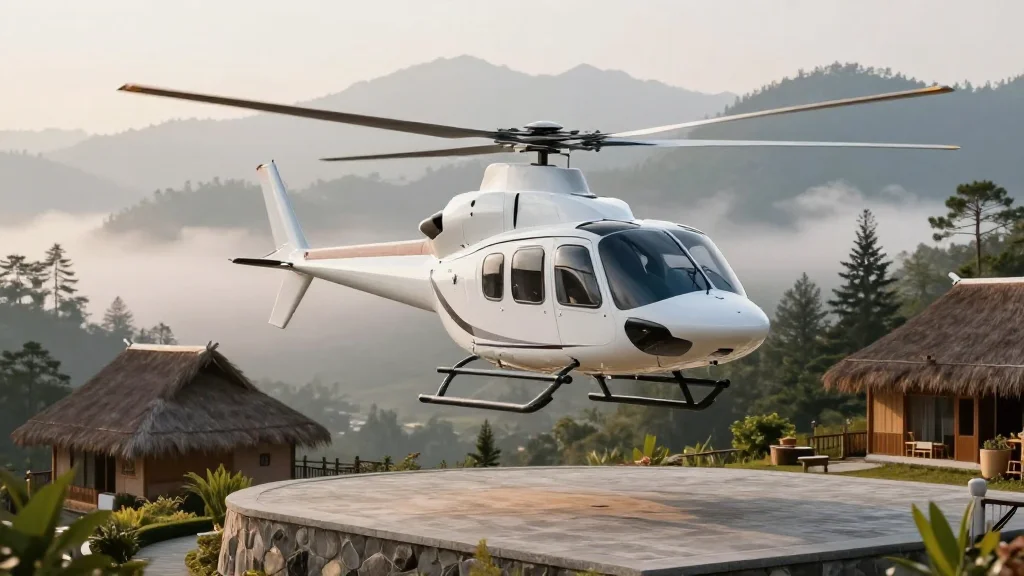
Garrya Mù Cang Chải Launches Highland Retreat with Direct Hanoi Helicopter Service

Why It Matters
The opening of Garrya Mù Cang Chải signals a pivotal moment for luxury travel, where remote, culturally rich destinations are becoming accessible through premium transport solutions. By offering a helicopter shuttle, the resort challenges the traditional trade‑off between exclusivity and sustainability, prompting the industry to confront how high‑end experiences can coexist with environmental stewardship. The venture also showcases how luxury brands are increasingly leveraging authentic local culture as a core value proposition, reshaping guest expectations for immersive, responsible travel. If the model proves successful, it could accelerate the proliferation of similar high‑altitude retreats across Southeast Asia, prompting investors to allocate capital toward infrastructure that bridges remote locales with affluent markets. Conversely, any backlash over carbon emissions may push luxury operators to adopt greener aviation technologies or offset schemes, potentially catalyzing innovation in sustainable high‑end mobility.
Key Takeaways
- •Garrya Mù Cang Chải launches a highland retreat in northern Vietnam during the water‑pouring season.
- •Dedicated helicopter transfer from Hanoi seats up to eight guests per 60‑75 minute flight.
- •Program includes guided treks, Hmong weaving workshops, and local cuisine preparation.
- •Resort collaborates with Hmong communities to ensure authentic cultural experiences.
- •Helicopter service raises sustainability questions amid growing eco‑luxury demand.
Pulse Analysis
Garrya Mù Cang Chải’s entry into the ultra‑luxury market reflects a convergence of two powerful trends: the desire for off‑the‑grid experiences and the willingness to pay a premium for time‑saving logistics. Historically, remote mountain resorts relied on arduous road travel, limiting their appeal to the most adventurous travelers. By inserting a helicopter link, the resort eliminates a major friction point, effectively expanding its addressable market to include high‑net‑worth guests who value both exclusivity and efficiency.
However, the move also spotlights a tension that could shape the future of luxury hospitality. As affluent consumers become more environmentally conscious, the carbon footprint of private air travel may become a liability unless offset by credible sustainability initiatives. The resort’s silence on fuel type or carbon‑neutral commitments suggests an opportunity for competitors to differentiate themselves through greener transport options, such as electric vertical take‑off and landing (eVTOL) aircraft or verified carbon‑offset programs.
From a strategic perspective, Garrya Mù Cang Chải’s emphasis on cultural immersion aligns with the “experience economy” that has redefined luxury over the past decade. Guests now seek narratives and personal growth alongside comfort, and the resort’s integration of Hmong traditions provides a compelling story that can command premium pricing. If the helicopter service drives sufficient occupancy, it could validate a new business model where high‑end resorts invest in bespoke transport infrastructure to unlock remote locations, potentially reshaping the geography of luxury tourism in Southeast Asia and beyond.
Garrya Mù Cang Chải Launches Highland Retreat with Direct Hanoi Helicopter Service
Comments
Want to join the conversation?
Loading comments...