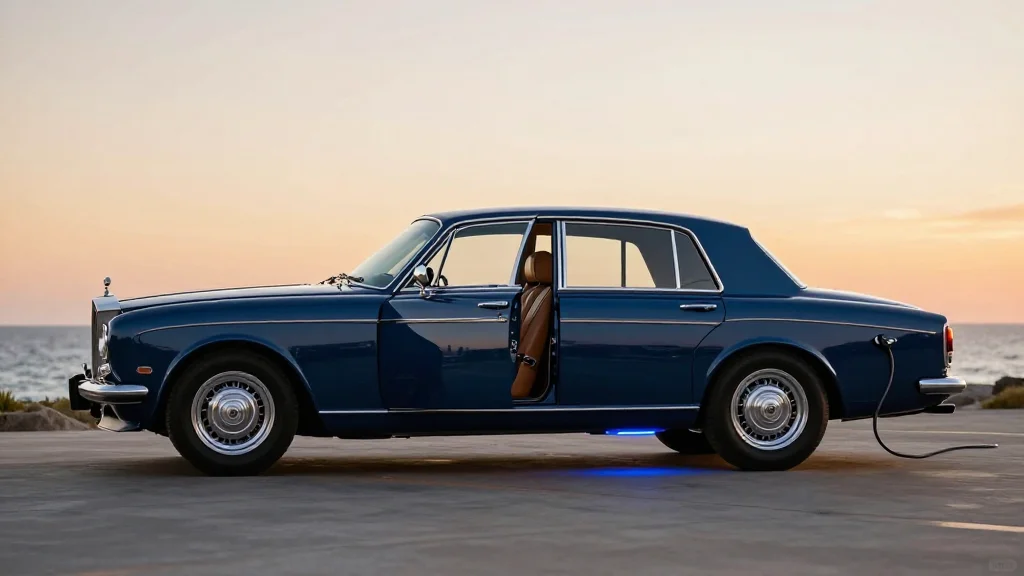
Halcyon Launches Highland Heather: Electric Restomod of 1970s Rolls‑Royce Corniche

Companies Mentioned

Why It Matters
The Highland Heather illustrates how the ultra‑luxury automotive market is reconciling heritage with sustainability. By electrifying a symbol of 1970s opulence, Halcyon demonstrates that classic design can coexist with zero‑emission technology, potentially reshaping collector expectations. The project also highlights the growing appetite among affluent buyers for exclusive, environmentally responsible products, a shift that could pressure legacy manufacturers to endorse or develop their own electric restomod programs. Furthermore, the limited‑run nature of the conversion underscores a new business model: scarcity combined with bespoke engineering creates a premium that justifies high price points. If successful, this model may inspire a wave of niche converters targeting other iconic models, expanding the market for high‑end electric conversions and reinforcing the notion that luxury is increasingly defined by both heritage and sustainability.
Key Takeaways
- •Halcyon unveiled Highland Heather, an electric restomod of a 1976‑79 Rolls‑Royce Corniche.
- •Original V8 replaced with a bespoke electric motor and battery pack.
- •Only Corniches built between 1976‑79 are eligible; exact production numbers unknown.
- •Target markets are the US West Coast, Middle East, and Florida.
- •Deliveries expected in early 2027; pricing likely above $500,000.
Pulse Analysis
Halcyon's Highland Heather arrives at a moment when the luxury automotive sector is grappling with the twin pressures of environmental regulation and consumer demand for exclusivity. Historically, classic car restomods have focused on performance upgrades—think supercharged V8s or modern suspensions—yet the shift to electric powertrains signals a deeper transformation. Electrification eliminates the combustion engine’s inherent noise and vibration, traits that Rolls‑Royce has prized since its inception, making the electric conversion a philosophically consistent evolution rather than a gimmick.
From a market perspective, the project leverages scarcity. By limiting conversions to a narrow production window (1976‑79) and sourcing donor cars primarily from climate‑friendly regions like California, Halcyon ensures each unit remains a true rarity. This scarcity, paired with the high cost of bespoke engineering, creates a compelling value proposition for ultra‑wealthy collectors who view sustainability as a status symbol. The focus on the US West Coast and Gulf states is strategic: both regions host dense concentrations of high‑net‑worth individuals who are already investing in electric superyachts, private jets, and high‑end real estate.
If Highland Heather garners sufficient demand, it could catalyze a broader industry shift. Legacy manufacturers may feel compelled to protect their heritage by offering official electric conversion programs, while boutique firms could expand beyond Rolls‑Royce to other marquees. The ripple effect would be a new sub‑segment of the luxury market—electric heritage vehicles—that blends nostalgia, craftsmanship, and green credentials, redefining what it means to own a piece of automotive history in the 2020s.
Halcyon Launches Highland Heather: Electric Restomod of 1970s Rolls‑Royce Corniche
Comments
Want to join the conversation?
Loading comments...