Why It Matters
HarPie showcases how site‑responsive architecture can deliver luxury living while honoring landscape, setting a benchmark for sustainable, context‑driven residential design.
Key Takeaways
- •Lake‑front siting maximizes water views, minimizes road exposure
- •Three‑volume layout creates clear public‑private hierarchy
- •Wood and stone blend durability with tactile warmth
- •Stone plinth anchors building to rocky terrain
- •Controlled openings modulate natural light throughout
Pulse Analysis
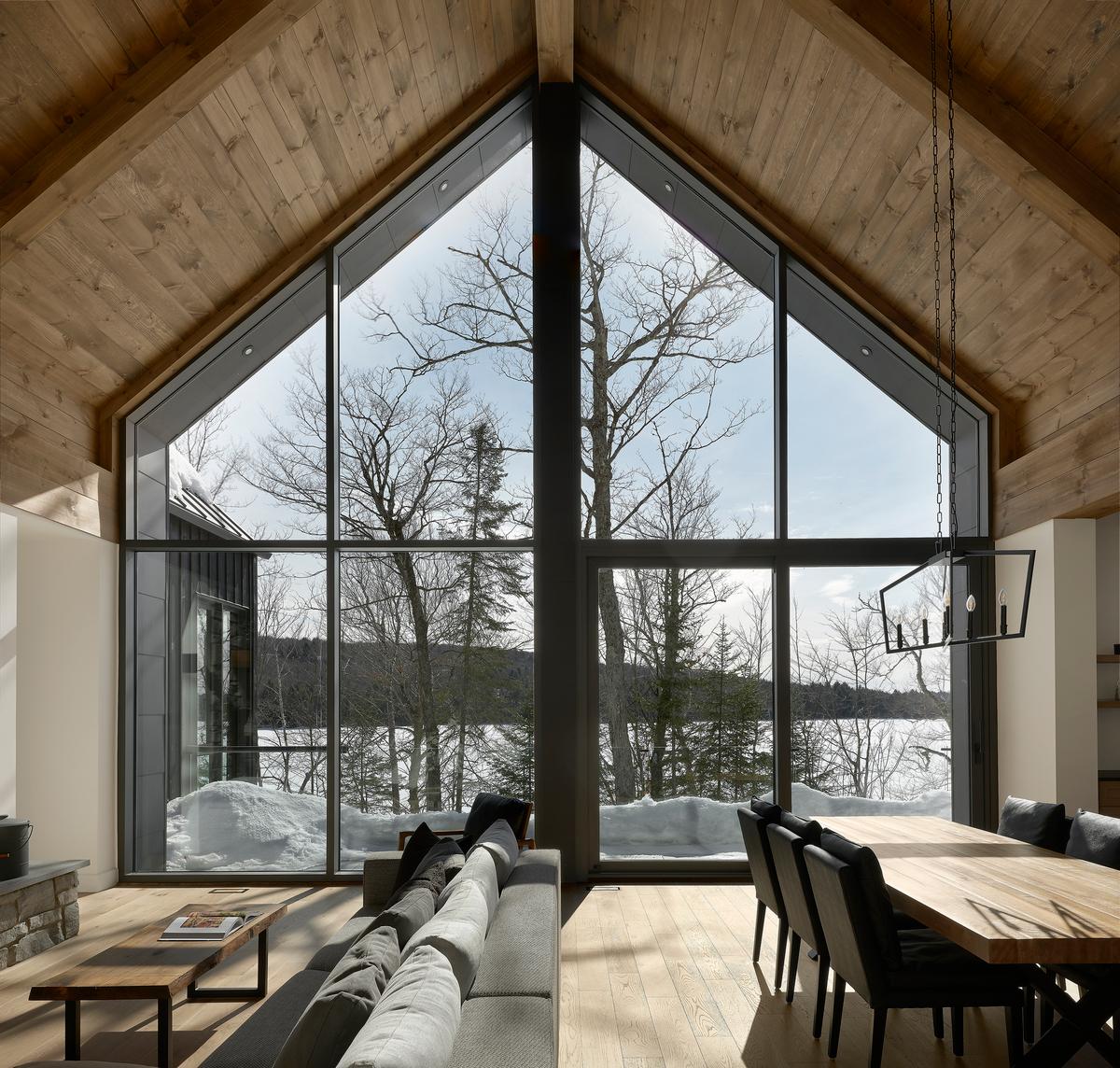
The HarPie residence, unveiled in 2025 by lead architect Nathalie Thibodeau, is a masterclass in site‑responsive design. Nestled on a narrow strip between a lake and an access road, the building exploits the natural slope to separate open, water‑facing spaces from the more private zones shielded from traffic. This orientation not only grants uninterrupted lake vistas but also creates a psychological buffer, turning the road into a distant backdrop. By aligning the floor plan with the terrain, the project exemplifies how topography can dictate spatial hierarchy without sacrificing aesthetic ambition.
Materiality lies at the heart of HarPie’s quiet elegance. Thibodeau reinterprets the classic wooden cabin language—pitched roofs, timber cladding, and a grounded presence—through a restrained palette of locally sourced wood and stone. The stone plinth appears to emerge from the rocky substrate, reinforcing a tactile connection to the site while providing structural stability. Inside, carefully placed openings filter daylight, producing a soft, diffused glow that accentuates the warm textures. This blend of durability and sensory richness aligns with growing client demand for sustainable, low‑maintenance homes that feel both modern and timeless.
The project’s three‑volume composition offers a clear public‑private gradient, a model increasingly adopted in high‑end residential markets. By segmenting shared living areas, secondary spaces, and intimate retreats, the design accommodates evolving lifestyle patterns such as remote work and multigenerational living. For architects, HarPie demonstrates how contemporary reinterpretations of vernacular forms can meet luxury expectations while respecting ecological context. As developers seek differentiators in saturated markets, the balance of contextual responsiveness, material authenticity, and refined spatial choreography showcased here is likely to influence future lake‑front and hillside commissions.
HarPie / Nathalie Thibodeau Architecte
Comments
Want to join the conversation?
Loading comments...