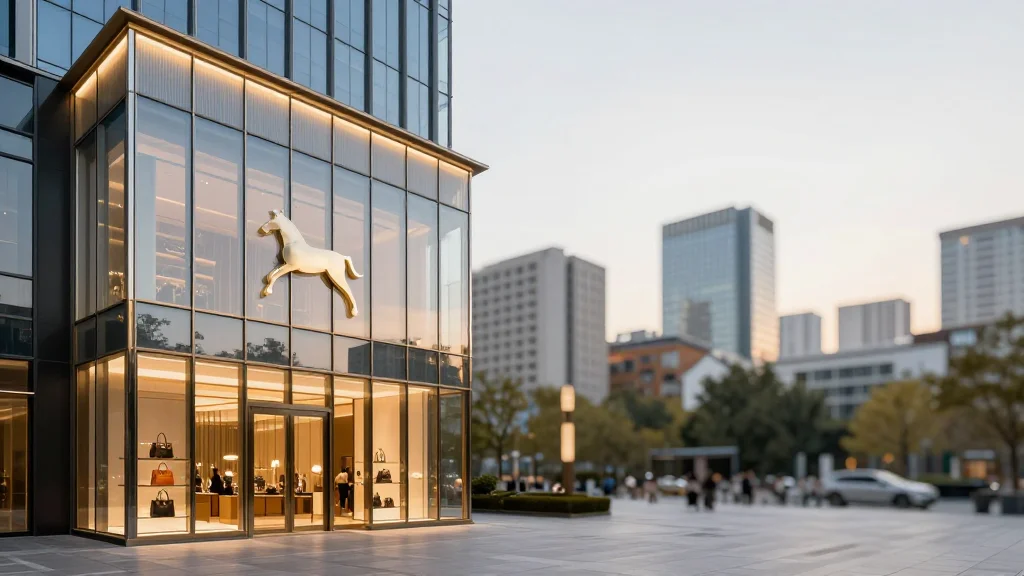
Hermès Opens First Stand‑Alone Beijing Store, Fulfilling Founder’s Promise

Companies Mentioned

Why It Matters
The Beijing flagship signals Hermès’s deepening commitment to China, the world’s largest luxury market, at a time when many Western brands are recalibrating their presence amid shifting consumer preferences. By honoring Jean‑Louis Dumas’s vision, the store reinforces the narrative of heritage and continuity that underpins Hermès’s brand equity, while the culturally specific design demonstrates a sophisticated localization strategy that could set a new benchmark for luxury retailers. If the store succeeds in attracting both affluent locals and international tourists, it could validate Hermès’s bet on experiential, heritage‑driven retail as a growth engine in China. Conversely, any shortfall would prompt a reassessment of the cost‑intensive flagship model, potentially accelerating a pivot toward digital‑first or smaller‑format concepts.
Key Takeaways
- •Hermès opened its first stand‑alone Beijing store in Taikoo Li Sanlitun, its largest Chinese location
- •The five‑story boutique houses 16 product categories and features the iconic firework‑maker sculpture
- •Design by RDAI and Mamou‑Mani Architects incorporates rose‑pink and terracotta tiles, nicknamed “the bird cage”
- •Pierre‑Alexis Dumas framed the opening as a tribute to his late father, fulfilling a 30‑year promise
- •The store’s locally produced furnishings and cultural programming aim to deepen Hermès’s connection with Chinese consumers
Pulse Analysis
Hermès’s Beijing flagship is more than a retail expansion; it is a strategic statement about how heritage luxury can thrive in a market that prizes both authenticity and novelty. Historically, Hermès has relied on a low‑volume, high‑margin model anchored in timeless craftsmanship. By investing in a purpose‑built, culturally resonant space, the brand is translating that philosophy into an immersive experience that can command premium pricing and foster brand loyalty among China’s affluent millennials and Gen‑Z shoppers.
The design’s emphasis on local materials and cultural motifs reflects a broader industry trend where Western luxury houses are moving away from a one‑size‑fits‑all aesthetic. This localization reduces logistical complexity and aligns with Chinese consumer expectations for brands that respect and reflect their heritage. Moreover, the store’s proximity to other megabrands creates a luxury corridor that can amplify foot traffic while positioning Hermès as a peer rather than an outlier.
Looking forward, the Sanlitun flagship will serve as a litmus test for Hermès’s flagship‑centric growth strategy in China. Strong performance could accelerate similar projects in Shanghai, Guangzhou and Chengdu, reinforcing a network of experiential hubs that complement the brand’s e‑commerce platform. Weak performance, however, may push Hermès to re‑evaluate the cost‑intensity of such builds, potentially shifting resources toward digital experiences or smaller boutique formats that can more nimbly respond to market fluctuations. In either scenario, the Beijing opening reshapes the competitive dynamics of luxury retail in China, compelling rivals to match Hermès’s blend of heritage storytelling and localized design.
Hermès Opens First Stand‑Alone Beijing Store, Fulfilling Founder’s Promise
Comments
Want to join the conversation?
Loading comments...