Companies Mentioned
Why It Matters
The project demonstrates how modular, circular‑economy design can deliver highly adaptable, low‑carbon housing for evolving lifestyles, setting a benchmark for future urban residences.
Key Takeaways
- •19 identical 3x3x3 m modules create flexible layout
- •CLT construction reduces carbon footprint, supports circular economy
- •Only 50% interior surface; patios provide breathing space
- •Custom IKEA pieces combined with recycled façade material
Pulse Analysis
Modular architecture is gaining traction as cities grapple with limited space and shifting household dynamics. The Hermi House exemplifies this trend by breaking down a conventional courtyard typology into a lattice of 3‑meter cubes that can be rearranged like building blocks. This approach not only maximizes functional density—delivering 400 m² of usable area on a compact footprint—but also empowers occupants to tailor their environment as work, leisure, or social needs evolve. By treating each module as a self‑contained unit with its own lighting and furniture, the design eliminates traditional hallways, turning every step into a lived space.
Sustainability lies at the core of the project. Constructed entirely from cross‑laminated timber (CLT), the house benefits from low embodied carbon and rapid, low‑waste assembly. Leftover façade panels are up‑cycled into bespoke furniture, while standard IKEA components are selectively customized, illustrating a pragmatic circular‑economy workflow that balances cost efficiency with material stewardship. The resulting carbon‑light structure aligns with European green‑building standards and offers a replicable model for developers seeking to meet stricter climate targets.
Beyond its environmental credentials, the Hermi House pushes the narrative of flexible living. The 50 % interior surface ratio, complemented by multiple patios and terraces, creates a porous envelope that breathes, filters light, and encourages indoor‑outdoor interaction. This spatial generosity, combined with a bold color scheme reminiscent of Wes Anderson’s cinematic palettes, transforms the home into a mood‑shaping instrument rather than a static container. As remote work and solo living become more prevalent, such adaptable, health‑focused designs are poised to influence residential architecture worldwide.
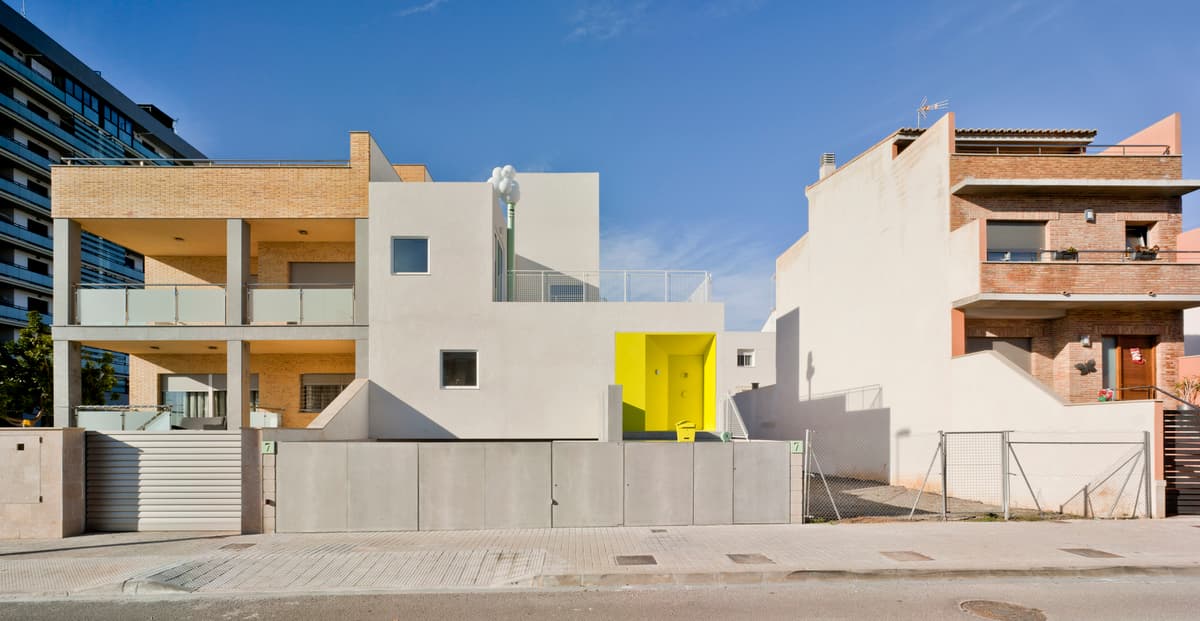
Hermi House / Superestudio
Comments
Want to join the conversation?
Loading comments...