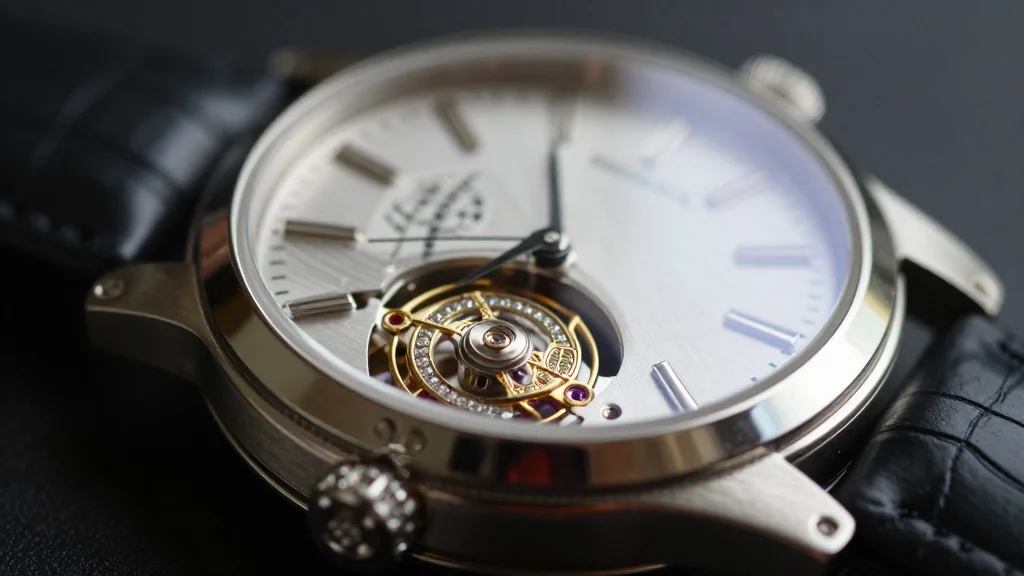
How Rotors Evolved From Utility to a Rich Canvas for Watch Branding and Design
Why It Matters
By elevating the rotor to a design element, luxury brands differentiate their pieces, attract new buyer segments and create additional revenue streams through high‑value decoration. The trend also reshapes collector perception, blurring the line between pure horology and fashion‑driven luxury.
Key Takeaways
- •Dior pioneered rotor decoration with Grand Bal collection in 2011
- •Rotors now serve as visible branding canvas across luxury watchmakers
- •Brands employ engraving, gemstones, gold and thematic motifs on rotors
- •Automotive and fashion partnerships are highlighted via custom rotor designs
- •Sapphire case backs make rotor decoration a focal point for buyers
Pulse Analysis
The automatic rotor, once a purely mechanical component that winds a watch, has become a focal point for luxury branding. As consumers seek pieces that blend technical excellence with visual storytelling, manufacturers are exposing the movement through sapphire case backs and open‑worked dials. This transparency turns the rotor into a miniature billboard, allowing houses to showcase craftsmanship, heritage motifs, or collaborative logos without compromising performance.
Dior’s Grand Bal line set the precedent by integrating a decorative rotor into the dial, prompting peers to explore similar avenues. Cartier’s Santos‑Dumont features mother‑of‑pearl and diamond‑set rotors, while Louis Vuitton’s Tambour Taiko employs hand‑painted clouds on an 18‑carat white‑gold rotor. Techniques such as fleur‑de‑lis engraving, gemstone inlay and gold‑plating are now commonplace, and partnerships with automotive brands like Lamborghini and Aston Martin are expressed through rotor shapes that echo car wheels or logos. These visual upgrades add perceived value and create collectible appeal beyond pure chronometry.
For the market, rotor decoration expands the luxury watch narrative, attracting style‑oriented buyers—particularly women—who value aesthetic flair as much as mechanical precision. It also opens new pricing tiers, as artisans can command premiums for hand‑finished rotors. As more houses adopt this approach, the industry may see a surge in limited‑edition pieces where the movement itself becomes a storytelling medium, reinforcing brand identity while preserving the technical heritage that underpins high‑end horology.
How rotors evolved from utility to a rich canvas for watch branding and design
Comments
Want to join the conversation?
Loading comments...