Why It Matters
The project highlights the commercial viability of adaptive reuse, showing that preserving architectural heritage can coexist with high‑end contemporary design, attracting discerning buyers and boosting property values in urban markets. It signals a growing trend where developers leverage historic assets to differentiate offerings in competitive real‑estate sectors.
Key Takeaways
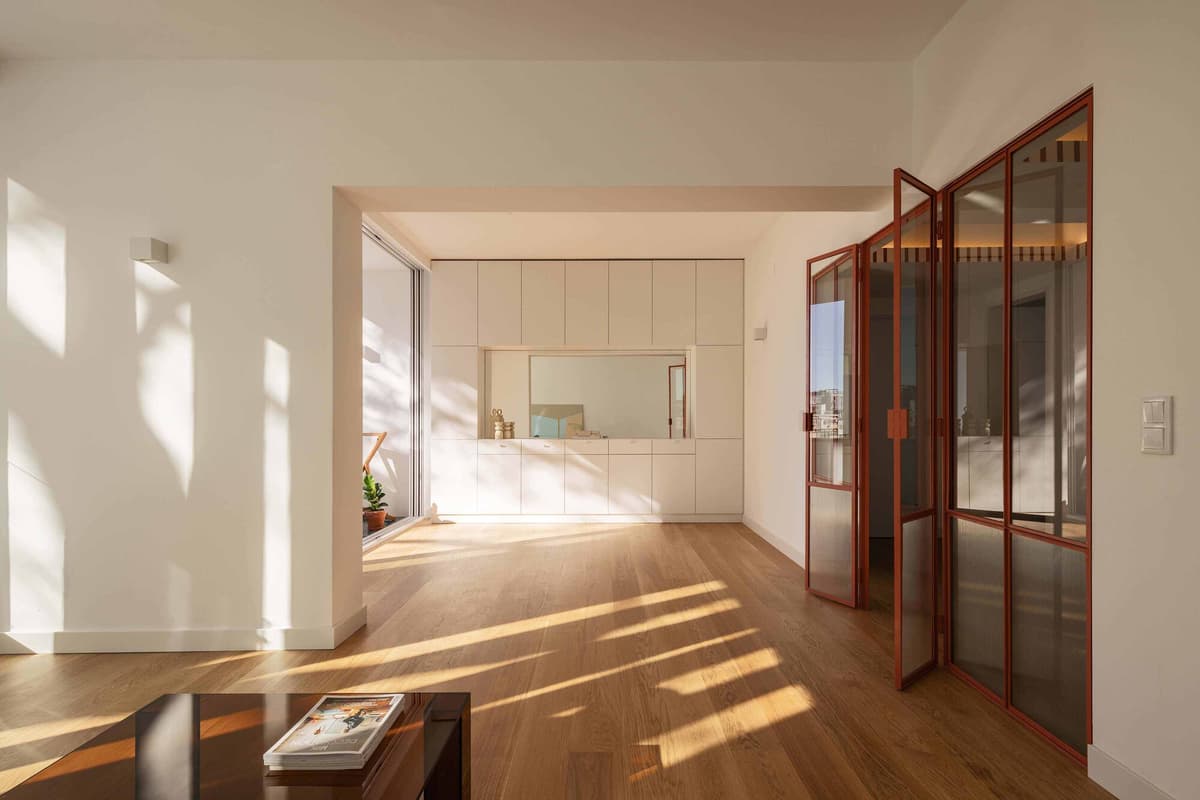
- •150 m² Lisbon home restored, blending 1950s modernism with contemporary design
- •Sculptural staircase redefines circulation, linking social and private zones
- •Bold colour palette delineates functions, enhancing spatial perception
- •Integrated carpentry hides infrastructure, preserving clean architectural forms
- •Project illustrates profitable adaptive reuse of heritage properties
Pulse Analysis
Lisbon’s post‑war modernist housing stock has become a focal point for investors seeking to blend cultural cachet with contemporary comfort. Cities across Europe are witnessing a surge in demand for properties that retain historic character while meeting today’s lifestyle standards, and the Infante House exemplifies this shift. By sensitively restoring a 1950s façade and reconfiguring interior volumes, the project taps into a niche market where authenticity commands premium pricing, reinforcing the city’s reputation as a design‑forward destination.
The architects employed a series of strategic interventions to reconcile heritage constraints with modern expectations. Expressive geometries break the monotony of the original layout, while a sculptural staircase serves as both functional connector and visual centerpiece. A daring colour palette replaces the typical neutral palette of mid‑century homes, using deep tones to guide movement and delineate zones. Custom carpentry solutions conceal wiring and plumbing, preserving the purity of lines, and the juxtaposition of period furniture with contemporary pieces creates a dialogue between eras that appeals to sophisticated tastes.
From a business perspective, the Infante House underscores the profitability of adaptive reuse projects. Heritage properties often command higher sale prices and rental yields due to their unique story and architectural significance. The blend of historic authenticity with modern amenities reduces the risk of obsolescence, attracting a demographic willing to pay for exclusivity. As urban developers increasingly prioritize sustainability, projects like this demonstrate that preserving existing structures can deliver both environmental and financial returns, setting a benchmark for future investments in historic urban cores.
Infante House / Blaanc
Comments
Want to join the conversation?
Loading comments...