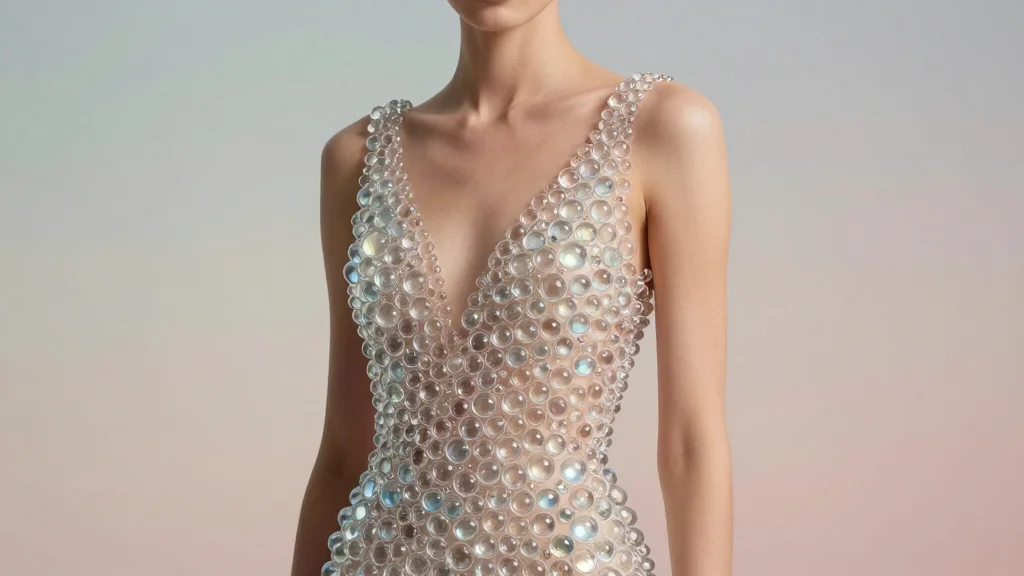
Iris Van Herpen's Glass‑Bubble Met Gala Gown Turns Eileen Gu Into a Dissolving Figure

Why It Matters
The Airo dress illustrates how luxury fashion is leveraging advanced materials and digital engineering to create moments that blur the line between clothing and performance art. As consumers seek experiences that feel exclusive and technologically sophisticated, brands that can deliver such spectacles may command higher margins and stronger cultural relevance. Moreover, the garment raises a broader conversation about sustainability in high‑end couture. While the piece is a one‑off, its reliance on glass and electronic components challenges designers to consider end‑of‑life strategies, potentially accelerating research into recyclable or bio‑based alternatives for future tech‑driven collections.
Key Takeaways
- •Iris van Herpen and AA Murakami created the Airo dress for Eileen Gu at the 2026 Met Gala.
- •The gown incorporates 15,000 iridescent glass bubbles bonded with UV light.
- •Hidden micro‑processors release pressurised gas, making the dress appear to dissolve.
- •Design and engineering required 2,550 hours over 15 weeks by a multidisciplinary team.
- •The piece underscores a growing trend of tech‑infused, experiential luxury fashion.
Pulse Analysis
Van Herpen’s Airo dress is more than a headline‑grabbing novelty; it signals a strategic pivot for luxury houses toward programmable couture. Historically, couture has thrived on hand‑crafted exclusivity, but the integration of micro‑electronics introduces a new dimension of scarcity—functionality that can’t be replicated without precise software and hardware. This creates a defensible moat, as the barrier to entry shifts from artisanal skill alone to interdisciplinary expertise spanning material science, software engineering, and design.
The market reaction is likely to be two‑fold. First, high‑net‑worth collectors will view such pieces as investment‑grade artifacts, driving secondary‑market prices and encouraging brands to produce limited‑run, tech‑enhanced garments. Second, mainstream luxury brands may accelerate partnerships with tech startups to embed similar capabilities into more accessible lines, potentially diluting the exclusivity but expanding the consumer base. The tension between artistic integrity and commercial scalability will shape how quickly the industry adopts these innovations.
Looking ahead, the next Met Gala will serve as a litmus test. If other designers unveil comparable kinetic creations, we may witness the emergence of a sub‑genre—"programmable couture"—that could redefine runway expectations and set new standards for sustainability, as designers grapple with the environmental impact of electronic components. Brands that can reconcile the allure of high‑tech spectacle with responsible material cycles will likely lead the next wave of luxury evolution.
Iris van Herpen's Glass‑Bubble Met Gala Gown Turns Eileen Gu Into a Dissolving Figure
Comments
Want to join the conversation?
Loading comments...