La Dolce Vita Orient Express Launches Rome‑Istanbul Luxury Rail, Fares Start at $27,000

Why It Matters
The Orient Express revival signals that luxury travel providers are betting on high‑touch, experience‑driven products to attract a new generation of affluent consumers, particularly from emerging markets like India. By marrying heritage branding with modern design and gastronomy, the La Dolce Vita Orient Express sets a template for how legacy names can be re‑imagined for contemporary luxury. If the train achieves strong occupancy at its premium price, it could inspire similar ultra‑luxury rail projects across Europe and Asia, intensifying competition among operators seeking to differentiate through storytelling, culinary pedigree and exclusive itineraries. Conversely, muted demand would highlight the limits of price elasticity in the ultra‑luxury segment, prompting brands to reassess the balance between exclusivity and accessibility.
Key Takeaways
- •La Dolce Vita Orient Express launches Rome‑to‑Istanbul rail journey, a four‑night, five‑day experience.
- •Capacity limited to 62 guests: 12 Deluxe Cabins, 18 Suites, 1 La Dolce Vita Suite.
- •Entry‑level fare: Rs22.2 lakh (~$27,000 USD) per person for a one‑way trip.
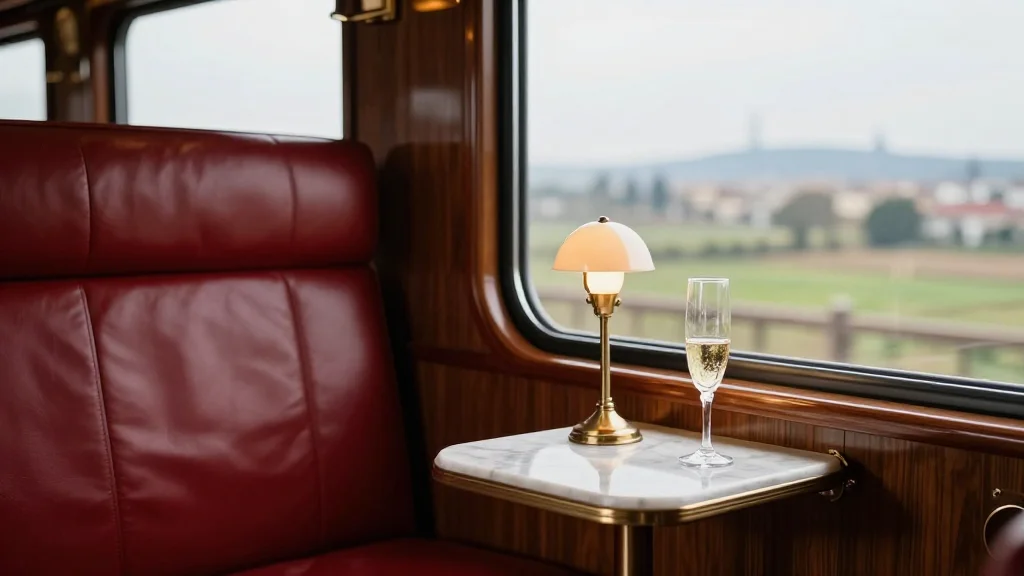
- •Train designed by Dimorestudio, featuring 1960s Italian glamour and brass accents.
- •Menus crafted by three‑Michelin‑starred chef Heinz Beck, highlighting regional cuisine.
Pulse Analysis
The re‑emergence of the Orient Express under the La Dolce Vita banner reflects a strategic pivot in luxury hospitality: from static, location‑bound assets to mobile, narrative‑driven experiences. Historically, luxury rail has been a niche, with services like the Venice Simplon‑Orient-Express catering to a limited elite. By expanding the route to include culturally resonant stops such as Venice, Budapest, and Istanbul, La Dolce Vita taps into a broader appetite for curated cultural immersion, a trend amplified by post‑pandemic travelers who value time‑rich, low‑stress journeys.
From a market perspective, the pricing strategy—positioning the train at roughly $27,000 for a one‑way ticket—places it squarely in the ultra‑luxury bracket, competing with private jet charters and boutique yacht charters. The decision to target Indian HNWIs acknowledges the rapid growth of wealth in the subcontinent, where experiential spending is outpacing traditional luxury goods. However, the high price also raises questions about scalability; the train’s limited capacity means revenue per trip is capped, making occupancy rates a critical metric for financial viability.
Looking ahead, the success of this launch could catalyze a renaissance of luxury rail across Europe and beyond, prompting legacy operators to modernize their offerings with contemporary design, celebrity chefs, and integrated concierge services. If demand proves robust, we may see a cascade of similar ventures, each leveraging historic brand equity while delivering hyper‑personalized itineraries. Conversely, a tepid market response would reinforce the notion that ultra‑luxury travel is increasingly fragmented, with consumers preferring bespoke, on‑demand experiences over fixed‑schedule, heritage‑laden journeys.
La Dolce Vita Orient Express launches Rome‑Istanbul luxury rail, fares start at $27,000
Comments
Want to join the conversation?
Loading comments...