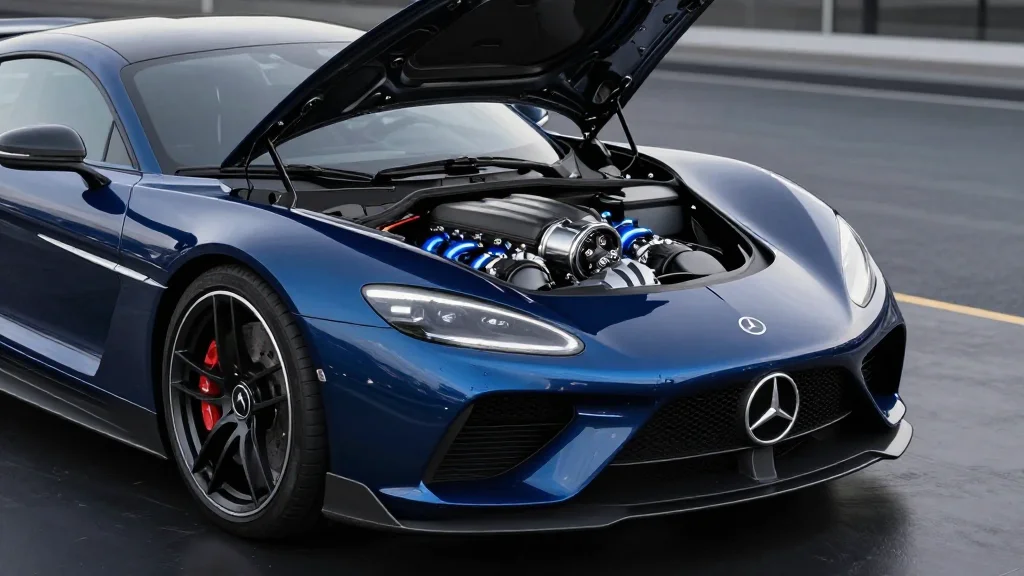
Lotus Unveils 1,000‑hp Hybrid V8 Supercar, Reviving V8 Era

Companies Mentioned
Why It Matters
The Type 135 illustrates how legacy sports‑car manufacturers can reconcile brand DNA with the accelerating shift toward electrification. By delivering a hybrid V8 that exceeds 1,000 hp, Lotus aims to retain the emotional appeal of a roaring engine while meeting stricter emissions standards through plug‑in hybrid technology. The project also highlights the growing importance of strategic partnerships—Lotus’s collaboration with Mercedes‑AMG provides access to cutting‑edge engine technology without the need for in‑house development. If successful, the Type 135 could redefine the performance‑luxury market’s expectations for hybrid powertrains, proving that extreme horsepower and limited‑run exclusivity remain viable selling points even as the industry leans heavily into pure electric platforms. Competitors will watch closely to gauge consumer appetite for such a hybrid‑centric halo model.
Key Takeaways
- •Lotus announces the Type 135 hybrid supercar with >1,000 hp, the first V8 since 2004.
- •Powertrain combines a new Mercedes‑AMG twin‑turbo 4.0 L V8 with Lotus’s X Hybrid system.
- •Focus 2030 roadmap allocates 60% of future models to plug‑in hybrids, 40% to BEVs.
- •Design draws from the Theory 1 concept; likely three‑seat layout similar to McLaren F1.
- •Production slated for Hethel, UK, with a prototype expected later in 2026.
Pulse Analysis
Lotus’s Type 135 is more than a nostalgic nod; it’s a strategic hedge against the uncertainty surrounding pure‑electric supercars. While EVs offer zero‑emission credentials, they still struggle to match the auditory and tactile feedback that many affluent buyers associate with the ultimate driving experience. By delivering a hybrid V8 that can still roar, Lotus preserves that sensory connection while leveraging electrification to meet regulatory demands.
Historically, Lotus has thrived on lightweight engineering and driver engagement, a philosophy that could be diluted by a full‑electric shift. The hybrid approach allows the marque to retain its core identity while adopting a modular powertrain that can evolve as battery technology improves. Moreover, the partnership with Mercedes‑AMG reduces development risk and signals a collaborative future for niche manufacturers that lack the capital of larger groups.
Market-wise, the Type 135 positions Lotus alongside a small but growing cohort of ultra‑luxury hybrids—such as the Bentley Continental GT Hybrid and the Lamborghini Sián—that blend extreme performance with limited‑run exclusivity. If the Type 135 captures the imagination of collectors, it could validate a hybrid‑first strategy for other heritage brands hesitant to abandon internal combustion entirely. Conversely, a lukewarm reception would reinforce the industry’s pivot toward pure EV supercars, pressuring Lotus to accelerate its BEV offerings. The next few years will reveal whether hybrid hypercars can coexist with the electrified future or become a fleeting footnote.
Lotus Unveils 1,000‑hp Hybrid V8 Supercar, Reviving V8 Era
Comments
Want to join the conversation?
Loading comments...