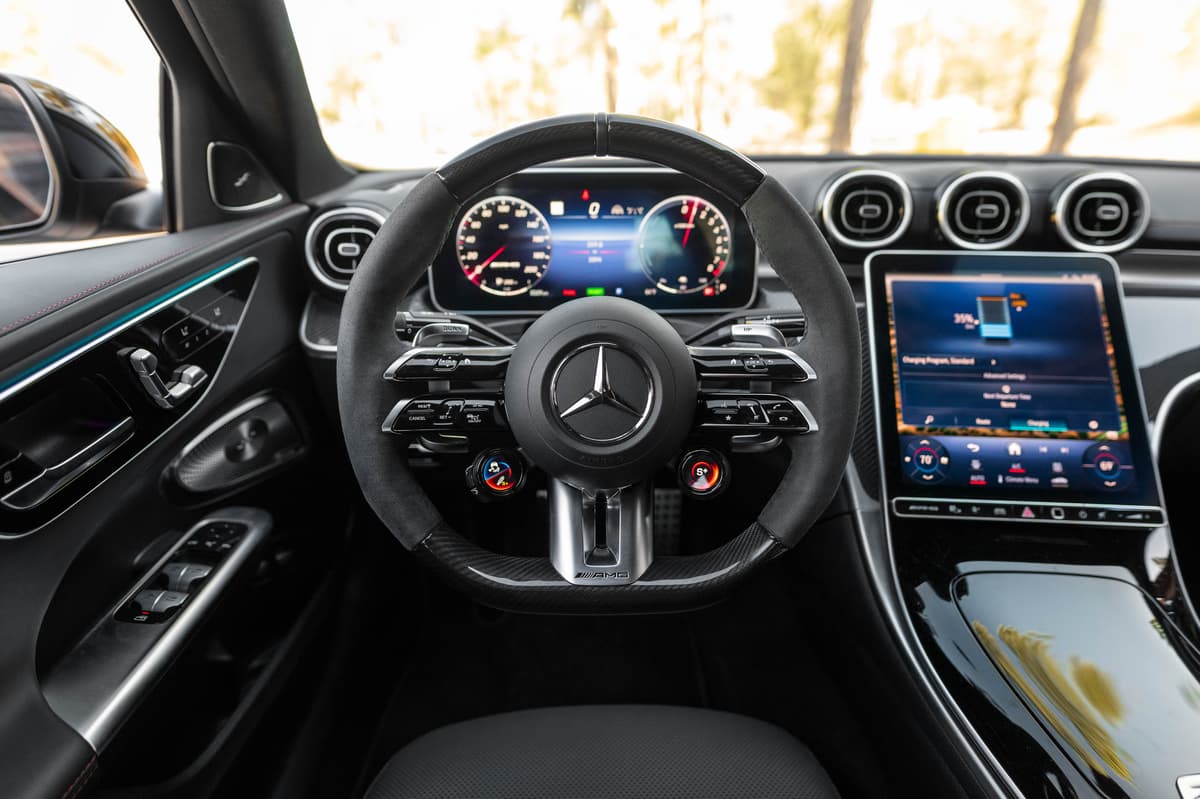
Mercedes-Benz Recalling Over 144,000 Vehicles Including AMG GT, C63 S for Instrument Panel Failure
Companies Mentioned
Why It Matters
The recall underscores the safety risks inherent in rapidly digitizing vehicle interiors and could dent Mercedes‑Benz’s premium reputation while adding significant warranty costs. It also signals to the broader auto industry that robust software validation is now a core safety requirement.
Key Takeaways
- •Recall covers 144,019 Mercedes models from 2024‑2026.
- •Faulty infotainment software can blank speedometer and gauges.
- •NHTSA says 100% of affected cars may experience resets.
- •Fix delivered via free dealer software update, OTA considered.
- •No crashes reported, but safety standards risk remains.
Pulse Analysis
The luxury automotive segment has embraced fully digital instrument clusters, promising sharper graphics, customizable layouts, and integrated vehicle data. Mercedes‑Benz’s latest recall illustrates the flip side of that ambition: a single software version released in August 2025 introduced a reset loop that can erase critical driver information, such as speed and RPM, for a few seconds. While the visual impact is brief, the loss of a speedometer violates federal safety standards and raises questions about how quickly manufacturers can verify complex code before it reaches the road.
For Mercedes‑Benz, the financial and reputational stakes are sizable. A recall affecting over 144,000 U.S. vehicles translates into millions of dollars in parts, labor, and logistics, even though the fix is a simple software flash. The automaker’s decision to offer a free dealer update—and to keep an over‑the‑air (OTA) solution on standby—reflects a growing industry reliance on remote remediation. However, the episode may erode confidence among affluent buyers who expect flawless performance from premium brands, prompting dealers to emphasize rigorous post‑sale support and potentially accelerating warranty extensions.
Industry‑wide, the incident serves as a cautionary tale for all OEMs accelerating digital transformation. Regulators are sharpening scrutiny, and the NHTSA’s 100 percent exposure estimate signals that future recalls could be triggered by software glitches rather than mechanical failures. Automakers are likely to invest more heavily in automated testing, simulation, and staged rollouts to catch defects before mass deployment. For consumers, the episode reinforces the importance of staying current on recall notifications and ensuring that OTA updates are applied promptly to maintain vehicle safety.
Mercedes-Benz Recalling Over 144,000 Vehicles Including AMG GT, C63 S for Instrument Panel Failure
Comments
Want to join the conversation?
Loading comments...