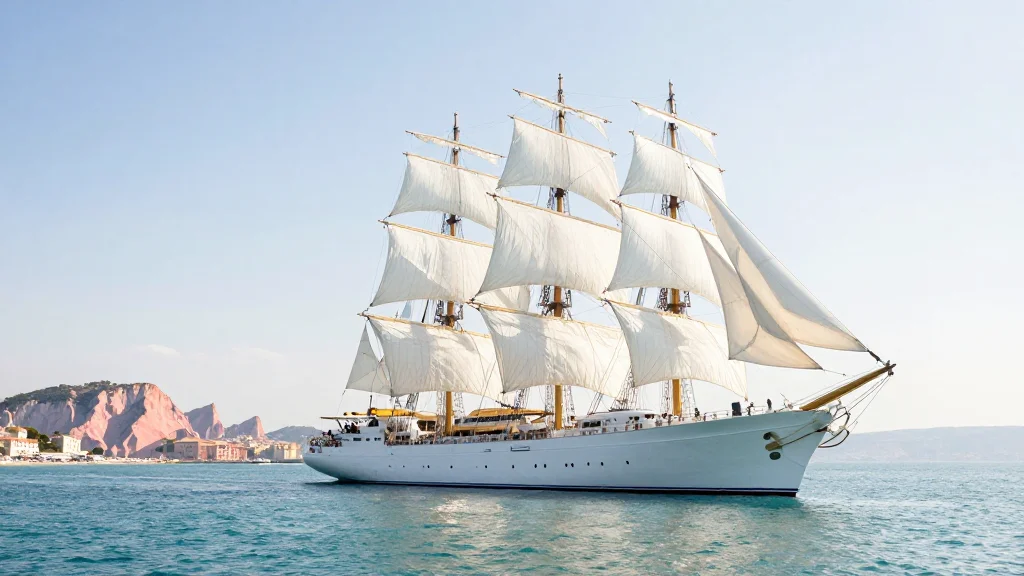
Orient Express Corinthian, 220‑Metre Sailing Yacht, Spotted Off French Riviera

Why It Matters
The emergence of the Orient Express Corinthian underscores a pivotal evolution in the luxury market: the blending of hospitality and maritime experiences to meet the desires of a clientele that values privacy, exclusivity, and mobility. By positioning a yacht as a floating hotel, Accor and LVMH are testing a new business model that could reshape revenue streams for luxury hotels and challenge traditional destination‑based tourism. Additionally, the vessel’s scale and high‑profile visibility bring heightened scrutiny to the environmental footprint of mega‑yachts, potentially prompting stricter regulations and a push for greener technologies in the sector. If the yacht proves commercially viable, it may catalyze a wave of similar projects, prompting hotel chains, luxury brands, and shipbuilders to invest in bespoke marine assets. This could intensify competition for prime docking locations, influence real estate values in coastal towns, and accelerate innovation in sustainable marine engineering as stakeholders seek to balance opulence with ecological responsibility.
Key Takeaways
- •Orient Express Corinthian, 220 m sailing yacht, spotted off Villefranche‑sur‑Mer on May 31
- •Launched May 2026 by Accor and LVMH; 54 luxury cabins, crew of 170
- •Designed as a mobile ultra‑luxury resort, eliminating need for multiple hotel stays
- •Potential itinerary includes Saint‑Tropez, Cannes, Antibes, and possibly Monaco
- •Yacht highlights growing demand for floating luxury experiences and new hospitality models
Pulse Analysis
The Orient Express Corinthian represents a bold experiment at the intersection of hospitality and marine engineering. Historically, luxury yachts have been private playthings for the ultra‑wealthy, but this vessel is being marketed as a commercial floating resort, a concept that could democratize access to high‑end maritime experiences for a broader segment of affluent travelers willing to pay premium charter rates. The partnership between Accor, a global hotel operator, and LVMH, a powerhouse of luxury brands, signals a strategic alignment that leverages Accor’s operational expertise with LVMH’s brand cachet. This synergy could set a template for future collaborations where hospitality firms extend their footprint onto the water, offering seamless, brand‑consistent experiences across land and sea.
From a market dynamics perspective, the yacht’s debut arrives at a time when traditional luxury travel is rebounding post‑pandemic, with consumers seeking exclusive, low‑density environments. The floating resort model addresses these preferences by providing controlled, private spaces that can be relocated to avoid overcrowding. However, the venture also faces headwinds: the operational costs of staffing 170 crew members, maintaining a 220‑metre vessel, and complying with increasingly stringent environmental regulations could erode profit margins unless premium pricing is sustained. Moreover, the yacht’s environmental impact may attract criticism from sustainability advocates, pressuring the owners to adopt green technologies such as hybrid propulsion or carbon offset programs.
Looking ahead, the success of the Orient Express Corinthian will likely hinge on its ability to generate consistent demand beyond novelty. If charter bookings remain robust and the vessel can secure high‑visibility dockings during marquee events like the Monaco Grand Prix, it could validate the floating resort model and inspire a new class of luxury assets. Conversely, if operational challenges or regulatory constraints prove prohibitive, the concept may remain a niche curiosity. Either outcome will shape strategic decisions for luxury brands contemplating maritime expansions and could redefine the parameters of ultra‑luxury travel in the coming decade.
Orient Express Corinthian, 220‑Metre Sailing Yacht, Spotted Off French Riviera
Comments
Want to join the conversation?
Loading comments...