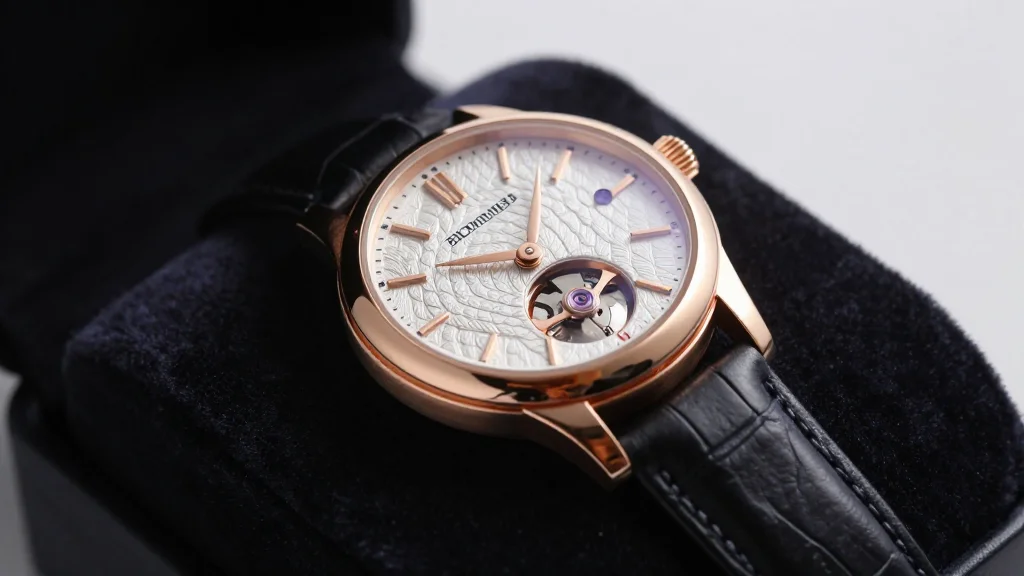
Piaget Unveils Décor Palace and Snake Scale Enamel Watches at 2026 Limelight Gala

Why It Matters
Piaget’s 2026 Limelight Gala releases illustrate how legacy maisons are leveraging heritage techniques—such as the Décor Palace engraving and Grand Feu enamel—to differentiate in an increasingly crowded ultra‑luxury market. The ultra‑thin calibre 501P1 demonstrates the brand’s engineering prowess, allowing complex decorative dials without sacrificing wearability. By limiting production to a few dozen pieces and keeping pricing private, Piaget fuels scarcity, which can translate into heightened secondary‑market activity and reinforce the brand’s positioning at the apex of haute joaillerie watchmaking. The launch also signals a shift toward hybrid collector appeal: the watches are as much art objects as functional timepieces. This duality attracts traditional watch enthusiasts, high‑net‑worth individuals seeking investment‑grade assets, and connoisseurs of fine jewellery, expanding Piaget’s reach across multiple luxury segments.
Key Takeaways
- •Piaget introduced two 32 mm Limelight Gala models—Décor Palace and Snake Scale Enamel—at its 2026 gala.
- •Both watches are powered by the ultra‑thin automatic calibre 501P1, 3.6 mm thick, 42‑hour reserve.
- •Décor Palace features 42 fancy‑cognac and white diamonds with a textured gold engraving pattern.
- •Snake Scale Enamel showcases orange Grand Feu enamel, 22 spessartite garnets and 20 diamonds.
- •Production is ultra‑limited; prices are available on request, with output measured in dozens.
Pulse Analysis
Piaget’s latest Limelight Gala offerings epitomize the convergence of haute joaillerie and micro‑mechanical watchmaking that has defined the upper echelon of the luxury watch market over the past decade. Historically, the brand’s strength lay in its ability to translate jewellery sensibilities into wristwear—a lineage that began with the 1973 asymmetric diamond‑draped lugs. The 2026 models deepen that narrative by marrying the Décor Palace engraving—a technique that transforms solid gold into a textile‑like surface—with a movement thin enough to keep the watch comfortable on the wrist. This engineering feat is not merely a technical showcase; it serves a strategic purpose. In an era where collectors increasingly view watches as alternative assets, the combination of visible artistry and cutting‑edge mechanics enhances perceived value and justifies premium secondary‑market pricing.
Scarcity remains a potent lever. By limiting production to a few dozen pieces and withholding price information, Piaget creates an aura of exclusivity that fuels demand among the ultra‑wealthy and seasoned collectors. This approach mirrors strategies employed by peers such as Greubel Forsey and Richard Mille, who have long used limited runs to sustain high resale values. However, Piaget’s added advantage is its broader brand recognition across both jewellery and watchmaking, allowing it to tap into a larger pool of affluent clients who may be drawn to the brand’s dual heritage.
Looking ahead, the success of these pieces will likely influence Piaget’s future collections. If market response—both primary sales and secondary‑market activity—remains robust, we can expect the maison to double down on limited‑edition, art‑focused releases that push the envelope of enamel work, gemstone integration, and ultra‑thin movement architecture. Such a trajectory would reinforce Piaget’s position not just as a watchmaker, but as a creator of wearable art, a niche that commands both reverence and premium pricing in the luxury ecosystem.
Piaget Unveils Décor Palace and Snake Scale Enamel Watches at 2026 Limelight Gala
Comments
Want to join the conversation?
Loading comments...