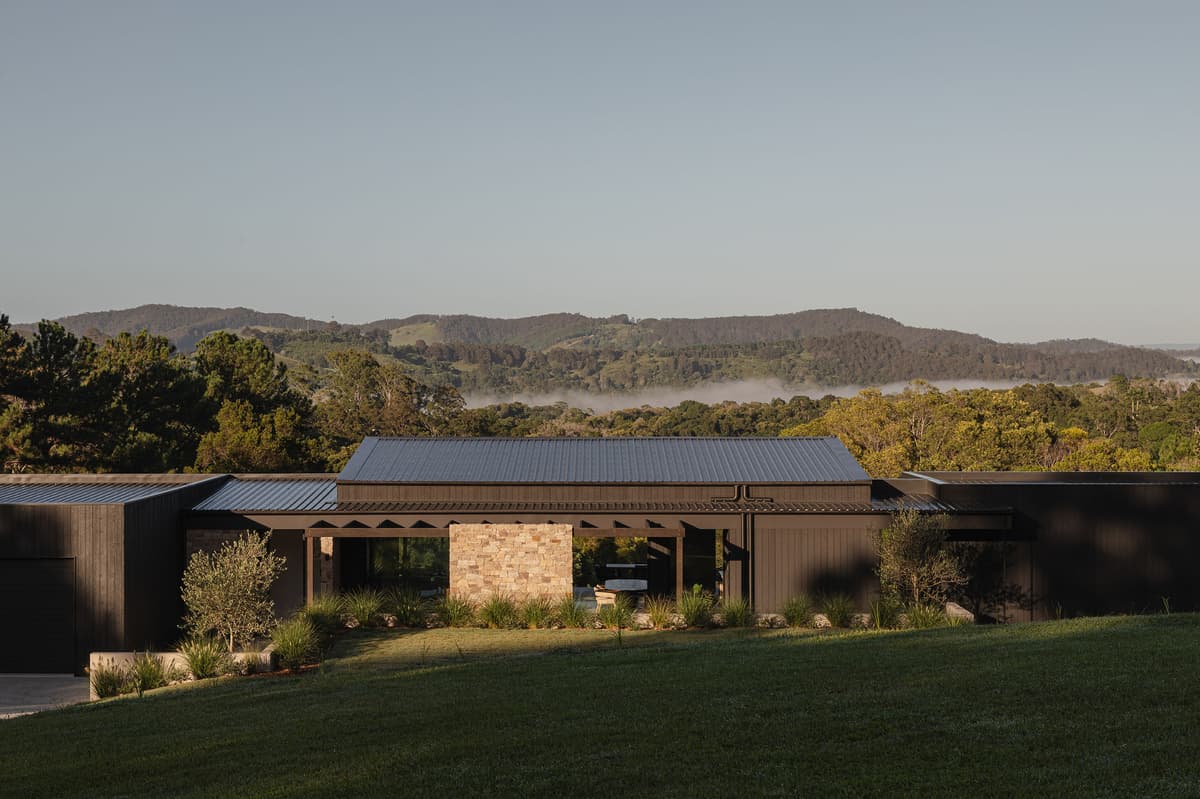
Why It Matters
By prioritizing site integration and material honesty, the Pomona House showcases a growing demand for luxury homes that respect their environment, influencing high‑end residential trends and sustainable design standards.
Key Takeaways
- •355 m² Pomona House blends into ridgeline, preserving privacy.
- •Natural, raw materials create calm palette aligned with surrounding land.
- •Glazed corridor separates master suite, enhancing indoor‑outdoor dialogue.
- •Elevated concrete pool and fire lounge frame panoramic Hinterland views.
- •Design prioritizes spatial flow, delivering stillness through open architecture.
Pulse Analysis
The Pomona House exemplifies a shift toward site‑specific architecture, where the building’s placement is dictated by topography rather than the opposite. By retreating from the street and aligning with the natural slope, the residence captures unobstructed vistas while maintaining a low visual impact. This approach resonates with affluent buyers who value privacy and a sense of belonging to the landscape, a preference that is reshaping luxury real‑estate development in scenic regions across the United States.
Materiality plays a central role in the home’s narrative. Raw, board‑formed concrete for the pool and exposed natural finishes throughout create a tactile continuity that blurs the line between indoor and outdoor spaces. The glazed corridor acts as a transparent threshold, allowing daylight and surrounding scenery to permeate the master suite. Such honest material expression not only reduces the need for excessive finishes but also aligns with sustainable building practices that favor durability and low‑maintenance aesthetics.
From a market perspective, projects like the Pomona House signal a premium on experiential living. Buyers are increasingly willing to invest in homes that deliver a curated sense of stillness and connection to nature, driving architects to innovate with spatial flow and contextual design. As climate‑responsive architecture gains traction, the emphasis on integrating natural views, passive design elements, and locally sourced materials is likely to become a benchmark for high‑end residential projects worldwide.
Pomona House / Hive Architecture
Comments
Want to join the conversation?
Loading comments...