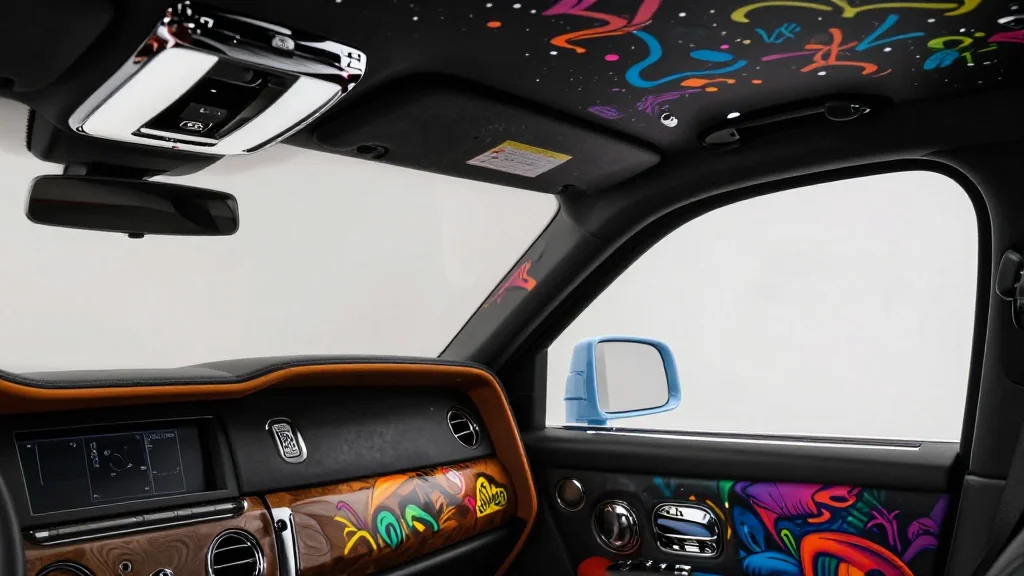
Rolls‑Royce Unveils Black Badge Cullinan with Hand‑Painted Cabin by Cyril Kongo

Companies Mentioned

Rolls‑Royce
Aston Martin
AML
Why It Matters
The Cyril Kongo Cullinan illustrates how luxury automakers are redefining exclusivity through cultural partnerships, moving beyond traditional material upgrades to immersive artistic experiences. By allocating all five units immediately, Rolls‑Royce demonstrates confidence that collectors are willing to pay a premium for provenance and narrative, a trend that could reshape pricing structures across the high‑end automotive segment. Moreover, the collaboration highlights a growing convergence between the art world and luxury goods, where street‑art credibility can elevate a heritage brand’s relevance among younger affluent consumers. This fusion may inspire other sectors—watchmaking, fashion, hospitality—to seek similar cross‑disciplinary alliances, amplifying the overall value of bespoke offerings in the luxury ecosystem.
Key Takeaways
- •Rolls‑Royce released five Black Badge Cullinan Private Commissions with hand‑painted interiors by Cyril Kongo.
- •Each vehicle features a black‑based cabin with four vivid colour accents and a custom Starlight Headliner.
- •Phil Fabre de la Grange, Head of Bespoke, described a dedicated workspace where artists and engineers collaborated.
- •Cyril Kongo called the Starlight Headliner "a universe in motion" and the centerpiece of his design.
- •All five cars have been allocated to collectors worldwide, signaling strong demand for art‑driven luxury.
Pulse Analysis
Rolls‑Royce’s decision to embed a graffiti legend into the heart of its flagship SUV is a calculated gamble that pays off on two fronts: brand differentiation and cultural relevance. Historically, the marque has leaned on heritage and engineering excellence; this partnership flips that script, positioning the Cullinan as a canvas rather than just a vehicle. The move mirrors a broader luxury trend where narrative and experiential value eclipse pure performance metrics. By allocating the five units immediately, Rolls‑Royce signals confidence that the market will absorb a higher price ceiling, effectively testing the elasticity of ultra‑high‑net‑worth demand.
From a competitive standpoint, the collaboration forces rivals to reconsider their own bespoke strategies. Bentley’s recent limited‑edition models have leaned on heritage motifs, while Aston Martin has flirted with art collaborations that remain peripheral. Rolls‑Royce’s hands‑on approach—dedicating bespoke facilities and integrating the artist into the production workflow—creates a defensible moat: the result is not a simple badge or paint scheme but a fully realized artistic environment that can only be replicated through deep, time‑intensive partnership. This could usher in a new era where luxury brands treat artists as co‑designers, blurring the line between product development and artistic creation.
Looking ahead, the success of the Cyril Kongo Cullinan may catalyze a pipeline of similar projects across the luxury spectrum. Expect to see watchmakers commissioning kinetic sculptures, fashion houses partnering with digital artists for NFT‑linked collections, and hospitality groups curating immersive art‑themed suites. For Rolls‑Royce, the next logical step is to expand the Private Commissions program beyond automotive, perhaps into yachts or private jets, leveraging the same bespoke infrastructure. The key takeaway for investors and industry watchers is that the value proposition of luxury is evolving from tangible craftsmanship to intangible cultural capital, and brands that can monetize that shift will capture the most resilient share of future high‑net‑worth spending.
Rolls‑Royce Unveils Black Badge Cullinan with Hand‑Painted Cabin by Cyril Kongo
Comments
Want to join the conversation?
Loading comments...