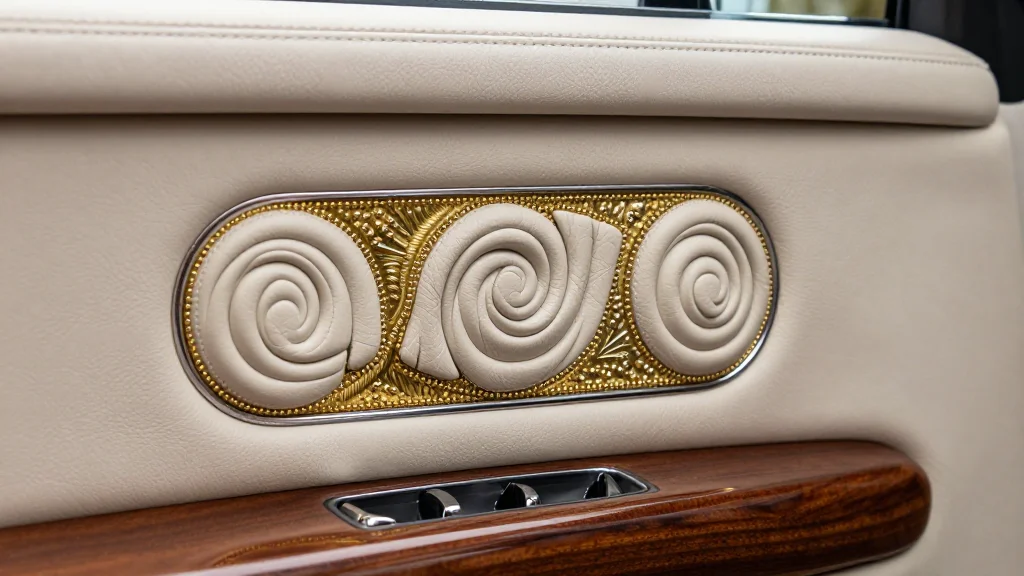
Rolls‑Royce Unveils Four New Bespoke Craft Techniques at London Craft Week

Companies Mentioned
Why It Matters
The introduction of these four Bespoke techniques marks a strategic shift for Rolls‑Royce, reinforcing its commitment to craftsmanship as a core value proposition in an era where many luxury automakers are turning to digital configurators and mass‑customisation. By offering clients the ability to embed fine‑art motifs and hand‑crafted details directly into their vehicles, Rolls‑Royce deepens emotional ownership and justifies the premium pricing that defines the ultra‑luxury segment. Moreover, the public showcase at London Craft Week signals to the broader luxury ecosystem—fashion houses, jewellery brands, and heritage artisans—that automotive manufacturers can serve as new canvases for traditional crafts. This cross‑industry collaboration could spark a wave of partnerships, expanding the market for high‑skill artisans and creating new revenue streams for both sides.
Key Takeaways
- •Rolls‑Royce introduced four new Bespoke craft techniques during London Craft Week, May 11‑17.
- •Techniques include 3D leather hand‑sculpting, 3D metal hand‑sculpting, layered 3D veneers with brass, and advanced beadwork.
- •Concept pieces, such as “Legacy Craft: Inspired by Still Life,” demonstrate over 250 hours of handwork.
- •The innovations draw on five centuries of decorative arts, linking fine art, couture, jewellery and architecture.
- •Rolls‑Royce aims to integrate the techniques into future models, enhancing ultra‑luxury personalisation.
Pulse Analysis
Rolls‑Royce’s decision to double down on hand‑crafted techniques reflects a broader luxury paradox: while digital experiences dominate consumer expectations, the highest‑end buyers still crave tangible, heritage‑rich artifacts. The brand’s Bespoke Collective is effectively turning the vehicle interior into a portable gallery, a move that could redefine how luxury is quantified—shifting from pure performance metrics to artistic merit.
Historically, Rolls‑Royce has leveraged craftsmanship as a differentiator, from the iconic Spirit of Ecstasy to bespoke coachbuilding. The new techniques extend this lineage, positioning the marque not just as a carmaker but as a curator of living art. This strategy may protect its market share against rivals that rely on technology‑driven exclusivity, such as limited‑edition electric models, by offering an experience that cannot be replicated by algorithms.
Looking ahead, the success of these techniques will hinge on client willingness to invest in labor‑intensive customisation. If demand scales, Rolls‑Royce could justify expanding its artisan workforce, potentially creating a niche supply chain for luxury materials and skills. Conversely, if the market leans toward streamlined, tech‑centric personalization, the brand may need to balance artisanal offerings with more efficient digital tools. The next few model cycles will reveal whether this handcrafted renaissance can sustain profitability in a rapidly evolving luxury landscape.
Rolls‑Royce Unveils Four New Bespoke Craft Techniques at London Craft Week
Comments
Want to join the conversation?
Loading comments...