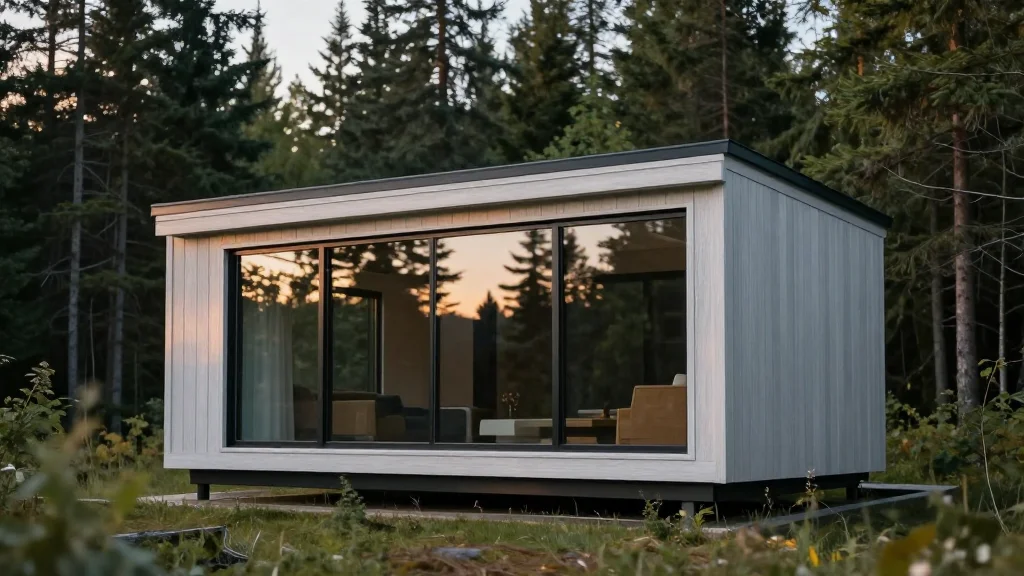
Why It Matters
The chalet demonstrates how ultra‑compact, high‑performance design can meet luxury expectations, setting a benchmark for sustainable tourism and resource‑conscious architecture in North America.
Key Takeaways
- •Under 100 m² footprint, emphasizing resource efficiency.
- •Pale‑grey wood cladding blends cabin with seasonal forest.
- •Dual‑level layout places private spaces on upper floor.
- •Expansive, hidden glazing offers 180° forest panorama.
- •Design prioritises natural light, airflow, and communal intimacy.
Pulse Analysis
In an era where travelers seek authentic immersion without compromising environmental stewardship, the Scotch Chalet illustrates a growing market shift toward micro‑retreats. By limiting its footprint to under 100 m², the project reduces material consumption and site disturbance, aligning with stricter carbon‑budget targets for hospitality developments. The use of locally sourced, pale‑grey timber not only harmonises visually with the forest but also leverages renewable construction practices, offering a replicable model for developers targeting eco‑conscious clientele.
Architecturally, the chalet employs a nuanced façade strategy: low‑profile elevations greet the approach road, while taller, glass‑rich walls open toward the interior forest, delivering unobstructed panoramas that blur indoor‑outdoor boundaries. The roofline’s modulation pushes private functions to the upper level, preserving a modest silhouette and enhancing privacy. Inside, a cathedral ceiling and central skylight flood the communal core with daylight, while the longitudinal‑transverse axis layout optimises cross‑ventilation, reducing reliance on mechanical climate control. These design choices underscore how thoughtful spatial choreography can elevate occupant experience without added energy demand.
The broader implication for the design and tourism sectors is clear: compact, high‑quality cabins can command premium rates while delivering lower operational costs and a smaller ecological footprint. As municipalities tighten zoning and sustainability regulations, projects like the Scotch Chalet provide a blueprint for balancing luxury, functionality, and environmental responsibility, positioning architects and developers at the forefront of the next wave of responsible leisure architecture.
Scotch Chalet / CARTA. Architecte + Designer
Comments
Want to join the conversation?
Loading comments...