Why It Matters
The project demonstrates how cross‑cultural design can produce sustainable, sensory‑rich workspaces, setting a benchmark for future artist retreats and low‑impact architecture.
Key Takeaways
- •Danish summerhouse reimagined with Japanese teahouse principles
- •Thatched roof and timber age naturally, mirroring coastal vegetation
- •Skylight and wooden louvers modulate daylight for a contemplative workspace
- •Open atelier balances intimacy and near‑sacral verticality
Pulse Analysis
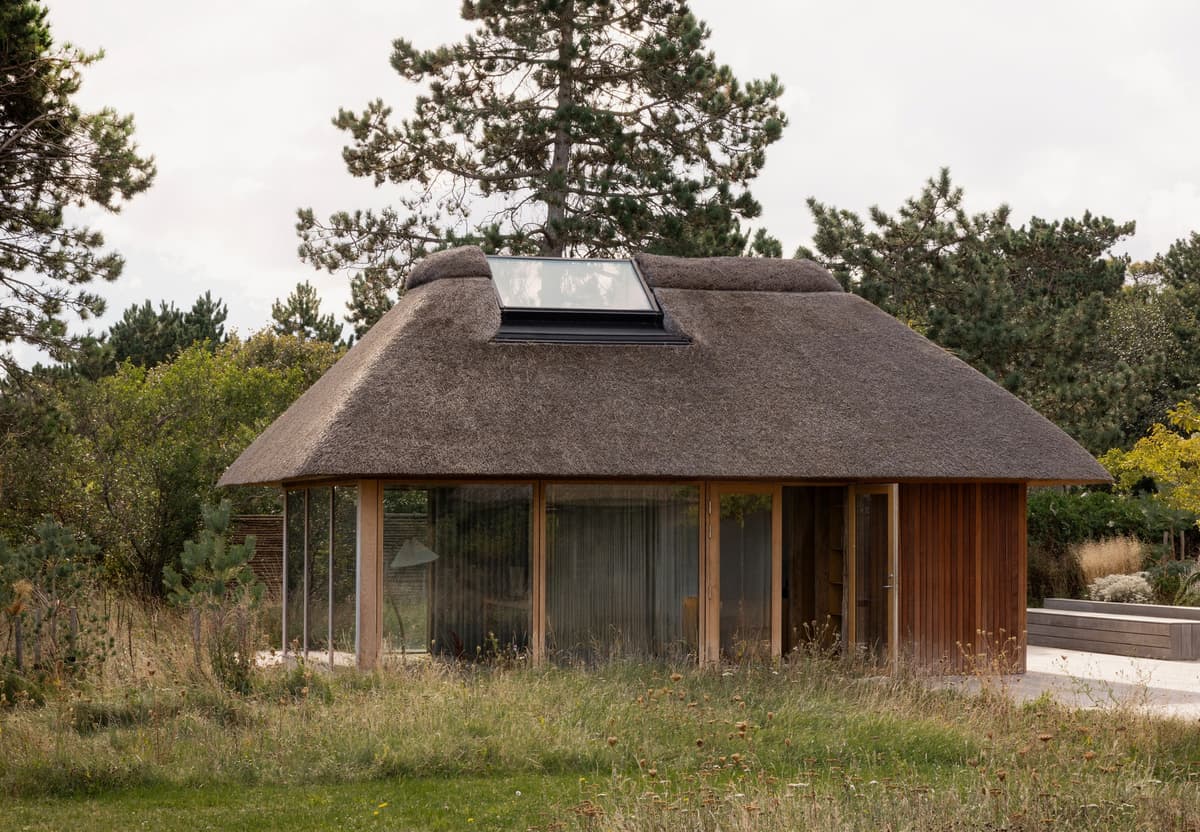
The emergence of hybrid architectural vocabularies is reshaping how designers address context, climate, and culture. Shoreline Studio exemplifies this shift by marrying the modest, timber‑laden summerhouses that dot Denmark’s coast with the disciplined spatial choreography of Japanese tea houses. Situated amid dunes, meadow and pine, the atelier does not dominate its site; instead, it listens to the wind‑swept horizon, allowing the landscape to become an extension of the interior. This dialogue between vernacular Danish forms and Japanese minimalism offers a template for architects seeking to create buildings that are both locally rooted and globally resonant.
Materiality lies at the heart of the studio’s quiet power. A thatched roof, reclaimed timber beams, hardwood cladding and brick flooring were chosen for their durability and their capacity to patinate gracefully over time, echoing the silvery tone of surrounding pines. The skylight, filtered through wooden louvers, introduces a soft, moving light that animates the brick floor throughout the day, while the acoustic softness of the thatch dampens external noise. By prioritizing low‑impact, locally sourced materials, the project reduces embodied carbon and demonstrates how craftsmanship can coexist with contemporary sustainability goals.
For artists and designers, the quality of light and spatial clarity directly influence creative output. Shoreline Studio’s open, legible volume provides an uncluttered workspace that simultaneously feels intimate and almost sacral, fostering prolonged focus without distraction. The seamless integration of secondary functions ensures that the primary atelier remains free of interruptions, a model that could be replicated in corporate retreats, research labs, or boutique hotels. As firms increasingly value employee wellbeing and environmental stewardship, projects like Shoreline Studio signal a market shift toward environments that nurture both productivity and a deeper connection to place.
Shoreline Studio / NORM Architects
Comments
Want to join the conversation?
Loading comments...