Why It Matters
By marrying bioclimatic design with artisanal techniques, the House of Time offers a replicable model for sustainable, community‑centric architecture in rapidly urbanizing regions.
Key Takeaways
- •Integrates river‑responsive design for passive climate control.
- •Revives local carpentry and masonry through modular brick systems.
- •Central courtyard links living, work, and performance spaces.
- •Adjustable walls double as projection screens and open thresholds.
- •Elevates structure 1.4 m to mitigate seasonal flooding.
Pulse Analysis
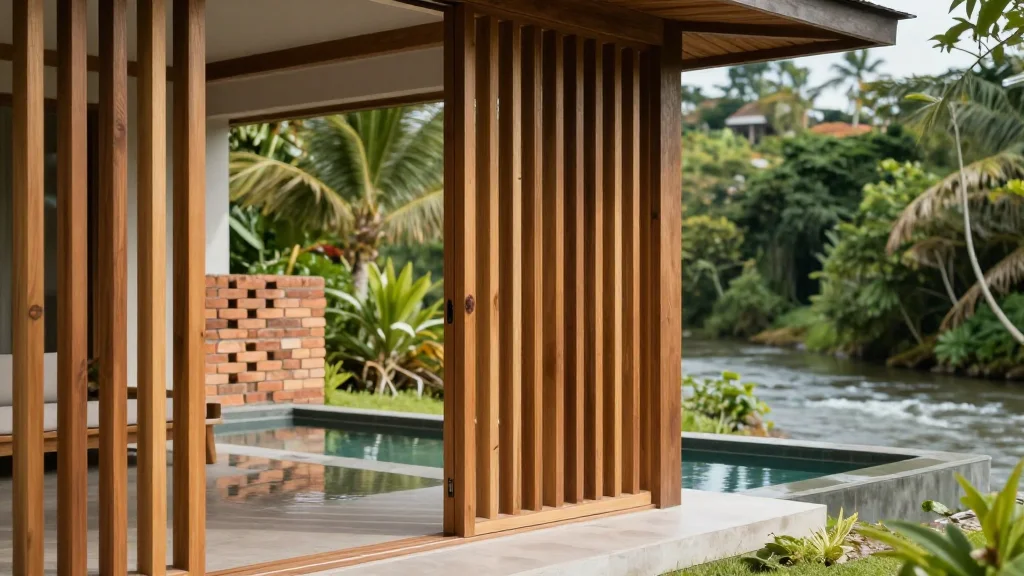
Sustainable architecture is increasingly measured by its ability to harmonize with local ecosystems, and the House of Time exemplifies this shift. Situated on the banks of a tropical river, the residence leverages passive cooling through water bodies, strategically placed skylights, and wooden lattice screens that filter sunlight while encouraging cross‑ventilation. This bioclimatic approach reduces reliance on mechanical systems, aligning with global targets for carbon‑neutral building practices and offering a template for developers seeking climate‑responsive solutions in humid regions.
Beyond environmental performance, the project foregrounds craftsmanship as a strategic asset. By reinterpreting brick as a modular component for walls, floors, and even lighting fixtures, the design revives traditional masonry techniques while delivering flexibility and material efficiency. Local timber beams, spaced at 1.75 m intervals, support a single‑sloped roof and create a rhythmic interior light quality. Such integration of artisanal methods not only preserves cultural heritage but also shortens supply chains, lowering embodied energy and construction costs—key considerations for cost‑conscious developers.
The House of Time’s adaptable interior spaces illustrate a broader trend toward multifunctional living environments. Pivoting courtyard walls serve simultaneously as projection screens and open thresholds, enabling seamless transitions between private residence, workshop, and community auditorium. This fluidity supports collaborative economies, where creative studios, educational programs, and cultural events co‑exist under one roof. As urban planners and investors prioritize resilience and social cohesion, projects that embed shared, flexible spaces are likely to attract both public funding and private interest, positioning the House of Time as a forward‑looking benchmark for future developments.
The House of Time / Natura Futura
Comments
Want to join the conversation?
Loading comments...