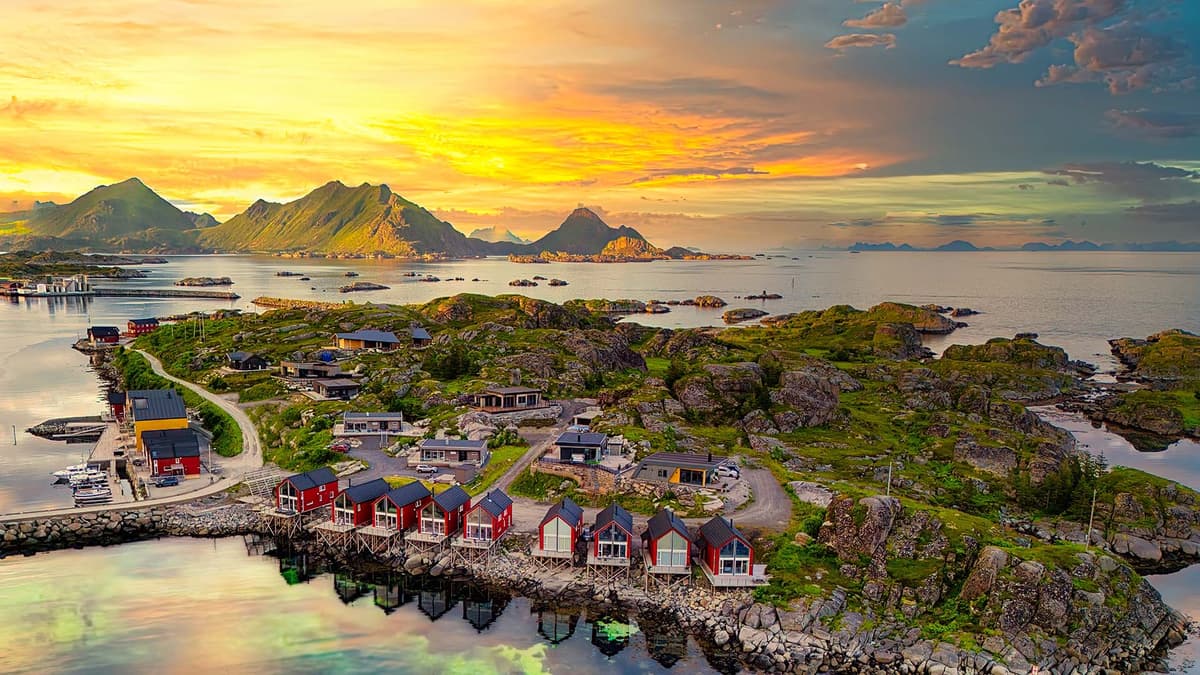
The Sun That Won’t Set, the Hotel That Won’t Open
Companies Mentioned
Why It Matters
The postponement underscores a structural pivot toward Arctic luxury travel, where daylight‑driven wellness, wildlife immersion, and seasonal gastronomy command premium pricing and reshape global travel routing.
Key Takeaways
- •Six Senses Svart delayed to late 2026, fueling Arctic hype
- •Lofoten lodges now top bookings during 28 May‑14 July sun window
- •Wellness programs leverage nonstop daylight for circadian reset
- •Midnight‑sun wildlife tours offer unique whale watching unavailable elsewhere
- •International demand spikes, especially from Gulf and India, despite complex routing
Pulse Analysis
The Six Senses Svart postponement is more than a construction setback; it signals investors’ confidence that the Arctic summer niche can sustain premium pricing. By positioning the resort as the world’s first energy‑positive hotel above the Arctic Circle, developers have created a halo effect that lifts neighboring properties. Existing lodges in Lofoten, already steeped in heritage, are now leveraging the six‑week sun‑lit window to command rates comparable to Mediterranean villas, proving that scarcity of daylight can be as market‑driving as location alone.
Wellness has become the second engine of growth, with operators translating continuous natural light into measurable health benefits. Circadian‑reset protocols—morning blue‑light moderation, evening sauna, and blackout‑ready rooms—appeal to executives battling jet lag and chronic insomnia. Coupled with unique wildlife encounters, such as midnight whale watching, the Arctic experience offers a holistic immersion that traditional spa menus cannot match. Seasonal Nordic gastronomy, highlighted by three‑star venues like Maaemo, further differentiates the region, turning June‑July into a culinary pilgrimage for food‑focused travelers.
The surge in foreign guest nights, driven largely by affluent travelers from the Gulf and India, demonstrates that demand outweighs logistical friction. Multi‑leg flights through European or Gulf hubs filter the market, ensuring a small, high‑spending clientele. This pattern is already echoing in the Southern Hemisphere, where Antarctic summer camps are booking out a year in advance. For investors and operators, the lesson is clear: latitude‑driven experiences are becoming a new asset class, and early movers stand to capture disproportionate upside as the industry pivots toward perpetual daylight destinations.
The Sun That Won’t Set, the Hotel That Won’t Open
Comments
Want to join the conversation?
Loading comments...