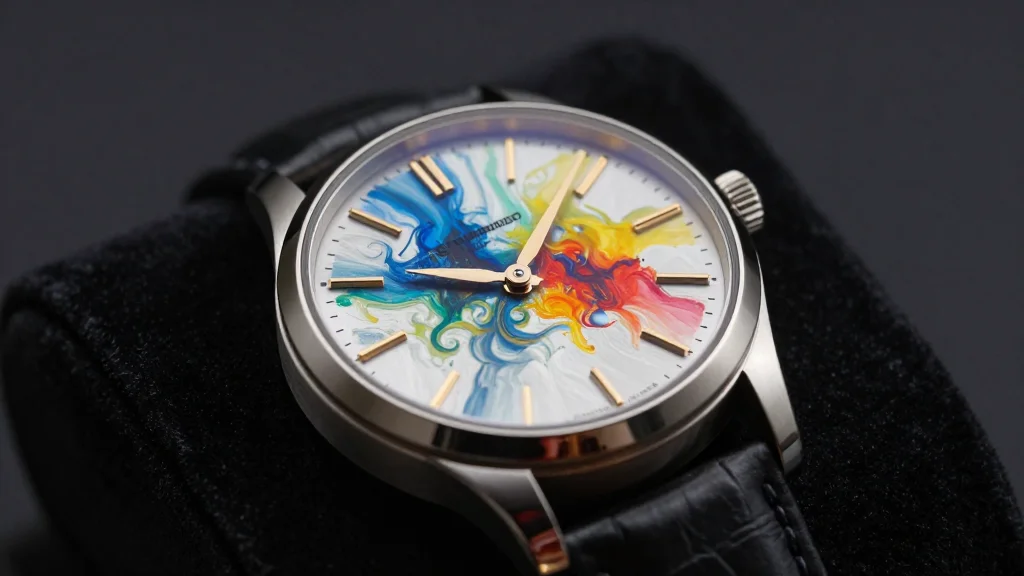
The World's Smallest Canvas: How Art and Watches Keep Time Together
Companies Mentioned

Louis Vuitton
Why It Matters
Integrating art into watches differentiates luxury brands, fuels collectible markets and expands consumer engagement beyond traditional time‑keeping. It signals a broader trend where heritage craftsmanship meets contemporary cultural expression.
Key Takeaways
- •Piaget's 1967 Dali d’Or merged gold coins with ultra‑slim watches
- •Gae Aulenti designed LV's Monterey I & II, pioneering ceramic cases
- •Max Bill's Junghans watches retain original 1960s design, showing timeless appeal
- •Movado's Museum Watch entered MoMA’s permanent collection in 1960
- •Swatch partners with artists and museums, making watches the smallest canvas
Pulse Analysis
The marriage of art and horology dates back to the 1960s, when Piaget enlisted surrealist Salvador Dali to create the "Dali d’Or" collection. By embedding gold‑coin motifs into ultra‑thin movements, the brand turned a luxury timepiece into a wearable masterpiece, establishing a template for scarcity‑driven collaborations that command premium prices and collector interest. Such early experiments demonstrated that a watch could serve as both a functional instrument and a limited‑edition artwork, a duality that continues to shape luxury marketing strategies.
Architects and designers have further expanded the canvas. Gae Aulenti’s Monterey I and II for Louis Vuitton introduced unconventional disk dials, crown‑at‑12 layouts and ceramic cases—materials then rare in watchmaking—while Max Bill’s partnership with Junghans translated Bauhaus minimalism into enduring wristwatch aesthetics. Nathan Horwitt’s 1947 Museum Watch distilled time‑telling to its essence, earning a permanent spot at MoMA in 1960 and cementing the notion that pure design can become cultural heritage. These collaborations underscore how design principles—clarity, proportion, material innovation—translate into timeless horological value.
Today, mass‑market brands like Swatch and Hublot have democratized the concept, launching dozens of artist‑themed collections that turn everyday accessories into miniature galleries. By aligning with museums such as the Uffizi and MoMA, they tap into institutional credibility while appealing to younger, experience‑driven consumers. The trend points toward increasingly interactive and digital extensions—augmented‑reality dials, NFT‑linked editions—where the watch remains a physical canvas but its narrative expands into the virtual realm. As luxury and streetwear converge, art‑infused watches will likely remain a potent vehicle for brand storytelling and consumer differentiation.
The World's Smallest Canvas: How Art and Watches Keep Time Together
Comments
Want to join the conversation?
Loading comments...