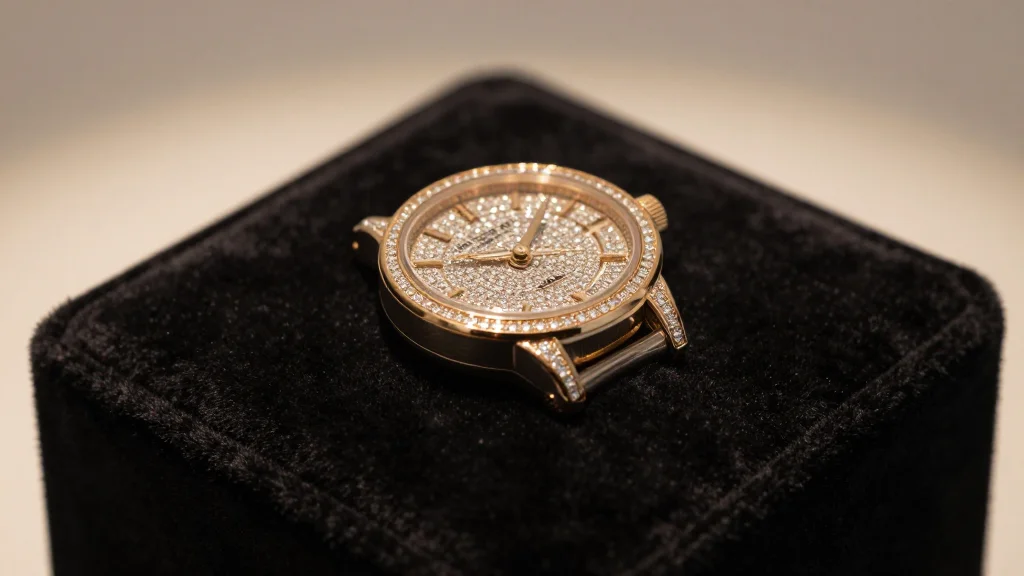
Tyson Fury Flaunts $630,000 “Ring of Fire” Jacob & Co Watch Amid Comeback Bout

Companies Mentioned

Why It Matters
Fury’s high‑profile endorsement of ultra‑expensive watches illustrates how celebrity patronage can accelerate demand for limited‑edition luxury timepieces, prompting brands to craft ever more exclusive pieces. The auction of the “Ring of Fire” model, which raised nearly $756,000 for charity, also demonstrates the charitable leverage that can accompany such collaborations, adding a philanthropic dimension to the luxury market’s growth. The visibility of these watches on a global sports stage may influence affluent consumers to seek similar status symbols, reinforcing a feedback loop where athletes drive brand prestige and, in turn, benefit from the cachet of owning rare, high‑price horological art. This dynamic could reshape marketing strategies across the luxury sector, prompting more athletes to become brand ambassadors for niche watchmakers.
Key Takeaways
- •Tyson Fury displayed a Jacob & Co “Ring of Fire” watch worth about $630,000 ahead of his fight with Arslanbek Makhmudov.
- •The commemorative watch features rose‑gold casework, sapphire crystals and miniature figurines of Fury and Oleksandr Usyk.
- •A Sotheby’s auction of an identical model fetched nearly $756,000 for Make‑A‑Wish International.
- •Fury’s collection also includes a $378,000 Bugatti Chiron Tourbillon, a $252,000 Richard Mille RM011 and a $504,000 Rolex Rainbow Daytona.
- •His luxury lifestyle—£8 million home, designer clothing, exotic cars—positions him as a key influencer in the high‑end watch market.
Pulse Analysis
The convergence of sport and luxury horology is no longer a niche phenomenon; it is now a strategic growth engine for watchmakers. Tyson Fury’s public flaunting of a $630,000 timepiece serves as a live case study of how athletes can amplify a brand’s narrative, turning a limited‑edition watch into a cultural artifact. Historically, luxury watches have relied on heritage and craftsmanship to command premium prices. Today, the added layer of celebrity provenance can push resale values well above original retail, as seen in the Sotheby’s auction that outperformed the watch’s list price by roughly 20%.
From a market perspective, this trend pressures traditional luxury houses to innovate beyond mechanical excellence. Brands are increasingly launching athlete‑centric micro‑editions, betting on the viral potential of a single Instagram post or press conference appearance. While this can generate short‑term spikes in demand, it also risks inflating prices beyond the sustainable appetite of core collectors. The challenge for watchmakers will be to balance exclusivity with authenticity, ensuring that collaborations enhance rather than dilute brand equity. Fury’s upcoming fight offers a litmus test: a victory could trigger another high‑value release, reinforcing the cycle, whereas a loss might temper the hype. Either outcome will provide valuable data on the durability of celebrity‑driven luxury demand.
Looking ahead, the luxury watch sector should monitor how athletes like Fury negotiate brand partnerships, especially regarding charitable components that add social goodwill. If more high‑profile athletes adopt similar models—combining personal branding with philanthropy—the industry could see a new paradigm where luxury consumption is intertwined with cause‑related marketing, reshaping consumer expectations and potentially broadening the market’s appeal beyond traditional affluent circles.
Tyson Fury flaunts $630,000 “Ring of Fire” Jacob & Co watch amid comeback bout
Comments
Want to join the conversation?
Loading comments...