Why It Matters
The project showcases how site‑specific architecture can merge high design with sustainable, locally sourced construction, setting a benchmark for luxury residential developments in challenging landscapes.
Key Takeaways
- •Built on irregular, steep terrain in Valle de Bravo
- •Combines glass, steel, wood, concrete for dynamic façade
- •Uses local materials like slate, clay tiles, pressed‑clay slabs
- •Two volumes separate private bedrooms and public living spaces
- •Design emphasizes light, shadow, and landscape integration
Pulse Analysis
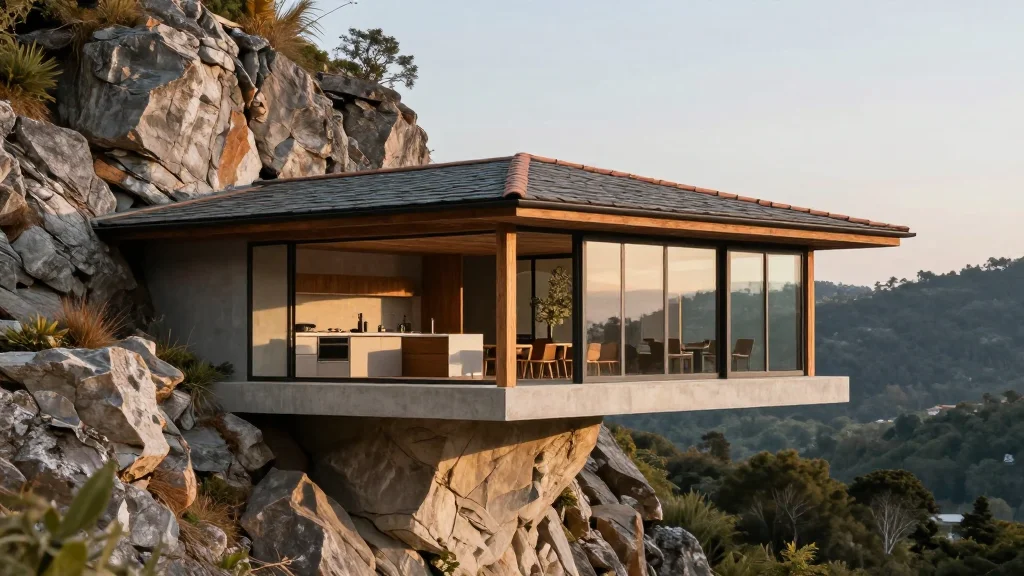
Valle House demonstrates how modern Mexican architects are turning difficult, forested slopes into sculptural residences. The project sits on a 425 m² parcel above Valle de Bravo, where the terrain rises sharply and is punctuated by pine trunks. By aligning the building’s massing with the natural gradient, the architects avoid heavy earthworks and let the structure appear to float above the rock outcrops. This approach reflects a growing trend toward site‑specific design that respects topography while delivering striking visual impact. The result is a residence that feels both grounded and ethereal.
Two intersecting volumes define the program: a sheltered wing houses four bedrooms, while a cantilevered concrete platform contains the kitchen, living and dining areas. The façade, rhythmically punctuated by wooden and steel posts, creates a "keyboard" pattern that captures shifting sunlight, casting watercolor‑like shadows across neutral walls. Material choices—exposed concrete, plastered masonry, slate stone, pressed‑clay tiles, and locally sourced timber—balance industrial sleekness with artisanal warmth. The interior staircase doubles as a double‑height furniture piece, reinforcing the seamless flow between public and private zones.
Beyond aesthetics, Valle House illustrates how local sourcing can reduce carbon footprints and support regional economies. By employing Interceramic and Kolorines tiles alongside indigenous stone and timber, the project minimizes transport emissions while enriching the tactile palette. The design also responds to climate, using overhangs and vertical glazing to moderate solar gain, a strategy increasingly vital in Mexico’s warming climate. As developers seek differentiators, such context‑driven architecture offers a compelling narrative for high‑end residential markets, positioning the property as both a work of art and a sustainable investment.
Valle House / DAFdf arquitectura Y urbanismo
Comments
Want to join the conversation?
Loading comments...