Why It Matters
The project demonstrates how thoughtful spatial planning and material strategy can deliver privacy and comfort in dense Asian megacities, setting a benchmark for future urban residential design.
Key Takeaways
- •Raised ground floor creates privacy while preserving street views
- •Semi-basement provides vehicle access separate from living spaces
- •Central atrium and spiral staircase link family zones visually
- •Rough concrete shell shields interior from high-rise noise and heat
- •Minimalist interior balances raw concrete with modern light materials
Pulse Analysis
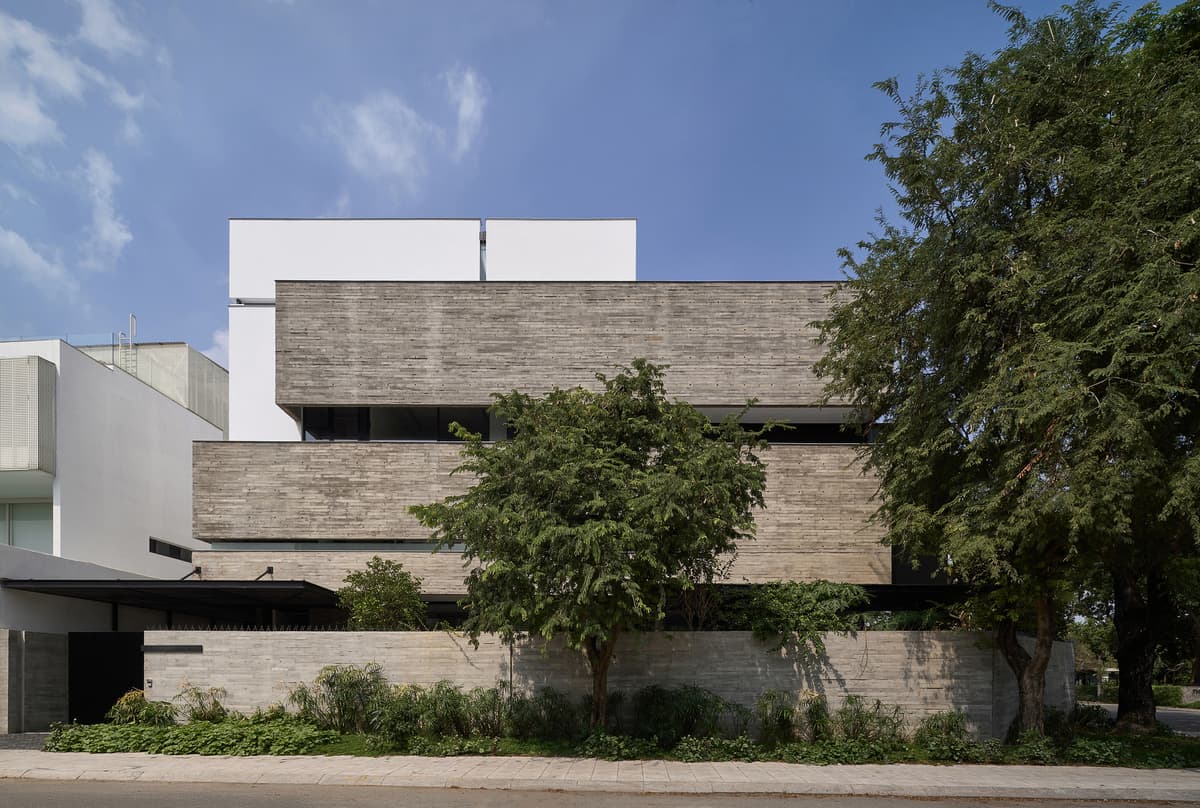
Ho Chi Minh City’s rapid vertical growth has intensified the search for housing that shields occupants from street noise and visual intrusion. Villa 68 responds to this pressure by elevating the main floor, a move that physically separates the home from the bustling sidewalk while preserving sightlines. The semi‑basement car entrance further isolates traffic vibrations, allowing the family’s living core to remain undisturbed. Such strategies echo a broader regional shift toward vertical privacy solutions in high‑density districts.
The architectural language of Villa 68 leans heavily on passive design. Rough concrete walls, broken into staggered layers, act as a thermal buffer, reducing heat gain from surrounding high‑rise towers. Intervening balconies create airflow corridors that dissipate heat before it reaches interior spaces, a low‑energy alternative to mechanical cooling. The central atrium, illuminated by a spiraling staircase, not only fosters visual connectivity among family members but also channels daylight deep into the home, reducing reliance on artificial lighting. These measures illustrate how material honesty and spatial choreography can achieve sustainability without sacrificing aesthetic appeal.
Beyond its immediate occupants, Villa 68 signals a growing appetite for minimalist yet resilient residential typologies in Vietnam’s emerging urban markets. By juxtaposing raw concrete with sleek, light‑filled interiors, the design offers a template for developers seeking cost‑effective construction that still delivers premium living experiences. As more families prioritize privacy, health, and environmental performance, architects are likely to adopt similar shell‑and‑buffer concepts, reshaping the city’s residential skyline for the next decade.
Villa 68 / MAS Architecture Workshop
Comments
Want to join the conversation?
Loading comments...