Why It Matters
The house exemplifies how high‑end residential architecture can fuse luxury living with environmental context, setting a benchmark for sustainable, site‑specific design in New Zealand’s premium property market.
Key Takeaways
- •40,000 m² ridge‑top residence on Waiheke Island.
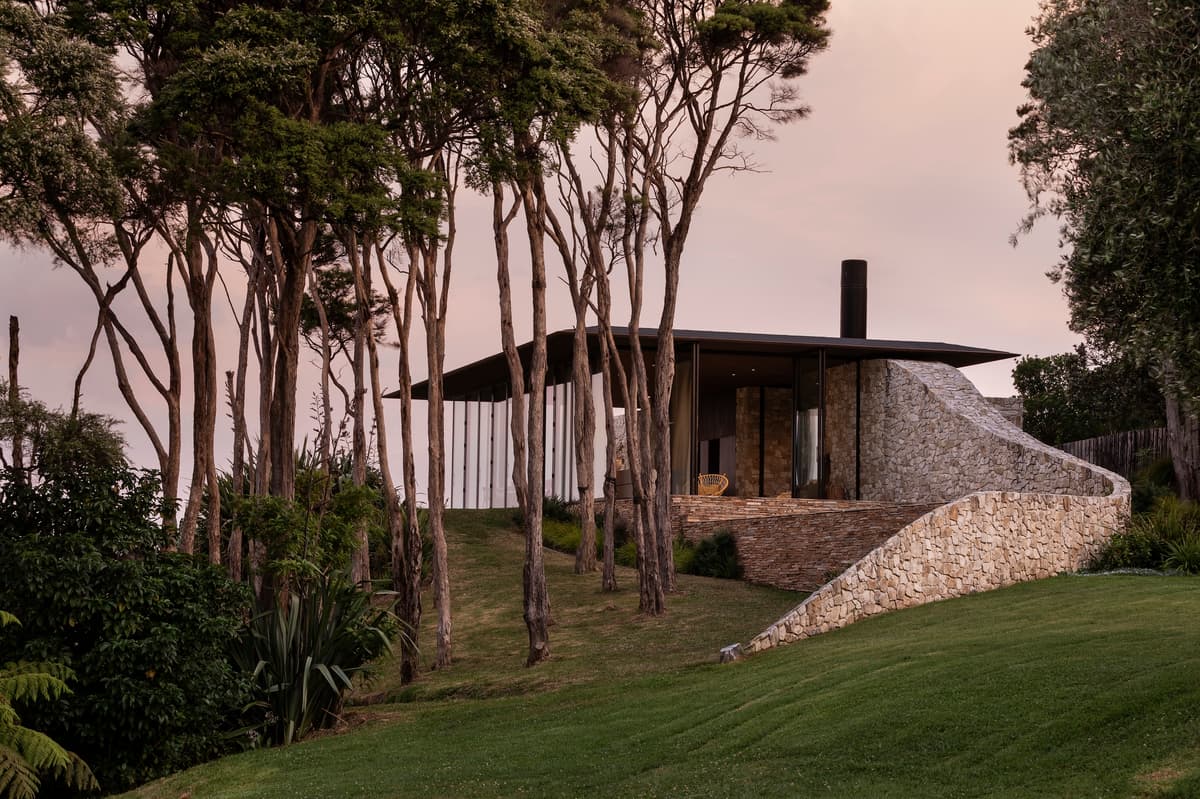
- •Serpentine stone wall separates indoor and outdoor spaces.
- •Glass pavilion offers north‑facing sun and sea views.
- •Design prioritizes sensory experience and natural materiality.
- •Project reinforces Cheshire Architects’ reputation for contextual luxury homes.
Pulse Analysis
The rise of high‑net‑worth buyers seeking refuge from urban density has turned New Zealand’s islands into hotspots for bespoke residences. Waiheke Island, with its proximity to Auckland and dramatic coastal topography, offers a unique canvas where architects can experiment with scale and materiality. In this climate, the 2020 Waiheke House stands out not merely as a private retreat but as a case study in how premium real estate can respect ecological boundaries while delivering uncompromised comfort. Its 40,000 m² footprint demonstrates that luxury can coexist with expansive natural settings. The project also highlights the growing appetite for low‑density, high‑value enclaves.
Cheshire Architects approached the project by translating the client’s decade‑long connection to the land into built form. A sinuous stone wall anchors the structure, creating a tactile transition from the cultivated lawn to the rugged ridge. The sleeping wing, hewn from local rock, reinforces a sense of permanence, while a glass‑enclosed pavilion on the north side captures the Gulf’s light and sea breezes. By orienting the main living spaces toward the sun, the design maximizes passive heating and daylight, reducing reliance on mechanical systems and reinforcing sustainable practice. The material palette further includes reclaimed timber, reinforcing the narrative of reuse.
The Waiheke House signals a broader shift toward context‑driven luxury architecture in the Asia‑Pacific market. Developers and investors are increasingly valuing projects that blend high design with environmental stewardship, a trend that can command premium pricing and attract eco‑conscious clientele. For Cheshire Architects, the residence bolsters their portfolio of site‑specific works, positioning the firm as a go‑to partner for clients who demand both aesthetic distinction and responsible construction. As remote work normalizes, such thoughtfully placed homes are likely to shape the next wave of upscale property development. These attributes are expected to influence zoning policies favoring low‑impact development.
Waiheke House / Cheshire Architects
Comments
Want to join the conversation?
Loading comments...