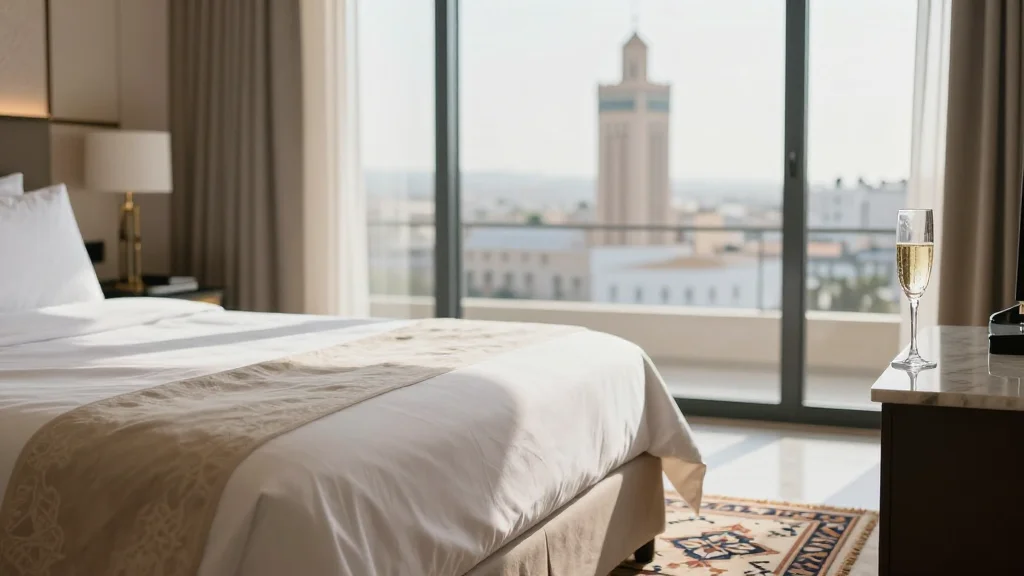
Waldorf Astoria Launches First Moroccan Hotel in Rabat‑Salé’s Mohammed V Tower

Companies Mentioned
Why It Matters
The Waldorf Astoria’s debut in Rabat‑Salé signals a decisive move by global luxury hospitality players into a market that is rapidly professionalizing its tourism sector. By anchoring the brand in Morocco’s tallest tower, Hilton not only taps into the country’s projected 20 million tourist arrivals by 2030 but also sets a new standard for cultural integration in luxury design, encouraging other operators to invest in locally resonant experiences. Beyond the immediate revenue upside, the hotel’s extensive art collection and wellness offerings could catalyze a broader cultural renaissance, drawing international attention to Moroccan artisans, chefs and designers. This creates a virtuous cycle where luxury tourism fuels creative industries, which in turn enrich the guest experience and reinforce Morocco’s reputation as a high‑end destination.
Key Takeaways
- •Waldorf Astoria opens its first Moroccan hotel in the 55‑room Mohammed V Tower, Rabat‑Salé
- •Hotel features one of North Africa’s largest private art collections with nearly 7,000 works
- •Signature restaurant Aldabaran is led by three‑star chef Alain Ducasse
- •Hilton’s Guy Hutchinson cites Morocco’s goal of 20 million tourists by 2030 as a growth driver
- •The property offers a 1,300 sq m event space, positioning it for diplomatic and corporate functions
Pulse Analysis
Hilton’s decision to launch Waldorf Astoria in Rabat‑Salé reflects a calculated bet on the convergence of luxury travel and cultural authenticity. Historically, luxury hotel chains have relied on iconic locations—Paris, New York, Dubai—to cement brand prestige. By moving into Morocco, Hilton is diversifying its geographic risk and tapping a market where luxury demand is rising faster than supply. The brand’s emphasis on a curated art collection and locally inspired design differentiates it from competitors that often import a generic luxury template.
The timing aligns with Morocco’s aggressive tourism strategy, which includes infrastructure upgrades, visa facilitation and a push to attract high‑spending visitors. Waldorf Astoria’s presence could accelerate this agenda by providing a venue that meets the expectations of affluent travelers accustomed to bespoke service. Moreover, the partnership with renowned chefs like Alain Ducasse and Lahcen Hafid signals a commitment to culinary excellence, a key driver of luxury hospitality revenue.
Looking ahead, the hotel’s performance will likely influence Hilton’s rollout plan for additional Waldorf Astoria properties across Africa and the Middle East. Success could validate a model that blends global brand standards with deep local cultural integration, prompting other luxury operators to adopt similar strategies. Conversely, if occupancy falls short of projections, it may caution brands against overextending into emerging markets without a clear demand pipeline. The next quarter will reveal whether the celestial‑themed retreat can truly become a magnet for the world’s most discerning travelers.
Waldorf Astoria Launches First Moroccan Hotel in Rabat‑Salé’s Mohammed V Tower
Comments
Want to join the conversation?
Loading comments...