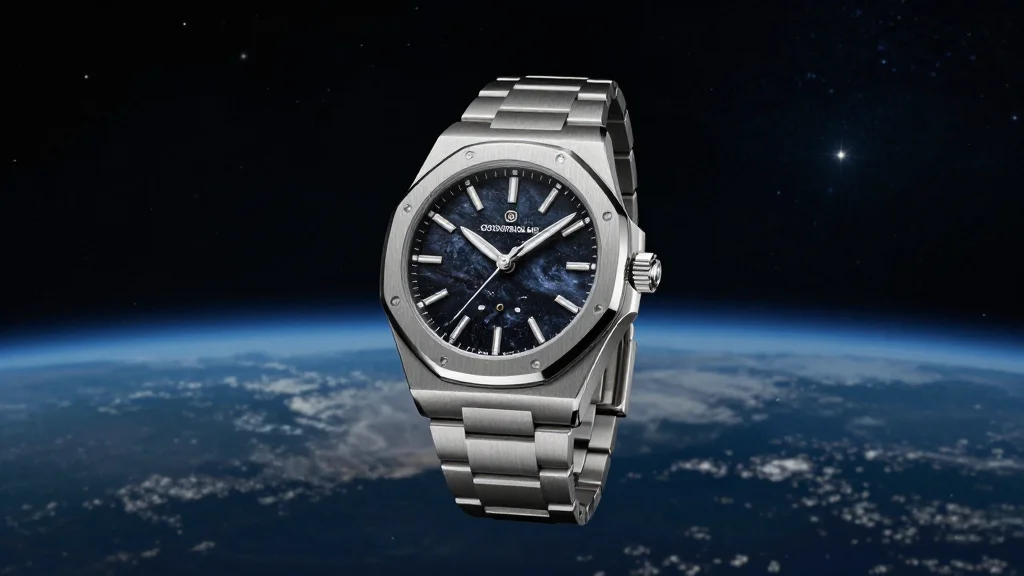
Watches & Wonders 2026 Unveils Space‑Driven Watch Trend Amid Luxury Tariff Concerns

Why It Matters
The emergence of space‑inspired watches marks a pivotal moment for the luxury watch sector, signaling a willingness to invest in high‑risk, high‑reward engineering after a period of tariff‑induced conservatism. By aligning their products with the cultural momentum of commercial spaceflight, brands are tapping into a narrative that resonates with ultra‑high‑net‑worth consumers seeking exclusivity tied to frontier exploration. If successful, this trend could reshape product development cycles, encouraging more manufacturers to allocate R&D budgets toward extreme‑environment durability and novel user interfaces. Conversely, a failure to achieve commercial viability may reinforce the sector’s reliance on heritage and incremental design, slowing the pace of technical innovation.
Key Takeaways
- •IWC’s Pilot’s Venturer Vertical Drive eliminates the crown, using a rotating bezel for winding and setting.
- •Bremont’s Supernova Chronograph features aerospace‑grade shock absorption for launch‑level vibrations.
- •The 2026 show reversed a year of tariff‑driven conservatism, showcasing bold engineering instead of minor updates.
- •Four additional trends—sustainability, digital‑hybrid, maximalist design, heritage reinterpretation—were noted but not detailed.
- •Brands aim to capitalize on the growing public interest in commercial space travel driven by billionaire entrepreneurs.
Pulse Analysis
The space‑centric pivot at Watches & Wonders 2026 reflects a broader strategic recalibration within luxury watchmaking. Historically, the sector has thrived on incremental refinements of classic architectures; however, the confluence of trade policy uncertainty and the cultural cachet of space tourism has forced a re‑evaluation of what constitutes value for affluent buyers. By embedding aerospace engineering principles—crown‑less winding mechanisms, micro‑gravity‑compatible escapements, and shock‑absorbing cases—brands are not merely adding a thematic veneer but are fundamentally re‑engineering the watch as a tool for an emerging environment.
From a competitive standpoint, the absence of Omega, the original Moonwatch custodian, opened a narrative vacuum that newcomers like IWC and Bremont are eager to fill. Their willingness to showcase prototypes at a high‑visibility event suggests confidence in the market’s appetite for technically audacious pieces, even at premium price points. This could trigger a cascade effect, prompting other heritage houses to accelerate their own space‑related R&D pipelines, potentially leading to a new sub‑segment of "orbital horology" within the luxury market.
Looking forward, the true test will be commercial translation. Limited‑edition releases will reveal whether collectors view these innovations as genuine advancements or as gimmicks capitalizing on hype. If demand sustains, we may see a shift in supply chain dynamics, with watchmakers forging new partnerships with aerospace material suppliers and precision engineering firms. Conversely, a tepid market response could reinforce the sector’s reliance on heritage storytelling and incremental design, underscoring the delicate balance between innovation and brand DNA in the luxury watch arena.
Watches & Wonders 2026 Unveils Space‑Driven Watch Trend Amid Luxury Tariff Concerns
Comments
Want to join the conversation?
Loading comments...