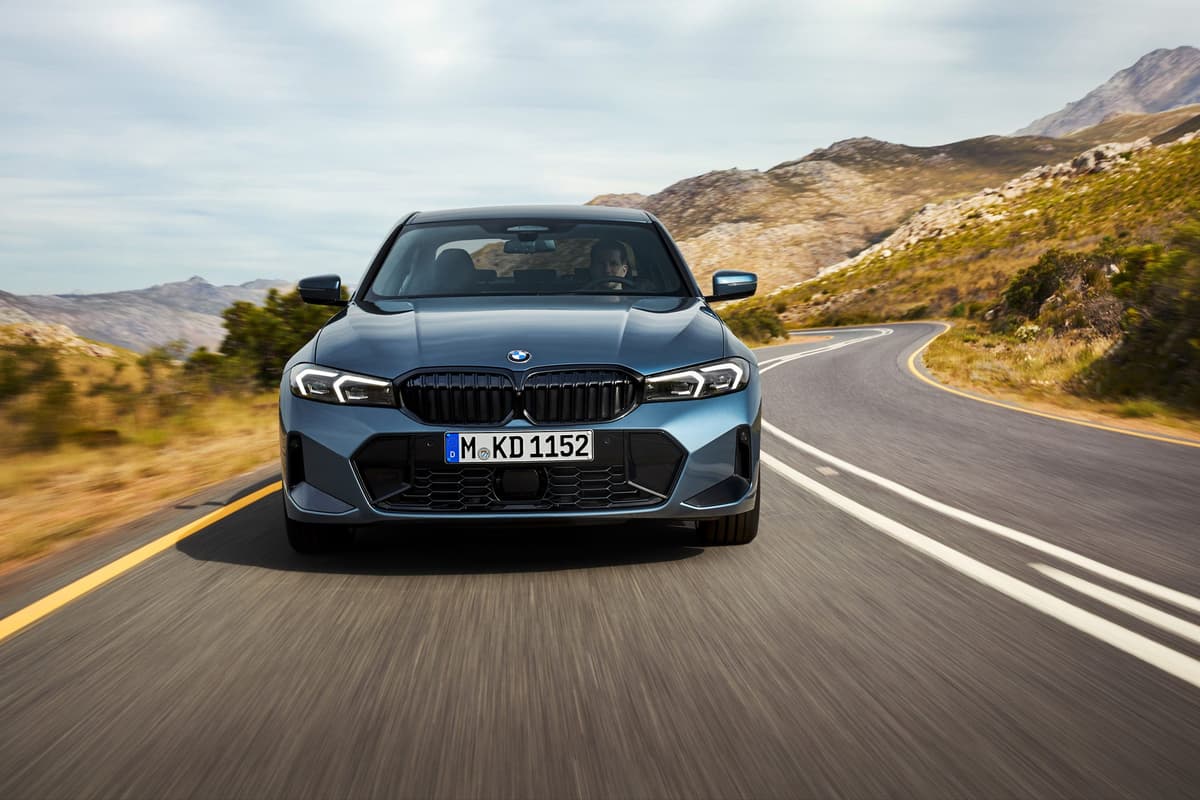
Which Version of the BMW 3-Series Gets You the Most for Your Money?
Companies Mentioned
Why It Matters
Choosing the 330i with selected packages delivers comparable luxury and tech at a lower price, influencing buyer decisions in the competitive compact luxury sedan market. It also illustrates BMW’s shift toward a la carte feature pricing rather than traditional trim hierarchies.
Key Takeaways
- •330i starts at $49,350, offering RWD, digital cockpit, and 18‑inch wheels
- •M340i priced at $63,650 adds 386‑hp engine and standard M Sport features
- •xDrive AWD option costs roughly $2,000 extra, reducing fuel efficiency
- •M Sport package ($2,550) and adaptive suspension ($550) boost handling and style
- •Driver Assistance package ($500) provides adaptive cruise control for added convenience
Pulse Analysis
BMW’s decision to abandon conventional trim levels in the 2025 3‑Series reflects a broader industry trend toward modular pricing. By separating powertrains from feature bundles, the automaker gives consumers granular control over cost and capability. This approach appeals to cost‑conscious luxury buyers who want premium amenities without paying for unnecessary upgrades, and it positions BMW against rivals like Audi and Mercedes‑Benz, which still rely on tiered trim structures.
From a performance standpoint, the 330i’s 255‑hp inline‑four delivers respectable acceleration while preserving fuel efficiency, especially in rear‑wheel‑drive form. The M340i’s 386‑hp six‑cylinder engine, paired with the standard M Sport package, offers a sportier driving experience but at a $14,300 premium. When buyers add the optional xDrive system—about $2,000 extra—they gain all‑wheel traction at the expense of higher consumption, a trade‑off that matters for urban commuters versus enthusiasts. Packages such as Convenience, Premium, and the M Sport add tangible value, turning the base model into a near‑custom vehicle without the price jump of a higher trim.
For the market, BMW’s a la carte strategy could reshape how luxury sedans are priced and sold. Consumers increasingly expect transparency and the ability to pick and choose features, a demand driven by digital configurators and subscription‑style services. By offering high‑impact upgrades like adaptive suspension and advanced driver assistance at modest incremental costs, BMW not only boosts average transaction price but also enhances perceived value. As other manufacturers observe the reception of this model, we may see a shift toward more flexible, component‑based pricing across the premium segment, ultimately giving buyers more control over their vehicle’s final cost and capability.
Which Version of the BMW 3-Series Gets You the Most for Your Money?
Comments
Want to join the conversation?
Loading comments...