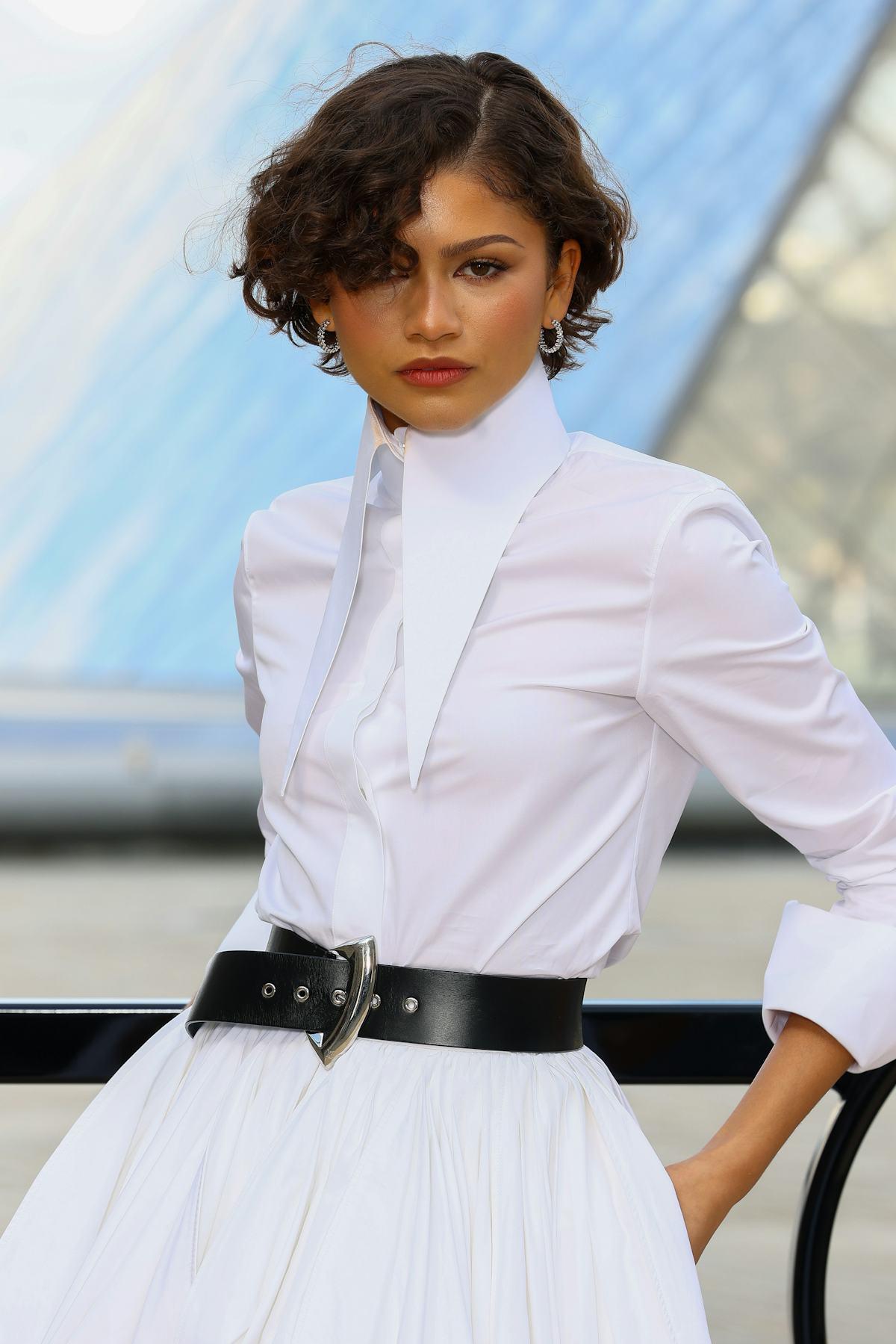
Zendaya Fuels Wedding Speculation in Bridal White High-Low Dress
•March 10, 2026
0
Why It Matters
The appearance demonstrates how celebrity styling can generate massive brand buzz and shape consumer narratives, while also highlighting the power of rumor‑driven media cycles in luxury fashion.
Key Takeaways
- •Zendaya wore white high‑low dress at Louis Vuitton show
- •Gold band sparked renewed wedding rumors with Tom Holland
- •Stylist Law Roach claimed couple already married on TV
- •Dress blends bridal elements with high fashion runway aesthetics
- •Speculation boosts Louis Vuitton media coverage and brand buzz
Pulse Analysis
Zendaya’s bridal‑inspired ensemble at Paris Fashion Week illustrates the symbiotic relationship between high‑profile talent and luxury houses. By pairing a classic white shirt silhouette with a dramatic high‑low hem and subtle black accents, Louis Vuitton created a runway moment that resonated far beyond the Louvre’s walls. The gold band on her finger acted as a visual cue, instantly linking the outfit to the ongoing wedding narrative surrounding the actress and Tom Holland, and turning a fashion presentation into a headline‑making event.
The ripple effect of such celebrity‑driven speculation is palpable across social platforms and entertainment news outlets. When a star’s outfit doubles as a rumor catalyst, it fuels organic conversation, driving millions of impressions without traditional advertising spend. Brands like Louis Vuitton benefit from heightened visibility, as the story intertwines product aesthetics with personal drama, prompting consumers to associate the label with aspirational lifestyles. This phenomenon underscores the modern marketer’s reliance on narrative hooks to amplify reach and deepen engagement.
Looking ahead, luxury fashion is likely to lean further into storytelling that blurs the line between runway and real life. Designers may craft collections with built‑in narrative elements—such as bridal motifs or symbolic accessories—to invite speculation and user‑generated content. As audiences crave authentic, shareable moments, the industry’s success will hinge on orchestrating moments that feel both spontaneous and strategically aligned with brand identity, ensuring that each runway look can become the next viral conversation starter.
Zendaya Fuels Wedding Speculation in Bridal White High-Low Dress
0
Comments
Want to join the conversation?
Loading comments...