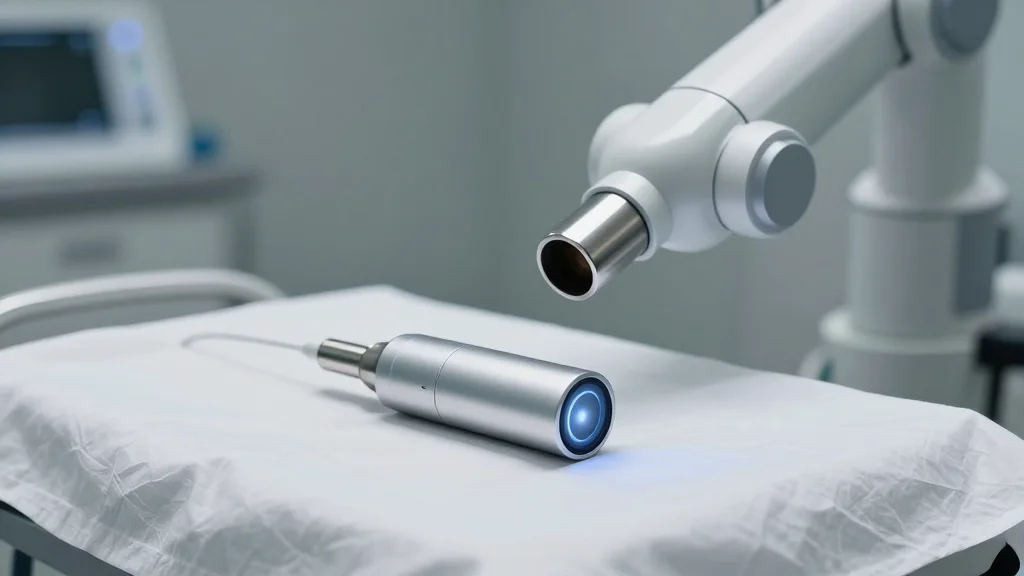
DePuy Synthes Announces Agreement to Acquire Miniature Radiofrequency Tracking Technology Across Its Joint Reconstruction Portfolio
Key Takeaways
- •DePuy Synthes secures rights to MinMaxMedical's Gemtrack RF tracker
- •RF tracking eliminates line‑of‑sight and reduces invasive pins in surgery
- •Integration planned across VELYS platform for shoulder, hip, knee procedures
- •First‑to‑market miniature RF tracker could set new orthopaedic standard
- •Regulatory approval and product rollout timelines remain pending
Pulse Analysis
The acquisition of Gemtrack’s RF tracking technology marks a strategic pivot for DePuy Synthes, moving beyond the conventional infrared camera systems that dominate orthopaedic navigation today. RF trackers emit low‑power signals that can be detected through soft tissue, allowing continuous, high‑precision monitoring of instrument position without the need for external cameras or bulky reference arrays. This capability not only simplifies the operating‑room setup but also reduces the risk of line‑of‑sight interruptions that can compromise accuracy during complex joint reconstructions.
From a market perspective, the introduction of a miniature RF tracker could reshape the competitive landscape. Major players such as Stryker and Zimmer Biomet have invested heavily in infrared‑based platforms, yet they face growing demand for less invasive, more reliable solutions. By embedding RF tracking into its VELYS ecosystem, DePuy Synthes can offer a differentiated value proposition—enhanced workflow efficiency, reduced instrument clutter, and potentially shorter procedure times. Hospitals, under pressure to lower costs and improve throughput, are likely to favor technologies that deliver measurable operating‑room savings while maintaining or improving clinical outcomes.
Regulatory pathways and adoption timelines remain the critical hurdles. The RF tracker must satisfy both FDA clearance and European CE marking, which will involve rigorous clinical validation to prove safety and efficacy across shoulder, hip and knee applications. If DePuy Synthes can navigate these hurdles swiftly, it could set a new industry benchmark for integrated image‑guided and robotic‑assisted joint surgery, compelling competitors to accelerate their own RF initiatives or risk obsolescence. The move underscores a broader trend toward digital, data‑driven orthopaedics, where precision, speed, and minimal invasiveness drive the next wave of surgical innovation.
DePuy Synthes Announces Agreement to Acquire Miniature Radiofrequency Tracking Technology Across its Joint Reconstruction Portfolio
Comments
Want to join the conversation?