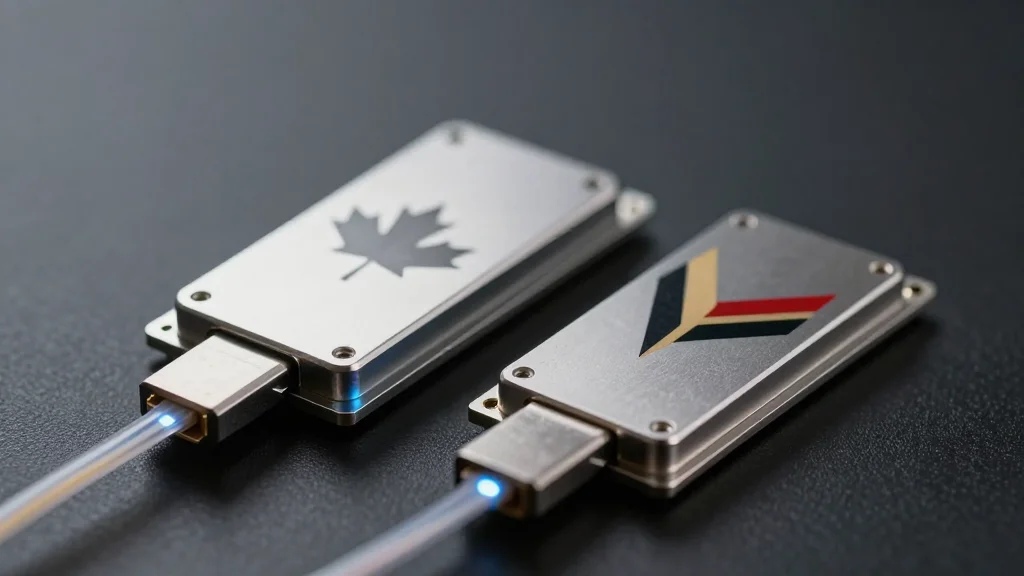
Cohere and Aleph Alpha Enter Merger Talks Backed by German Government

Companies Mentioned

Why It Matters
The merger talks signal a strategic shift toward cross‑border consolidation in the generative‑AI space, where scale and data access are becoming decisive competitive factors. By aligning a North‑American model‑provider with a European multilingual specialist, the deal could create a rare sovereign AI platform that satisfies stringent EU data‑privacy standards while retaining the agility of a public‑listed tech firm. For investors, the partnership offers a clearer path to profitability through diversified revenue streams—enterprise API usage, government contracts, and potential licensing of joint models. It also raises questions about how regulators will treat a transatlantic AI champion that straddles divergent privacy regimes, potentially prompting new guidelines for future AI M&A activity.
Key Takeaways
- •Cohere (Canada) and Aleph Alpha (Germany) are in merger talks as of April 10, 2026.
- •German Digital Minister Karsten Wildberger pledged government support and potential as a key customer.
- •Cohere brings enterprise‑API expertise; Aleph Alpha adds multilingual, EU‑compliant models.
- •Deal reflects broader consolidation trend in generative AI amid rising compute costs and regulatory pressure.
- •Closing would require approvals in Canada, the EU and the United States, with a likely timeline later in 2026.
Pulse Analysis
The Cohere‑Aleph Alpha talks illustrate how AI firms are moving beyond national silos to capture scale that rivals the U.S. incumbents. Historically, AI mergers have been domestic—think of OpenAI’s partnership with Microsoft—because of data residency and regulatory concerns. This cross‑border approach flips that script, leveraging Berlin’s willingness to act as a cornerstone customer to mitigate market risk and to satisfy European data‑sovereignty expectations.
From a market perspective, the combined entity could command a broader addressable market, spanning North‑American enterprise customers and European public‑sector contracts. That dual‑market exposure may unlock a valuation premium, especially if the merged firm can demonstrate cost efficiencies in model training and inference through shared infrastructure. However, the deal also faces headwinds: antitrust scrutiny in three jurisdictions, cultural integration challenges, and the need to harmonize differing corporate governance standards.
Looking ahead, the success of this merger could set a precedent for other AI players seeking to blend technical strengths with geopolitical advantage. If Cohere and Aleph Alpha close the deal and secure Berlin’s flagship contracts, they may inspire a wave of similar transatlantic alliances, reshaping the competitive map of generative AI and prompting regulators to craft clearer cross‑border M&A frameworks.
Cohere and Aleph Alpha Enter Merger Talks Backed by German Government
Comments
Want to join the conversation?
Loading comments...