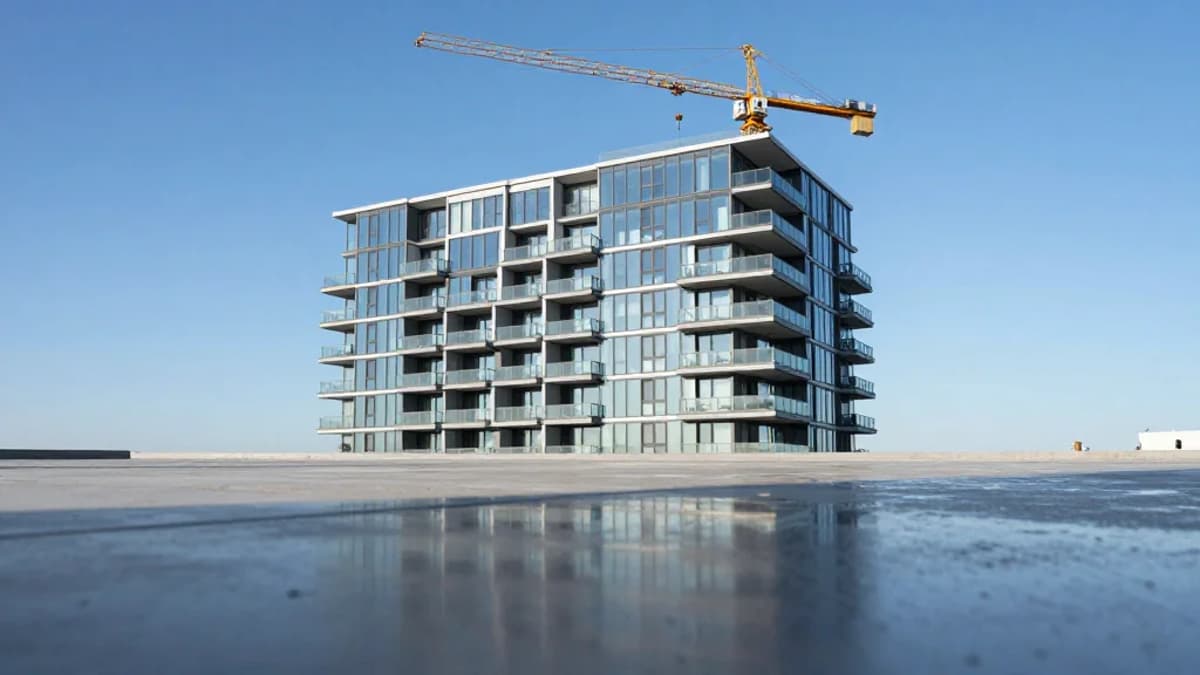
Hulking Wilmington Office Slated For Resi Conversion Following Life Sciences Firm's Exit
•February 19, 2026
0
Why It Matters
The conversion reflects a broader shift from surplus office space to mixed‑use assets, boosting Wilmington’s housing supply and downtown vitality while preserving a biotech anchor.
Key Takeaways
- •BPG buys 500K SF Bracebridge office for mixed-use conversion
- •Upper floors become residential; lower floors stay office/retail
- •Incyte retains 80K SF lease after sale
- •Widener Law School may occupy Bracebridge II space
- •Project slated for completion by end‑2027
Pulse Analysis
Downtown Wilmington has seen a steady rise in office vacancy since the pandemic, prompting developers to explore adaptive reuse strategies. Large, monolithic office towers built in the 1990s, such as the Bracebridge complex, are increasingly viewed as candidates for mixed‑use conversion. Converting surplus office floors into apartments not only addresses a regional housing shortage but also injects foot traffic into otherwise dormant streets. The trend mirrors similar projects in Philadelphia and Boston, where developers have leveraged tax incentives and market demand to reshape legacy office campuses into vibrant, 24‑hour neighborhoods.
Buccini Pollin Group’s acquisition of the 500,000‑square‑foot Bracebridge I and the adjacent 145,000‑square‑foot Bracebridge III marks a decisive shift toward a hybrid model. The plan retains office and retail on the ground level while converting the upper stories into residential units, softening the building’s fortress‑like façade. Incyte will continue to occupy 80,000 sq ft, preserving a biotech anchor that supports the emerging life‑science corridor. The nearby relocation of Widener University’s Delaware Law School could bring over a thousand students and faculty, further energizing local retail and transit usage.
The transaction also highlights the financial dynamics of large‑scale redevelopment. Incyte secured roughly $15 million in state incentives for its original office project, though it remains unclear whether those credits will transfer to BPG. By handing the $100 million construction effort to a specialist developer, the life‑science firm can focus on its core mission of cancer research while the city benefits from job creation, albeit potentially below the originally promised 450 positions. If successful, the Bracebridge conversion could set a template for other legacy office assets across the Mid‑Atlantic.
Hulking Wilmington Office Slated For Resi Conversion Following Life Sciences Firm's Exit
0
Comments
Want to join the conversation?
Loading comments...