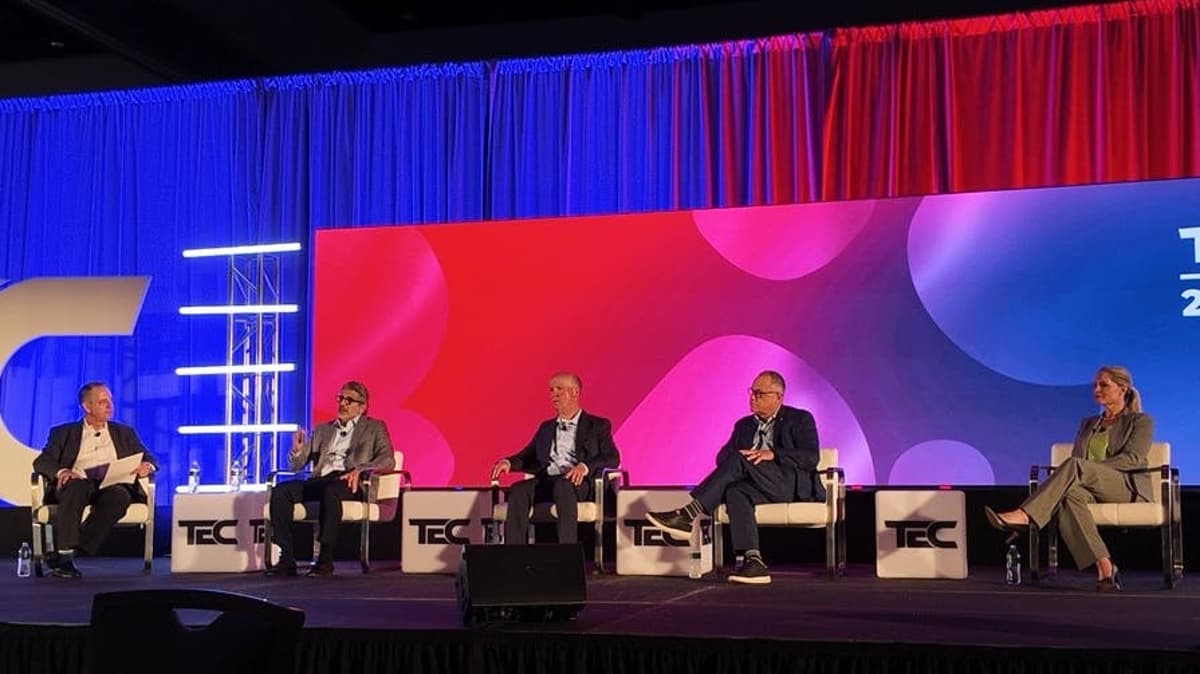
Industry Leaders See Tailwinds, Tariff Uncertainty, and a Talent Imperative at PSA-TEC 2026
Why It Matters
Robust capital inflows and rapid AI adoption promise revenue expansion, but regulatory uncertainty and a looming talent gap could constrain the sector’s upside if not addressed promptly.
Key Takeaways
- •North American integration market $20B, set to double by 2030
- •Raymond James completed ~100 deals since 2021, valuations up 1.5×
- •State AI restriction proposals target facial‑recognition and workplace surveillance
- •FCC NextNav 900 MHz petition could disrupt alarm and access systems
- •Talent, talent, talent identified as top five‑year priority for integrators
Pulse Analysis
The security integration sector is entering a rare growth phase, buoyed by abundant private‑equity capital and a clear macro‑trend toward heightened physical and cyber protection. Raymond James alone has facilitated close to a hundred deals since 2021, pushing deal sizes up roughly 1.5 times. Analysts estimate the North American market, currently around $20 billion, will more than double by 2030, creating fertile ground for consolidation among the roughly 70 % of firms that remain regional. This influx of funding not only fuels M&A activity but also underwrites higher R&D spend and aggressive hiring, positioning the industry as a “darling” for long‑term investors.
At the same time, AI is migrating from a product differentiator to an operational engine within integrators. Companies like Unlimited Technology are deploying enterprise‑grade tools such as Microsoft Copilot and custom AI agents to automate sales, engineering, and back‑office functions, freeing staff for higher‑value work. However, the rapid rollout is shadowed by a wave of state‑level proposals restricting facial‑recognition and workplace surveillance AI, and a pending FCC petition from NextNav to repurpose the 900 MHz band—both of which could force costly redesigns of alarm, access‑control, and wireless sensor networks. Navigating these regulatory currents will require proactive lobbying and technical mitigation strategies.
The panel’s most urgent warning centered on talent. With the market expanding, a shortage of skilled technicians and engineers threatens to bottleneck growth. Initiatives such as the FAST program and targeted veteran recruitment aim to broaden the pipeline, but integrators must also evolve contract models, adopt multi‑year service agreements, and invest in continuous AI literacy to retain staff. Meanwhile, tariff volatility adds another layer of complexity, prompting manufacturers to diversify supply chains and embed cost‑pass‑through mechanisms. Companies that align capital, technology, and people strategies will be best positioned to capture the next wave of security demand.
Industry Leaders See Tailwinds, Tariff Uncertainty, and a Talent Imperative at PSA-TEC 2026
Comments
Want to join the conversation?
Loading comments...