Molex to Acquire Israel’s Teramount, Boosting Co‑Packaged Optics Portfolio

Why It Matters
The Molex‑Teramount deal illustrates how large connectivity manufacturers are moving beyond traditional copper interconnects to capture the fast‑growing optical market driven by AI and hyperscale data centers. By securing a detachable, wafer‑level coupling technology, Molex not only expands its product portfolio but also gains a strategic foothold in the nascent CPO ecosystem, where scalability and serviceability are critical. For the M&A landscape, the transaction highlights a trend of vertical integration: companies with broad system‑level capabilities are acquiring niche photonics innovators to control more of the value chain. This could accelerate further consolidation as rivals seek similar end‑to‑end solutions, potentially reshaping the competitive dynamics of the optical interconnect sector over the next few years.
Key Takeaways
- •Molex agreed to acquire Israel‑based Teramount Ltd., developer of detachable fiber‑to‑chip solutions.
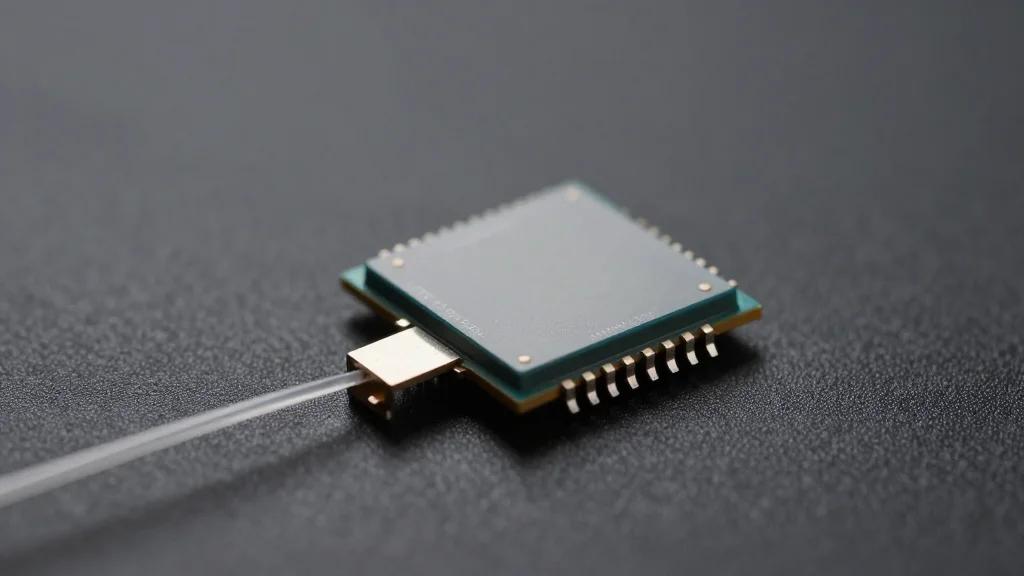
- •The acquisition targets Teramount’s TeraVERSE platform, a passive, wafer‑level self‑aligning coupler for CPO.
- •Deal expected to close in the first half of 2026; financial terms were not disclosed.
- •Molex will retain Teramount’s Jerusalem design center while leveraging its global manufacturing scale.
- •Legal advisors: Goldfarb Gross Seligman (Molex) and Gornitzky & Co. (Teramount).
Pulse Analysis
Molex’s move reflects a strategic pivot from legacy connectivity to high‑density optical solutions that can keep pace with AI‑driven data traffic. The company’s existing portfolio—spanning copper, fiber, and now detachable photonic couplers—creates a rare end‑to‑end offering that could lock in large hyperscale customers seeking a single supplier for both hardware and system integration. Historically, the optical interconnect market has been fragmented, with many small innovators focusing on niche components. By absorbing Teramount, Molex not only eliminates a potential competitor but also accelerates its own R&D timeline, sidestepping the years typically required to develop a comparable passive alignment technology in‑house.
From an M&A perspective, the transaction signals that capital is flowing toward photonics assets that can be rapidly commercialized at scale. The lack of disclosed purchase price suggests a deal structured around strategic value rather than pure financial metrics, a pattern we’ve seen in other recent tech‑hardware consolidations. As AI workloads continue to push bandwidth requirements beyond 400 Gb/s per lane, the pressure on CPO suppliers to deliver manufacturable, serviceable solutions will intensify. Molex’s acquisition positions it to set pricing and performance benchmarks, potentially forcing rivals to pursue similar buy‑outs or joint ventures.
Looking ahead, the success of this integration will hinge on Molex’s ability to translate the combined technology into volume shipments within a tight product cycle. If it can deliver a cost‑effective, high‑density CPO module by late 2026, the company could capture a sizable share of the projected $15 billion optical interconnect market by 2030. Failure to do so, however, may open the door for other players—such as Intel’s own photonics group or emerging Chinese manufacturers—to fill the gap, prompting a second wave of acquisitions aimed at bolstering their own CPO capabilities.
Molex to Acquire Israel’s Teramount, Boosting Co‑Packaged Optics Portfolio
Comments
Want to join the conversation?
Loading comments...