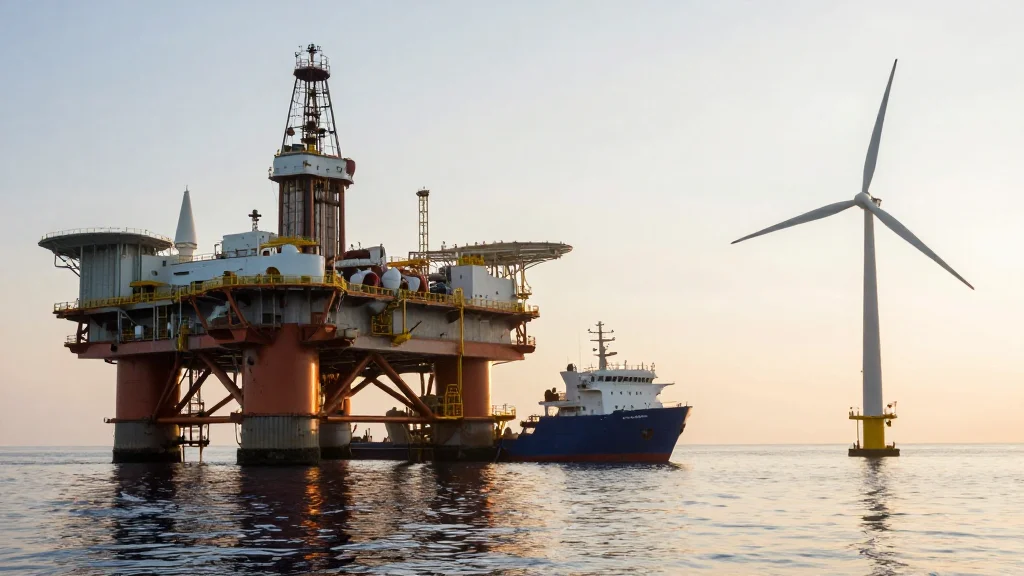
Seatrium's Shipyard Merger Creates $9 B Offshore Oil and Wind Powerhouse

Companies Mentioned
Why It Matters
The Seatrium merger illustrates how consolidation can rescue financially distressed shipbuilders and create entities capable of competing for multi‑billion‑dollar offshore contracts. By combining Sembcorp Marine’s engineering depth with Keppel’s project execution experience, Seatrium now commands a market share that can influence pricing and capacity in the offshore oil and wind sectors. The deal also demonstrates the strategic importance of diversified revenue streams—oil, gas, and renewables—allowing the firm to navigate volatile commodity cycles while supporting the global energy transition. For investors and policymakers, Seatrium’s rapid swing from a $1.5 billion loss to a $254 million profit highlights the upside potential of well‑executed M&A in capital‑intensive industries. The company’s success may spur further consolidation among smaller Asian shipyards seeking scale, potentially reshaping the competitive dynamics against Chinese and Korean giants.
Key Takeaways
- •Seatrium completed the merger of Sembcorp Marine and Keppel Offshore, forming a $9 billion revenue offshore leader.
- •Secured an 11 billion SGD ($8.2 billion) contract with Petrobras for two all‑electric FPSOs, delivery due 2029.
- •2025 net profit rose to 324 million SGD ($254 million), more than double the previous year’s loss.
- •Revenue grew 24% to 11.5 billion SGD ($9.0 billion), with oil & gas >70% and offshore wind ~20% of sales.
- •CEO Chris Ong cites high oil prices (~$100/barrel) as a catalyst for new offshore projects.
Pulse Analysis
Seatrium’s merger is a textbook case of scale‑driven value creation in a sector where fixed costs dominate. By eliminating duplicate facilities and centralizing procurement under the “One Seatrium” model, the firm reduced overhead and improved its ability to negotiate component pricing, a critical advantage when global supply chains are under stress. Historically, shipbuilding has suffered from chronic overcapacity; Seatrium’s approach of modular, globally sourced components mirrors trends in aerospace and automotive manufacturing, where flexibility and cost control are paramount.
The strategic timing of the Petrobras contract cannot be overstated. While many offshore players are scrambling to pivot toward renewables, Seatrium has locked in a long‑term, high‑margin oil‑focused deal that funds its wind ambitions. This dual‑track strategy mitigates the risk of a premature shift away from fossil fuels, ensuring cash flow while the offshore wind market matures. Moreover, the all‑electric FPSO design positions Seatrium at the forefront of decarbonizing offshore production, potentially opening doors to carbon‑intensive clients seeking greener solutions.
Looking ahead, the merger sets a precedent for further consolidation in the Asia‑Pacific shipbuilding arena. Smaller yards lacking the capital to invest in new technologies or absorb supply‑chain shocks may become acquisition targets for larger, integrated players like Seatrium. If the firm can sustain its profit growth and deliver on its high‑profile contracts, it could become the benchmark for a new generation of offshore manufacturers that blend traditional oil expertise with renewable capabilities, reshaping the competitive landscape for years to come.
Seatrium's Shipyard Merger Creates $9 B Offshore Oil and Wind Powerhouse
Comments
Want to join the conversation?
Loading comments...