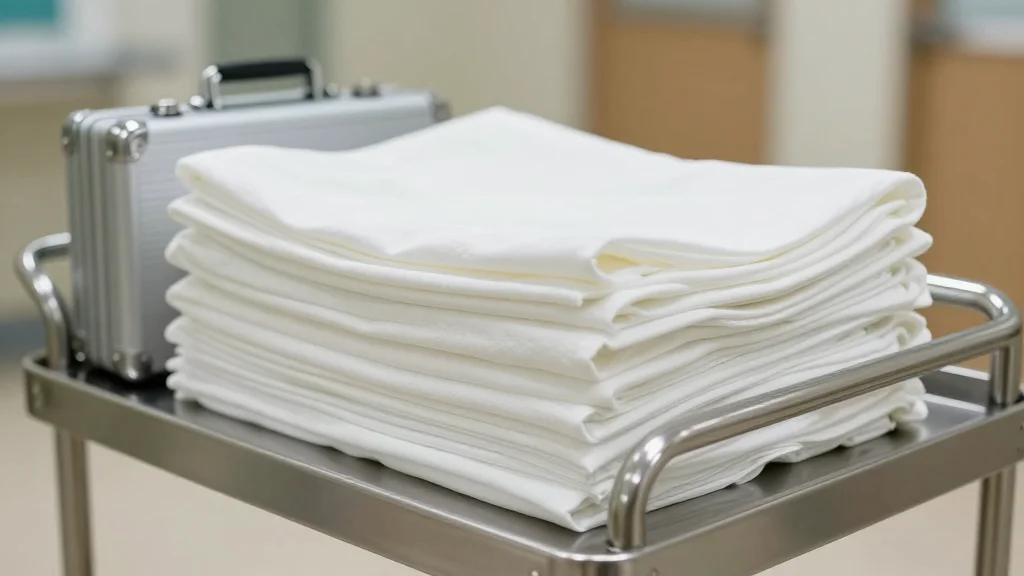
Sterling Group Acquires Healthcare Linen Services Group, Expanding Healthcare Support Portfolio

Companies Mentioned
Why It Matters
The deal underscores a broader trend of private‑equity consolidation in non‑clinical healthcare services, a segment that has attracted $12 billion of investment capital in the past two years alone. By adding a platform with 23 facilities and a diversified client base, Sterling not only expands its revenue base but also gains leverage to negotiate pricing and service contracts with large health systems. The acquisition could accelerate the shift toward outsourced support functions, prompting hospitals to re‑evaluate in‑house versus third‑party models for cost and quality control. Moreover, the transaction highlights the strategic importance of operational expertise in scaling mission‑critical services. Sterling’s “Seven Levers” framework—focused on cost reduction, capacity optimization, technology integration, talent development, and customer experience—offers a template that could be replicated across other fragmented healthcare support markets, such as sterile processing and medical equipment maintenance. If successful, the model may set a benchmark for future private‑equity deals in the sector.
Key Takeaways
- •Sterling Group completes acquisition of Healthcare Linen Services Group on April 10, 2026.
- •HLSG operates 23 linen facilities across 13 states, serving thousands of healthcare institutions.
- •Transaction terms were not disclosed; Sterling manages roughly $9 billion in assets.
- •York Private Equity exits after a four‑year partnership that drove transformational growth.
- •Sterling plans to apply its Seven Levers operational framework to scale and optimize HLSG.
Pulse Analysis
Sterling’s purchase of HLSG reflects a calculated bet on the durability of outsourced healthcare services. While many private‑equity firms chase high‑growth tech or biotech deals, Sterling is doubling down on the steady, cash‑generating nature of industrial‑grade services that are insulated from macro‑economic swings. The firm’s historical focus on basic manufacturing and distribution gives it a playbook for standardizing processes, a critical advantage in a sector where service consistency directly impacts patient safety.
Historically, the healthcare linen market has been fragmented, with regional players operating under disparate systems. By consolidating these operators, Sterling can achieve economies of scale in procurement, logistics, and technology deployment—particularly in automation and RFID tracking that improve inventory accuracy and reduce labor costs. If Sterling can lift HLSG’s EBITDA margin by even 2‑3 percentage points, the deal could generate upwards of $30 million in incremental annual cash flow, reinforcing the appeal of similar roll‑up strategies.
Looking ahead, the acquisition may act as a catalyst for further M&A activity in ancillary healthcare services. Competitors such as Bain Capital’s healthcare platform and KKR’s life‑sciences portfolio have already signaled interest in expanding beyond core clinical assets. As hospitals continue to prioritize cost containment, the market for outsourced support functions is likely to become a hotbed for private‑equity competition, with Sterling positioned as an early mover capable of setting operational standards that others will have to match.
Sterling Group Acquires Healthcare Linen Services Group, Expanding Healthcare Support Portfolio
Comments
Want to join the conversation?
Loading comments...