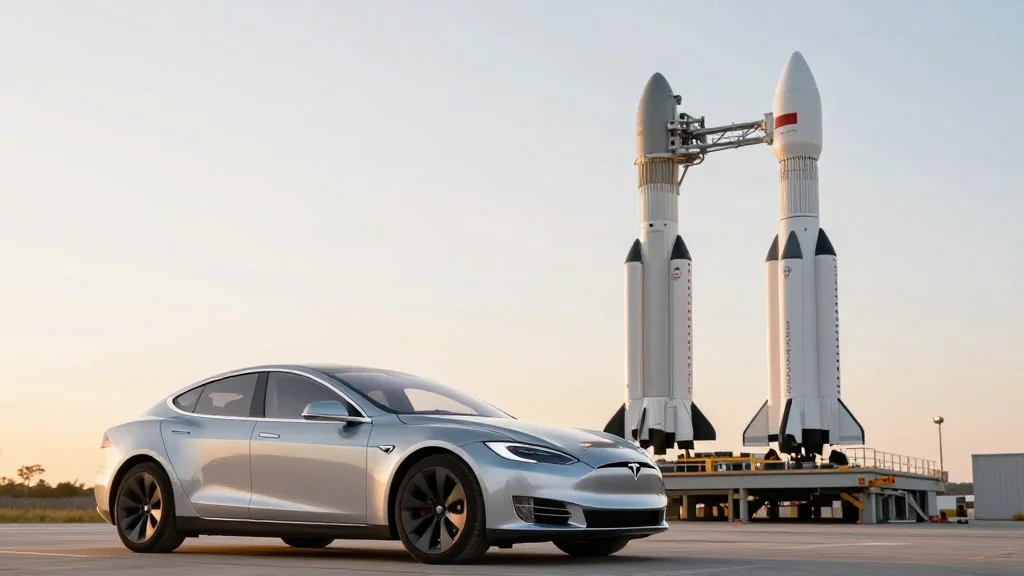
Tesla (TSLA) and SpaceX Merger Would Be Musk’s 4th Billion-Dollar Self-Deal
Why It Matters
The deal would lock Tesla shareholders into a massive conglomerate controlled by Musk, raising serious fiduciary‑duty and governance concerns while reshaping the tech‑industrial landscape.
Key Takeaways
- •Musk controls 85% of SpaceX voting power vs 20% Tesla equity
- •SpaceX IPO targets up to $1.75 trillion valuation, $75 billion raise
- •Prior self‑deals include $2.6 billion SolarCity and $44 billion Twitter acquisitions
- •Analysts see 80‑90% merger odds by early 2027, markets less bullish
- •Potential $3 trillion combined entity raises fiduciary‑duty concerns for Tesla shareholders
Pulse Analysis
Musk’s track record of shuffling assets between companies he dominates has turned corporate governance into a high‑stakes game of self‑dealing. From the 2016 SolarCity acquisition—criticized as a bailout of a cash‑strapped sibling—to the $44 billion Twitter purchase and the subsequent xAI‑X transaction, each move leveraged Musk’s dual‑board positions to inflate valuations without proportional performance gains. This pattern has left Tesla as the primary conduit for private‑capital risk, prompting lawsuits alleging breaches of fiduciary duty and drawing scrutiny from regulators wary of conflicts inherent in super‑voting structures.
SpaceX’s upcoming IPO, slated for June 12 under the ticker SPCX, aims for a headline‑making $1.75 trillion market cap and a $75 billion capital raise—the largest public offering ever. Proponents argue that merging Tesla’s manufacturing scale and energy storage with SpaceX’s satellite network, Starlink, and AI capabilities could create a $3‑plus‑trillion technology behemoth. Yet the valuation rests on speculative revenue streams, including projected Mars missions and space‑based data centers, which remain far from proven. While Wedbush’s Dan Ives assigns an 80‑90% probability to a merger by 2027, prediction‑market odds linger around 33%, reflecting investor skepticism about the strategic fit and the financial prudence of such a union.
For shareholders, the stakes are unprecedented. A merger would effectively bind Tesla’s $1.6 trillion market value to a SpaceX entity where Musk wields near‑absolute voting control, magnifying exposure to his private ventures—Twitter, xAI, and other speculative projects. The governance imbalance could trigger further legal challenges and compel regulators to examine the adequacy of disclosure and shareholder protections. Even if the combined firm unlocks operational synergies, the overarching risk lies in Musk’s ability to set terms that favor his private holdings at the expense of public investors, a dynamic that could reshape how future mega‑mergers are evaluated by boards and markets alike.
Tesla (TSLA) and SpaceX merger would be Musk’s 4th billion-dollar self-deal
Comments
Want to join the conversation?
Loading comments...