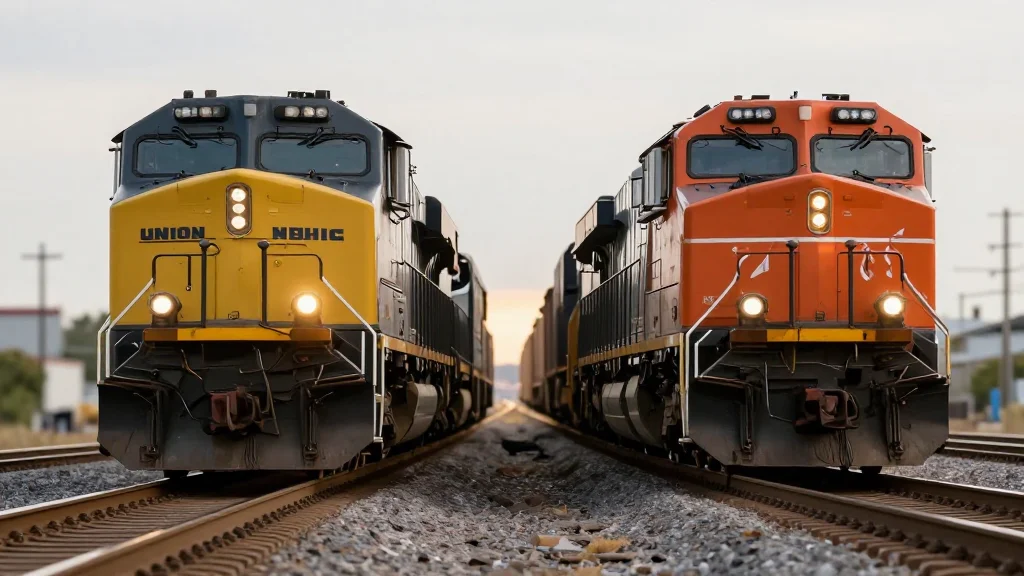
Union Pacific, Norfolk Southern Revive $85 B Coast‑to‑coast Rail Merger as STB Starts 30‑day Review

Why It Matters
The revived UP‑NS merger represents the largest consolidation in U.S. freight rail history, with the potential to redefine coast‑to‑coast logistics. A combined network could streamline routing, lower intermodal costs, and shift millions of truck trips to rail, impacting highway congestion, emissions, and the trucking industry’s bottom line. Conversely, the merger raises antitrust questions about market concentration among the six Class I railroads, a concern that could set precedents for future infrastructure deals across transportation sectors. The outcome of the STB review will also signal how aggressively regulators will enforce competition standards in an era of megadeals. A favorable ruling could embolden other large‑scale consolidations, while a rejection would reinforce a more fragmented rail market and could spur alternative collaborative models, such as joint ventures or shared‑infrastructure agreements, that avoid full ownership integration.
Key Takeaways
- •Union Pacific and Norfolk Southern filed an amended $85 billion merger application, restarting a 30‑day STB review.
- •Railroads claim the deal will save shippers $3.5 billion annually and divert 2.1 million trucks from highways.
- •The revised filing includes a commitment to divest control of the Terminal Railroad Association of St. Louis.
- •Opposition coalition includes BNSF, CPKC, Teamsters Rail Conference, and major industry groups.
- •Comments on the filing are due by May 8; the STB’s decision will shape the future of U.S. freight rail.
Pulse Analysis
The UP‑NS merger is a textbook case of scale‑driven strategy meeting regulatory scrutiny. By aggregating the two largest Class I networks, the combined entity would control roughly 45 % of U.S. rail mileage, creating a single‑line corridor that could shave days off cross‑country shipments. The railroads’ reliance on full‑traffic data is a savvy move to pre‑empt the STB’s typical reliance on sampled data, but it also opens the door for competitors to challenge the methodology and the assumptions about cost savings.
Historically, rail mergers have been incremental—most notably the 1999 BNSF‑Santa Fe deal—yet this proposal pushes the envelope both financially and operationally. The $85 billion price tag dwarfs prior transactions and signals that the rail industry believes a coast‑to‑coast platform is essential to compete with the efficiency gains of trucking and emerging intermodal technologies. If approved, the merger could accelerate a shift toward rail‑centric supply chains, prompting shippers to renegotiate contracts and potentially spurring investment in rail‑first logistics hubs.
However, the opposition coalition underscores a growing political and industry appetite for preserving competition. Their diverse membership—from agricultural lobbies to labor unions—suggests that any perceived advantage for the merged carrier could translate into broader pushback against consolidation in other transport sectors, such as trucking and air cargo. The STB’s decision will therefore be watched not only for its immediate impact on freight rates but also for its broader message about the limits of market concentration in critical infrastructure. Stakeholders should prepare for a scenario where the board imposes divestitures, operational constraints, or even a full block, which would force the railroads to explore alternative partnership models that balance efficiency with antitrust compliance.
Union Pacific, Norfolk Southern revive $85 B coast‑to‑coast rail merger as STB starts 30‑day review
Comments
Want to join the conversation?
Loading comments...