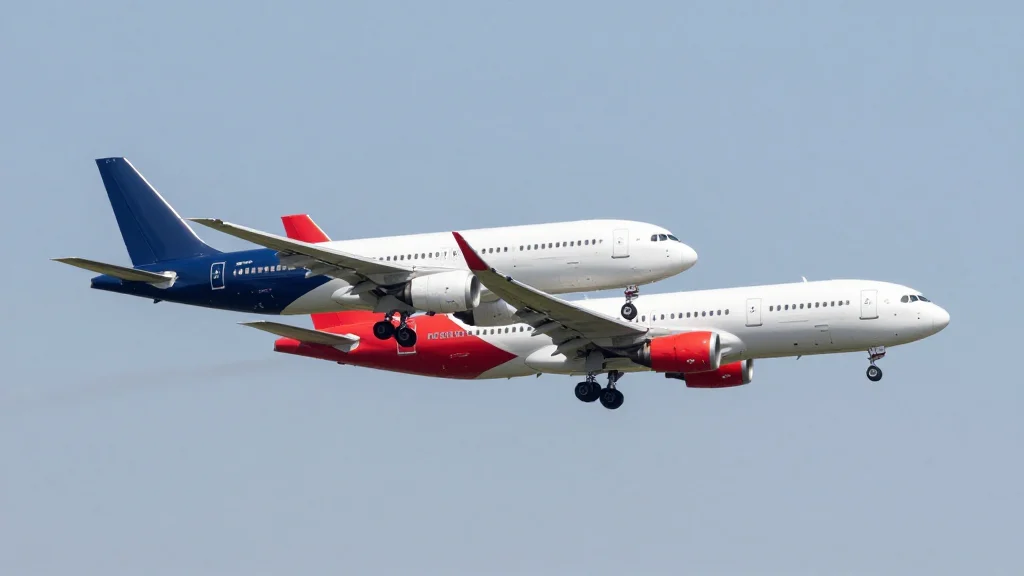
United Airlines Floats Merger with American Airlines, Potentially Creating World's Largest Carrier

Companies Mentioned
Why It Matters
The reported United‑American merger talks signal a possible reshaping of the U.S. airline industry, where consolidation could further concentrate market power among a few dominant players. A combined carrier controlling 40% of domestic capacity would have significant leverage over pricing, route planning, and labor negotiations, potentially leading to higher fares and reduced consumer choice if antitrust safeguards are not imposed. For the broader M&A landscape, the deal illustrates how sector‑specific pressures—such as soaring fuel costs and competitive threats from state‑backed foreign airlines—can drive strategic consolidation even in heavily regulated markets. The outcome will set a precedent for future airline mergers, influencing how regulators balance competition concerns with industry stability and how investors assess the risk‑return profile of large‑scale transportation deals.
Key Takeaways
- •United CEO Scott Kirby raised merger idea with American during a White House meeting
- •Combined airline would control ~40% of U.S. domestic capacity
- •Shares of United (+2%) and American (+1.8%) rose on speculation
- •DOJ antitrust review expected; potential divestiture of overlapping routes
- •Merger seen as a response to rising fuel costs and competition from state‑backed carriers
Pulse Analysis
The United‑American merger conversation underscores a pivotal moment for airline M&A, where strategic imperatives clash with regulatory safeguards. Historically, the U.S. airline sector has seen a handful of mega‑mergers—Delta‑Northwest, United‑Continental, and American‑US Airways—each reshaping the competitive map but also prompting rigorous antitrust scrutiny. This proposed tie‑up would be the most concentrated to date, raising the stakes for the DOJ, which has grown increasingly vigilant after recent challenges to airline consolidations that threatened market competition.
From a financial perspective, the merger could unlock significant synergies: combined purchasing power for aircraft and fuel, streamlined operations across overlapping hubs, and a unified loyalty program that could boost ancillary revenue. Yet, the upside is tempered by the risk of forced asset sales and the integration complexities that have plagued past airline mergers, often leading to service disruptions and cultural clashes. Investors must weigh the promise of a stronger balance sheet against the uncertainty of regulatory outcomes and potential integration costs.
Looking ahead, the deal could accelerate a wave of consolidation across other transportation sectors where scale is becoming a defensive necessity against global competitors. If United and American navigate the antitrust gauntlet successfully, it may embolden other carriers to pursue similar mega‑mergers, reshaping the competitive dynamics not just in aviation but in broader logistics and mobility markets.
United Airlines Floats Merger with American Airlines, Potentially Creating World's Largest Carrier
Comments
Want to join the conversation?
Loading comments...