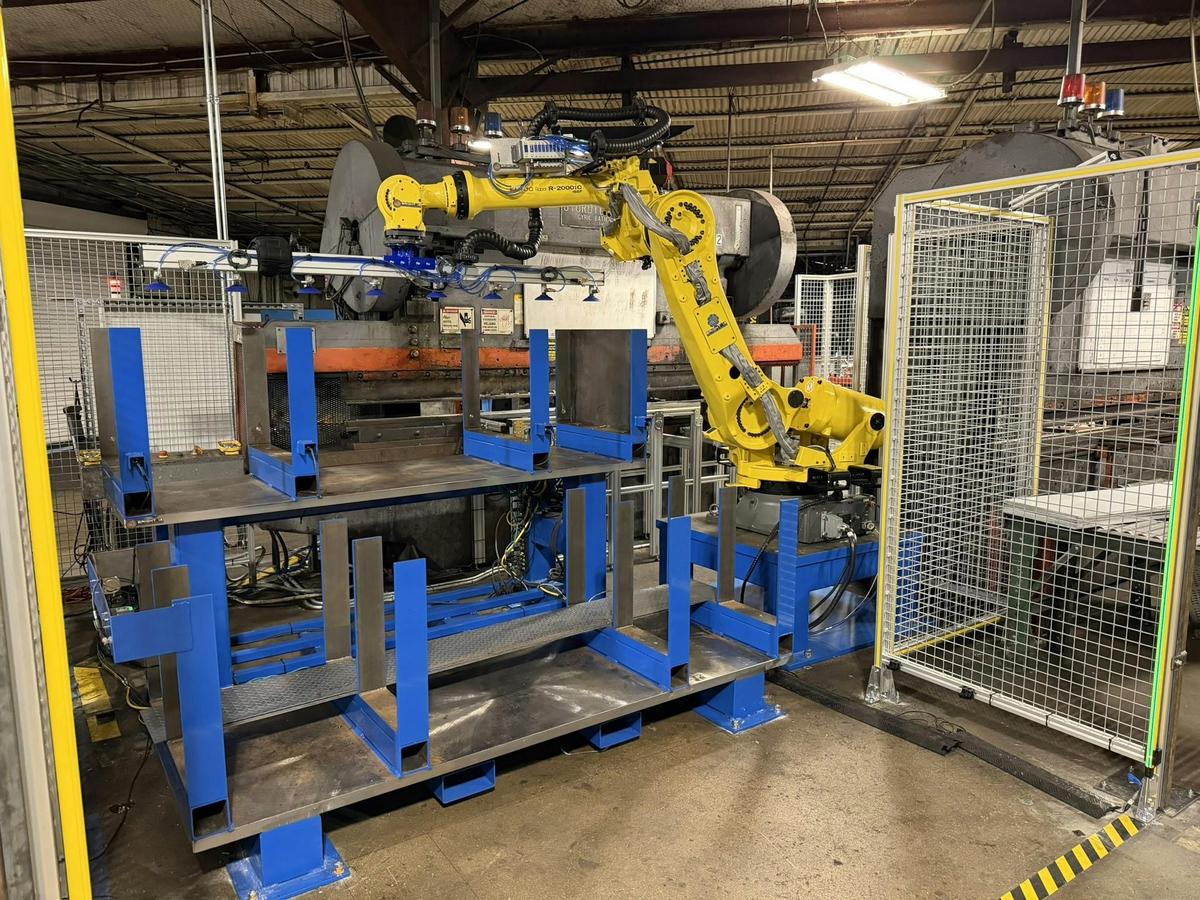
Advancing Process Safety in an Automated Press Brake Work Cell
Key Takeaways
- •Bright IA automated press brake loading, removing operators from machine.
- •Valin built modular aluminum frames to stabilize conveyors in tight space.
- •Integrated perimeter fencing and door interlocks meet OSHA safeguarding standards.
- •Production throughput more than doubled compared to manual operation.
- •Modular T‑slot design enables future safety upgrades and layout changes.
Pulse Analysis
Manufacturers are increasingly turning to automation to stay competitive, yet many plants still rely on decades‑old equipment that was never designed for robotic integration. Retrofitting such legacy machines poses unique challenges: uneven shop floors, constrained footprints, and inconsistent mounting points can jeopardize both reliability and worker safety. By addressing these physical constraints head‑on, companies can unlock the productivity gains of automation without compromising the stringent safety standards that govern high‑risk processes.
In the Bright IA‑Valin project, a modular aluminum extrusion framework served as the backbone for a new robotic work cell. The design incorporated timing‑belt conveyors for precise material handling, while custom support frames provided the rigidity needed to counteract floor irregularities. Safety was woven into every layer: perimeter fencing defined the hazardous zone, and safety‑door interlock switches halted motion instantly if a gate opened. This combination of physical barriers and control‑level protections aligns with OSHA safeguarding requirements, illustrating how engineering rigor can translate into a hands‑off, risk‑reduced environment.
The results speak to the business case for safety‑first automation. Throughput more than doubled, delivering a clear productivity boost, while operators were removed from direct exposure to the press brake’s moving parts, dramatically lowering injury potential. The modular T‑slot system also future‑proofs the cell, allowing additional guarding or layout changes as standards evolve. For manufacturers wrestling with legacy assets, the case study underscores that strategic, safety‑centric retrofits can deliver both operational efficiency and a stronger safety culture, positioning firms for sustainable growth in a regulated market.
Advancing process safety in an automated press brake work cell
Comments
Want to join the conversation?