Bausch+Lomb Chooses Steriline to Improve Production of Ophthalmic Medical Devices
•March 9, 2026
0
Key Takeaways
- •Steriline supplies OFCM84 line to Bausch+Lomb Italy.
- •Line delivers 200 units per minute, meeting demand.
- •Design meets GMP Annex 1 cleanroom standards, grade A.
- •Automatic CIP‑SIP reduces manual contamination risk.
- •Bausch+Lomb orders two more lines for US sites.
Summary
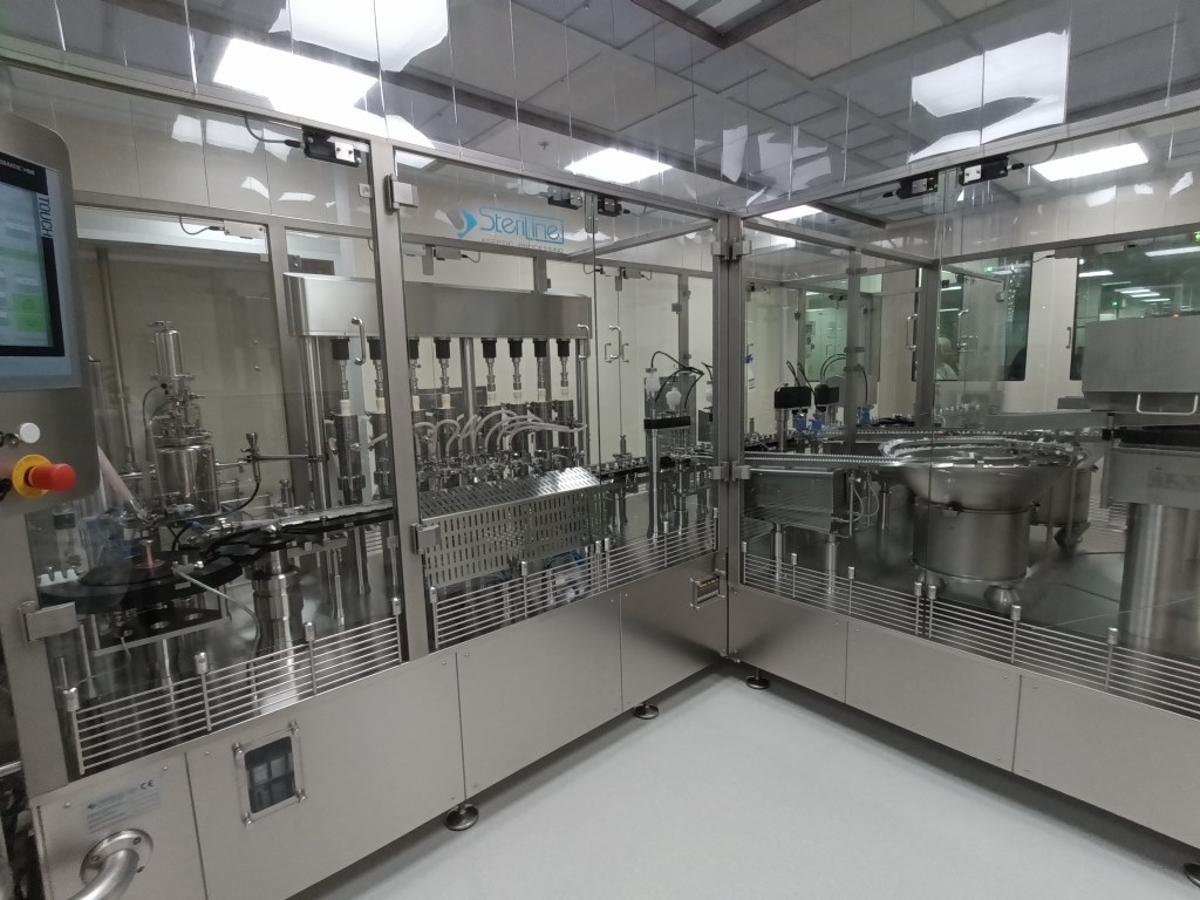
Steriline has delivered its OFCM84 aseptic filling and capping line to Bausch+Lomb Italia to boost eye‑care product output. The line runs at 200 bottles per minute, features CIP/SIP automation, and complies with EU GMP Annex 1 grade‑A cleanroom requirements. Its design eliminates rotating parts, uses ceramic pumps, and achieves particle counts below 3,520 / m³, minimizing microbial and endotoxin risk. Satisfied with the performance, Bausch+Lomb has placed orders for two additional lines for its U.S. facilities.
Pulse Analysis
The ophthalmic market is accelerating toward smaller dose formats, prompting manufacturers to seek high‑speed, aseptic solutions that meet the latest EU GMP Annex 1 guidelines. Traditional filling equipment often struggles with the stringent particle‑count and sterility demands of grade‑A environments, creating bottlenecks for companies aiming to expand their eye‑care portfolios. By installing Steriline’s OFCM84 line, Bausch+Lomb Italia addresses both capacity constraints and regulatory compliance, positioning itself to capture emerging demand for 10‑ml to 60‑ml eye‑drop bottles.
Technically, the OFCM84 stands out for its linear, rotating‑part‑free architecture and eight ceramic volumetric pumps, which together minimize turbulence and particulate shedding. Automatic CIP and SIP cycles streamline cleaning, reduce operator exposure, and keep particle concentrations under 3,520 per m³, qualifying for grade‑A cleanroom classification. The 200‑bottle‑per‑minute throughput aligns with Bausch+Lomb’s target production speed, while the intuitive operator panel shortens change‑over times, delivering measurable efficiency gains over legacy equipment.
Strategically, the successful rollout in Italy has unlocked further business for Steriline, as Bausch+Lomb has already commissioned two additional lines for its U.S. sites in Tampa and Greenville. This partnership not only reinforces Bausch+Lomb’s commitment to quality and scalability but also cements Steriline’s reputation as a go‑to provider for aseptic ophthalmic manufacturing. As the eye‑care sector continues to grow, firms that combine regulatory adherence with flexible, high‑performance tooling are likely to dominate market share.
Comments
Want to join the conversation?