Bioinspired AM Boosts Robotic Limb Stiffness And Sensing
•March 6, 2026
0
Key Takeaways
- •Voxel-level material placement optimizes stiffness and strain sensing.
- •Multi-material AM prints limbs with integrated sensors, reducing part count.
- •Stiffness gains allow smaller actuators and lighter robotic limbs.
- •Integrated sensing mitigates need for external gauges and wiring.
- •Calibration challenges persist due to material interfaces and temperature drift.
Summary
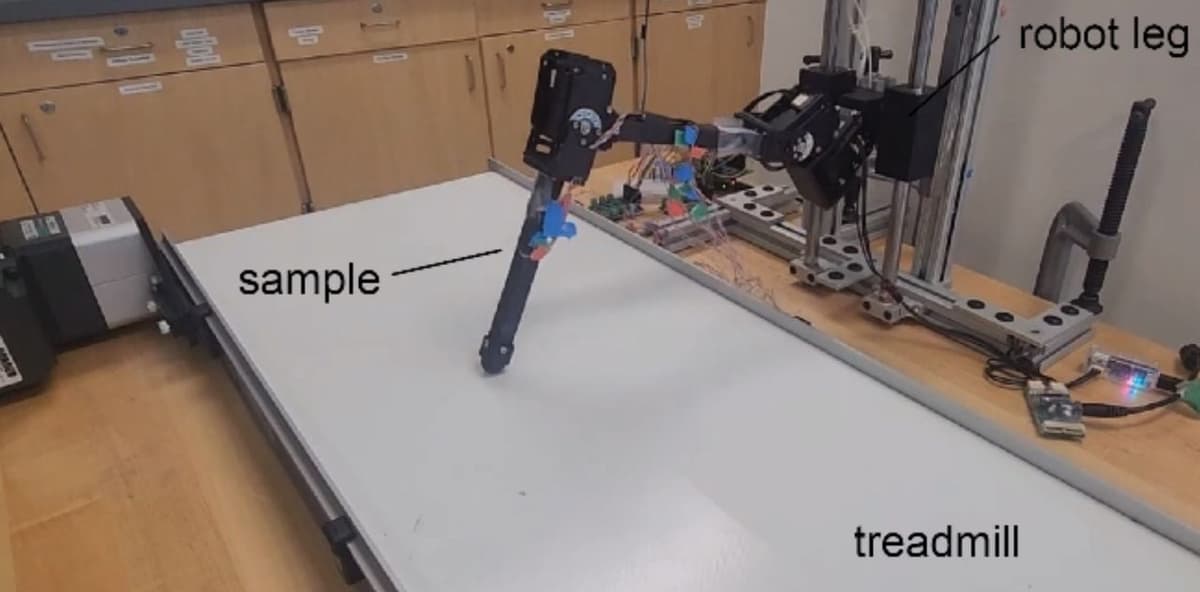
Researchers have demonstrated a bioinspired additive manufacturing (AM) strategy that simultaneously increases robotic limb stiffness and embeds strain‑sensing capability. By allocating stiffer polymers along high‑stress paths and compliant, piezoresistive material where strain is most informative, the printed limb achieves higher load‑bearing performance while delivering reliable proprioceptive feedback. The approach leverages voxel‑level control in multi‑material extrusion or inkjet polymer printing, eliminating the need for separate sensor stacks and reducing overall part count. Results suggest lighter structures, smaller actuators, and simplified assembly for legged robots and manipulators.
Pulse Analysis
Robotic designers have long wrestled with the paradox of rigidity versus compliance: stiff structures provide precision, while compliant elements ensure safety and adaptability. Bioinspired engineering offers a pathway to reconcile this tension by mimicking natural load‑distribution patterns, and modern additive manufacturing supplies the voxel‑scale freedom to translate those patterns into polymer composites. By mapping high‑stress trajectories to stiff resins and routing softer, piezoresistive material to zones where deformation conveys useful data, engineers can embed proprioceptive sensors directly into the limb’s skeleton, eliminating bulky external gauges.
The optimization workflow described in the recent study treats structural stiffness and strain sensing as a unified design problem. Computational models assign material properties based on stress concentration and strain information density, then generate a multi‑material print file that a dual‑extrusion or inkjet AM system can execute. This results in a monolithic limb segment where the stiff core bears loads while adjacent compliant voxels act as built‑in strain gauges. Although the concept is compelling, practical hurdles remain: interlayer adhesion between dissimilar polymers, anisotropic creep, and temperature‑induced drift in piezoresistive signals demand rigorous calibration and robust signal conditioning to maintain long‑term reliability.
If the reported performance gains hold across platforms, the impact on the robotics market could be substantial. Smaller, lighter limbs reduce actuator sizing and overall robot mass, enabling more agile legged platforms and compact manipulators. Fewer discrete components translate to lower assembly labor, reduced wiring complexity, and faster prototyping cycles—advantages especially valuable for low‑volume, high‑customization manufacturers and research labs. As multi‑material polymer printing matures, designs that fuse load‑bearing and sensing functions are poised to become a cornerstone of next‑generation robotic systems, driving efficiency and innovation across the industry.
Comments
Want to join the conversation?