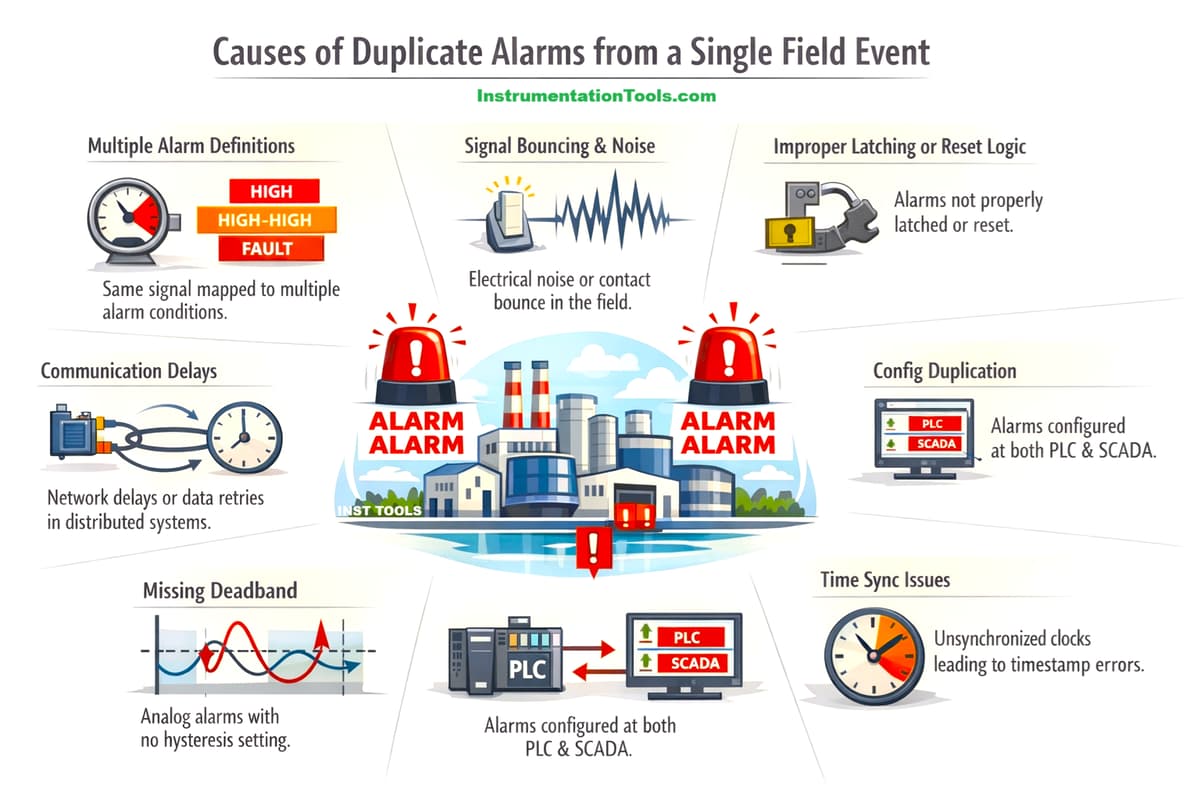
Duplicate Alarms Generated From Single Field Event
Key Takeaways
- •Multiple alarm definitions on one tag cause simultaneous high and high‑high alerts
- •Signal bounce or noise creates rapid ON/OFF cycles seen as separate alarms
- •Missing or faulty latching logic lets the same condition retrigger alarms repeatedly
- •Network delays and retries duplicate event messages across PLC‑SCADA links
- •Configuring identical alarms in PLC and SCADA layers creates redundant alerts
Pulse Analysis
In modern process plants, alarm overload remains a leading cause of operator fatigue and missed events. Studies by the International Society of Automation estimate that up to 30 % of alarms in complex PLC‑SCADA architectures are redundant, inflating alarm traffic without adding diagnostic value. Duplicate alerts not only clutter human‑machine interfaces but also increase the likelihood of delayed or incorrect actions, which can translate into lost production time and heightened safety risk. As regulatory frameworks such as IEC 61511 emphasize alarm rationalization, firms are under pressure to prune unnecessary notifications and improve alarm integrity.
The root causes of duplicate alarms are largely technical. When a single field tag is mapped to several alarm definitions—high, high‑high, or fault—any threshold breach triggers all associated alerts simultaneously. Mechanical switch bounce, electrical noise, or insufficient input filtering can generate millisecond‑scale fluctuations that the PLC scans as multiple events. Inadequate latching logic or premature reset conditions cause the same condition to be logged repeatedly, while network latency, packet loss, and retry mechanisms may resend the same event to the SCADA server. Each of these mechanisms can be mitigated through disciplined configuration, debounce filters, and robust communication protocols.
Effective alarm management starts with a unified design workflow that aligns PLC and SCADA alarm tables, eliminates overlapping definitions, and assigns clear priorities. Implementing hysteresis, deadband, and hardware debouncing reduces spurious triggers, while proper latching ensures an alarm persists until acknowledged or truly cleared. Modern engineering tools offer automated duplicate detection and alarm rationalization reports, helping teams meet IEC 61511 compliance with less manual effort. As industrial IoT adoption grows, cloud‑based analytics will further enable real‑time alarm clustering and predictive filtering, turning noisy alarm streams into actionable insights.
Duplicate Alarms Generated From Single Field Event
Comments
Want to join the conversation?