Endress+Hauser Expands Instrumentation Possibilities Through Technical Innovation
Key Takeaways
- •Endress+Hauser invested $305 M in R&D, 7% of revenue.
- •Launched iTHERM TrustSense sensor that self‑calibrates at 39 °C.
- •Adopted Ethernet‑APL, enabling high‑speed, low‑cost field connectivity.
- •Targeting 50% CO₂ reduction per unit by 2034 via EcoDesign.
- •Expanding biosensor portfolio through FRIZ labs for biotech and medical markets.
Pulse Analysis
Endress+Hauser’s $305 million R&D outlay underscores a strategic push to stay ahead in a crowded process‑instrumentation market. By allocating roughly 7 % of revenue to new‑product development, the Swiss‑German firm introduced 41 instruments in the past year, ranging from temperature sensors to advanced analytics platforms. The iTHERM TrustSense TM371/TM372, which self‑calibrates at a modest 39 °C, eliminates costly shutdowns and laboratory calibrations, directly addressing a pain point for food‑beverage and life‑science manufacturers. This breadth of innovation reinforces the company’s reputation for reliability while creating cross‑sell opportunities across its global customer base.
Digital connectivity is the linchpin of Endress+Hauser’s sustainability agenda. The adoption of Ethernet‑APL—a high‑speed, Ethernet‑based fieldbus—offers seamless data flow from sensors to cloud, reducing cabling complexity and enabling real‑time diagnostics, predictive maintenance, and energy‑management analytics. Coupled with the FieldXpert and FieldCare suites, operators gain actionable insights that translate into lower energy consumption, fewer emissions, and higher equipment availability. By embedding digital twins and advanced diagnostics, the firm helps industrial plants meet tightening ESG regulations while delivering measurable cost savings, a compelling value proposition for capital‑intensive users.
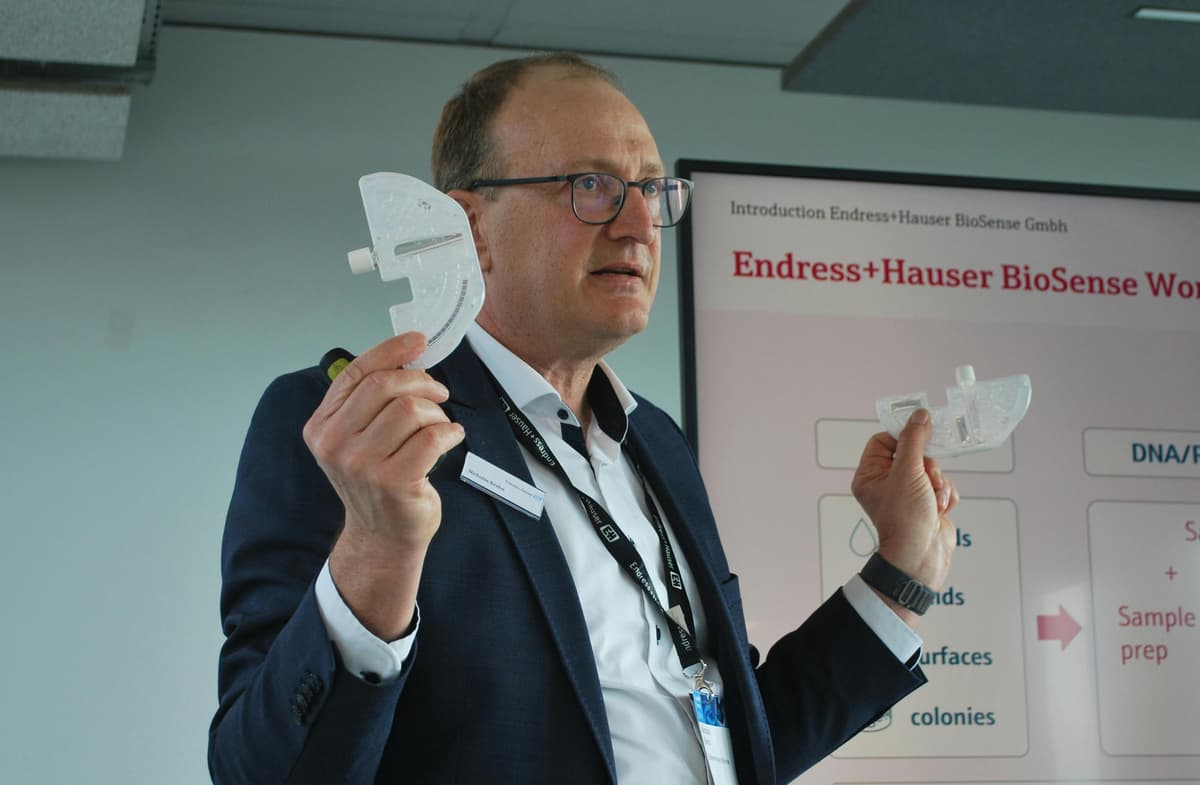
The Freiburg Innovation Center (FRIZ) signals Endress+Hauser’s ambition to bridge traditional process control with emerging biotech and medical markets. Its Sensor Automation Lab, Industrial IoT group, and Optics Hub are developing biosensors, Raman spectroscopy, and TDLAS technologies that can monitor fermentation, water quality, and even cell‑therapy metabolites in near real time. Partnerships with startups such as iST Jobst accelerate the commercialization of microsensor platforms for intensive‑care monitoring and gene‑therapy manufacturing. As pharmaceutical and personalized‑medicine sectors seek tighter process control, Endress+Hauser’s expanded portfolio positions it to capture high‑growth, high‑margin opportunities beyond its legacy industrial base.
Endress+Hauser expands instrumentation possibilities through technical innovation
Comments
Want to join the conversation?