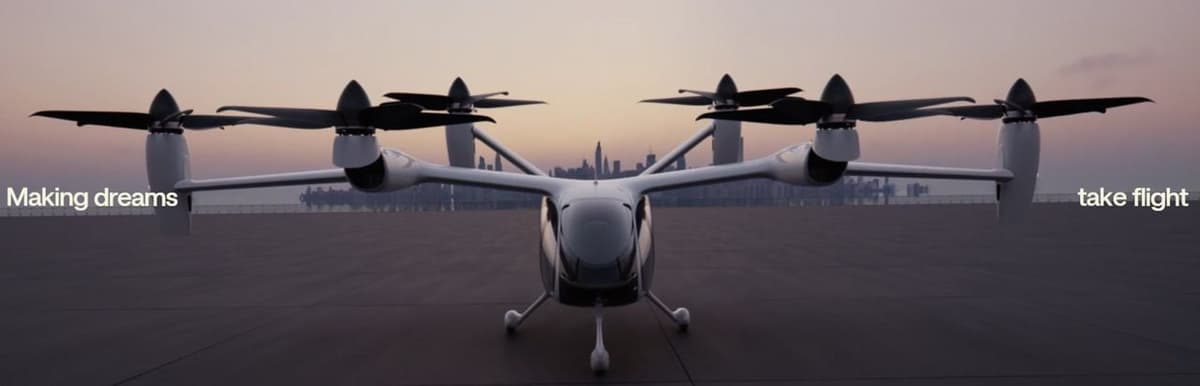
From Wright Brothers to Air Taxis: Joby Aviation’s Bold Manufacturing Bet in Dayton
Key Takeaways
- •Joby adds 700,000 sq ft facility, targeting 500 eVTOLs/year
- •Dayton site to create up to 2,000 jobs
- •Proximity to Wright‑Patterson speeds certification and defense collaborations
- •Dual‑site strategy aims to double production by 2027
- •Advanced manufacturing uses 3D printing, qualifying for R&D tax credits
Pulse Analysis
Joby Aviation’s Dayton rollout marks a watershed moment for the eVTOL sector, where scale has long been a missing piece. The 140‑acre campus, slated to expand to two million square feet, is designed to churn out 500 electric vertical takeoff and landing aircraft each year—enough to seed a national network of urban air‑taxi services. By situating the plant next to Dayton International Airport and the Wright‑Patterson Air Force Base, Joby leverages existing runways, airspace, and testing infrastructure, dramatically compressing the design‑to‑flight loop that traditionally drags on for years.
The manufacturing model itself diverges from legacy aerospace practices. Instead of low‑volume, highly specialized assembly lines, Joby is building a flexible, automotive‑style production ecosystem that blends additive manufacturing, digital twins, and modular assembly. 3D‑printed lightweight structures and integrated propulsion components enable rapid iteration and cost‑effective scaling, while the dual‑site approach—California for R&D, Ohio for volume output—optimizes talent deployment and reduces logistical overhead. This paradigm shift not only accelerates Joby’s path to commercial deliveries but also sets a template for other eVTOL developers seeking to move beyond boutique prototyping.
Beyond commercial mobility, the Dayton foothold deepens Joby’s defense collaborations, most notably with L3Harris and the Air Force’s Agility Prime program. The proximity to military research hubs facilitates joint testing of hybrid and autonomous VTOL platforms, opening a dual‑use revenue stream that can subsidize civilian rollout costs. Moreover, the heavy use of 3D printing and other R&D‑intensive processes positions Joby to capture federal and state research tax credits, further improving the economics of scaling. As the industry converges on distributed manufacturing and government‑backed innovation, Joby’s strategic bet in Dayton could become the blueprint for the next generation of aerial transportation.
From Wright Brothers to Air Taxis: Joby Aviation’s Bold Manufacturing Bet in Dayton
Comments
Want to join the conversation?