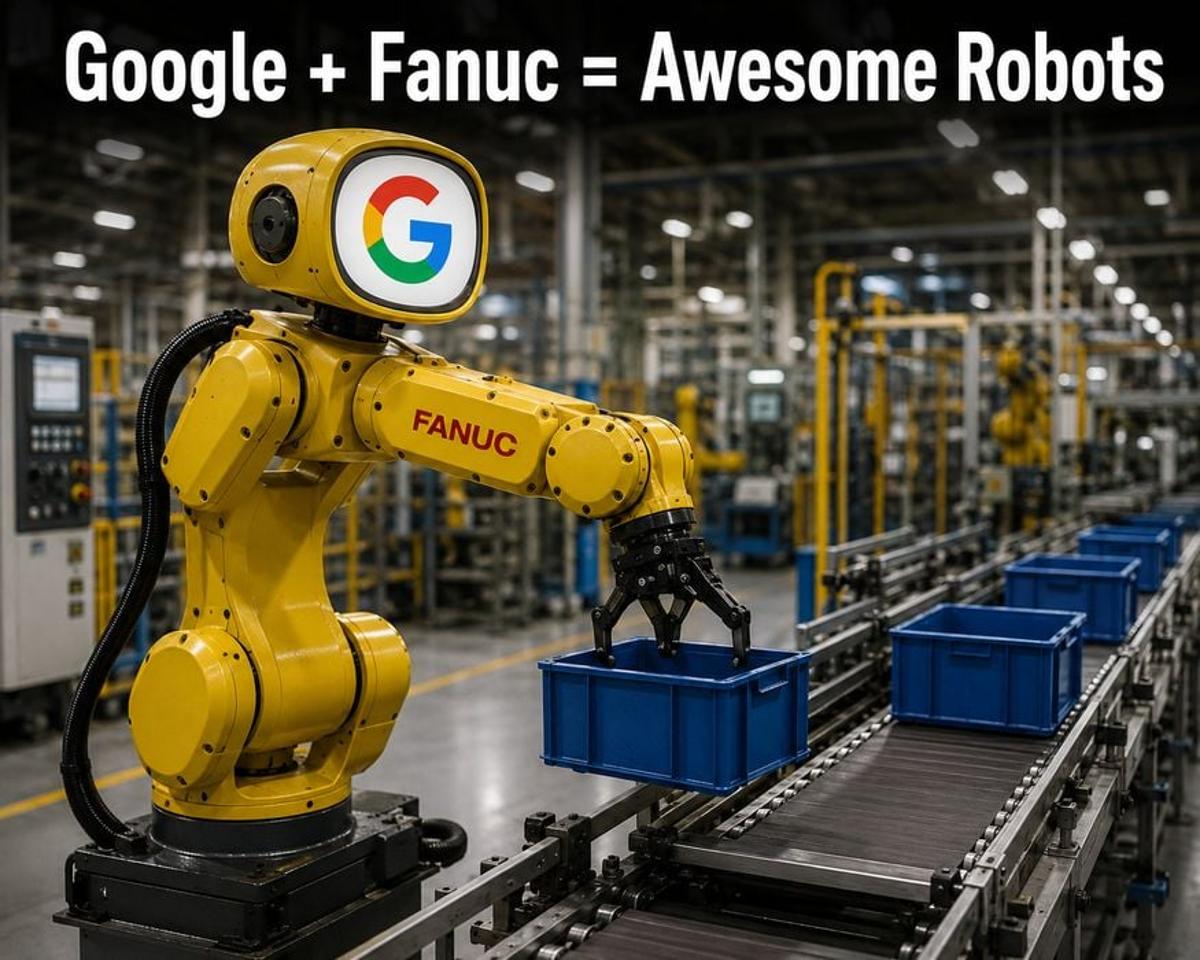
Google and FANUC Want to Build the First Truly Intelligent Factory Robots
Key Takeaways
- •Google's Gemini Enterprise powers FANUC robots with multimodal AI reasoning.
- •Physical AI enables natural‑language commands and real‑time vision for robots.
- •Over 1,000 FANUC units already deployed for Physical AI applications.
- •AI‑driven additive manufacturing can adjust toolpaths and fix defects on the fly.
Pulse Analysis
The resurgence of AI in industrial robotics marks a turning point after earlier, hardware‑focused attempts fell short. Google’s original robotics push in the 2010s relied on acquiring startups but lacked the mature AI models needed for unpredictable factory floors. By pairing its Gemini Enterprise large‑language model and cloud‑scale infrastructure with FANUC’s proven hardware platform, the companies sidestep past pitfalls and focus on software‑driven intelligence. This strategic alignment lets robots process multimodal data, reason about tasks, and execute actions without exhaustive pre‑programming, opening doors for broader deployment in sectors that demand flexibility.
In additive manufacturing, the Physical AI approach could be transformative. Real‑time vision and sensor fusion enable robotic arms to monitor layer deposition, adjust laser power or extrusion rates on the fly, and correct defects before they propagate. Such dynamic tool‑path optimization reduces waste, improves part quality, and shortens the iteration cycle for large‑scale metal printing processes like WAAM. By automating inspection and decision‑making, manufacturers can scale 3D‑printing operations while maintaining the tight tolerances required for aerospace and automotive components.
Beyond the shop floor, the partnership signals a broader industry shift toward embedding generative AI into physical systems. Access to FANUC’s installed base of over a million robots provides Google with real‑world data to refine its models, while FANUC gains a competitive edge through AI‑enhanced capabilities that lower integration costs and accelerate time‑to‑value. This feedback loop may spur further investment, attract R&D tax credits, and catalyze a new wave of intelligent factories where humans converse with machines as collaborators rather than programmers.
Google and FANUC Want to Build the First Truly Intelligent Factory Robots
Comments
Want to join the conversation?