IR Nozzle Preheat Lifts PEI FFF Strength, Stability
Key Takeaways
- •IR nozzle preheat raises PEI interlayer temperature above Tg in milliseconds
- •Tensile strength improves up to 43 MPa, over fourfold increase
- •Warping angles cut by more than 60% with 69 W IR power
- •Enables Ultem‑class prints using only 80 °C chamber, reducing equipment cost
Pulse Analysis
High‑temperature fused filament fabrication (FFF) has long been hampered by the need for massive hot chambers that push ambient temperatures to 150‑200 °C. Those conditions protect the polymer’s interlayer diffusion but strain electronics, increase energy consumption, and extend cycle times. Materials such as PEI, PEKK, and PEEK suffer from poor Z‑axis strength and severe warping when printed in cooler environments, forcing manufacturers to invest in specialized enclosures or accept sub‑par part quality.
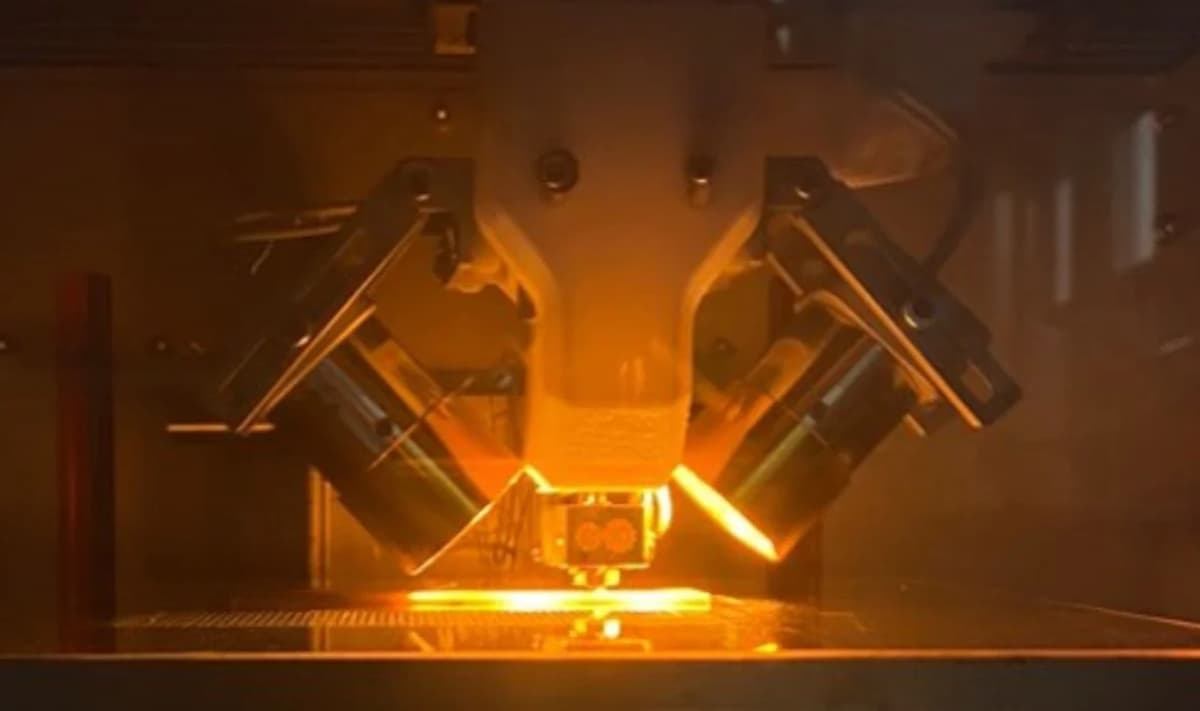
The Korean team’s infrared nozzle preheat tackles the problem at its source by delivering focused thermal energy directly to the freshly extruded filament. Dual IR lamps, positioned 15‑25 mm from the nozzle, raise the local temperature above the 177 °C glass transition within 0.05 seconds and maintain it for the critical diffusion window. Mechanical testing showed transverse tensile strength jumping from under 10 MPa to 42.8 MPa at 69 W, while longitudinal strength peaked at 73.6 MPa before softening at excessive power. Simultaneously, warping angles fell from roughly 8° to 2.4°, a reduction exceeding 60%, and scanning electron microscopy revealed denser, void‑free bonding.
For the additive‑manufacturing market, the implications are significant. By eliminating the need for a full‑scale hot chamber, existing mid‑range FFF platforms could be retrofitted with relatively inexpensive IR kits, expanding their material portfolio to include Ultem‑class polymers. Lower thermal loads also protect motion controllers and reduce maintenance, improving uptime for service bureaus. As process control matures—through closed‑loop temperature sensing and adaptive power algorithms—this approach may become the new standard for cost‑effective, high‑performance 3D printing of advanced thermoplastics.
IR Nozzle Preheat Lifts PEI FFF Strength, Stability
Comments
Want to join the conversation?