The AM strategy gives Kratos a competitive edge in rapid, low‑volume defense production, enhancing mission readiness and cost efficiency while positioning the firm as a key supplier for DoD, NASA and commercial space customers.

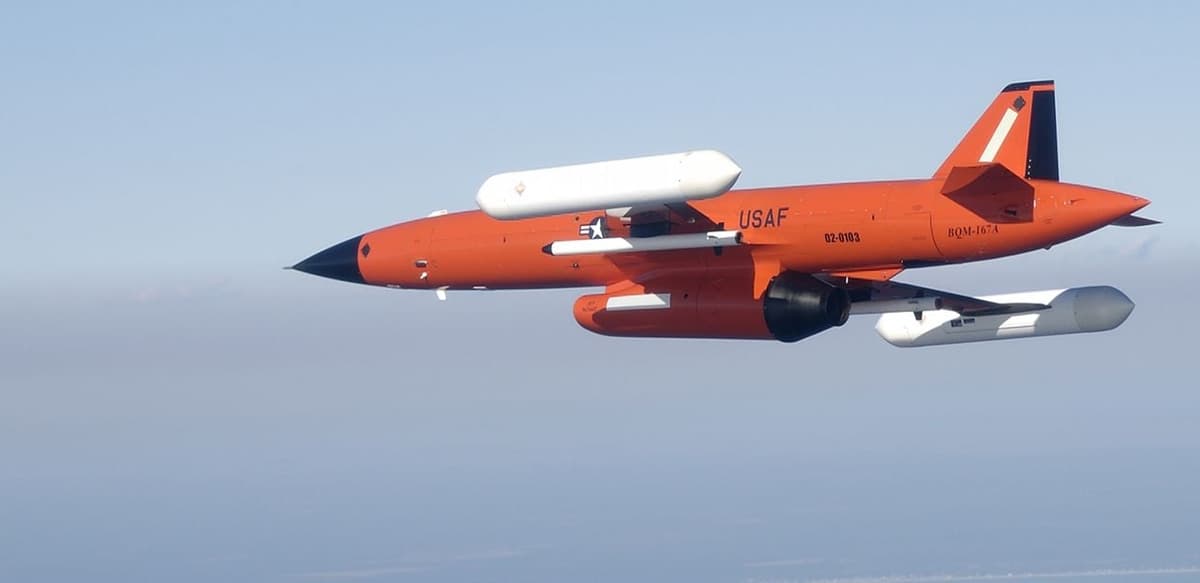
Unmanned aerial vehicle (UAV) [Source: Kratos]
Charles R. Goulding and Preeti Sulibhavi take a closer look at how Kratos leverages additive manufacturing to move faster, reduce costs, and support next-generation defense and space systems.
In today’s fast-moving defense industry, innovation never waits. Governments and militaries across the globe increasingly rely on rapid prototyping, agile design, and affordable production methods to outpace adversaries and meet emergent threats. One key enabler of these trends is additive manufacturing (often referred to as 3D printing): a suite of technologies that build complex parts layer by layer. Additive manufacturing reduces lead times, enables lightweight and highly optimized geometries, and simplifies supply chains—all critical advantages when mission success and national security are on the line.
At the forefront of this movement is Kratos Defense & Security Solutions, Inc. (NASDAQ: KTOS), a U.S. technology company that blends advanced aerospace systems with affordability and speed. Headquartered in San Diego, California, Kratos specializes in defense, national security, space, propulsion, unmanned systems, C5ISR (Command, Control, Communications, Computers, Combat Systems, Intelligence, Surveillance, and Reconnaissance), and microwave electronics. The company has grown substantially in recent years, with approximately 3,600 to 4,000 employees and diversified operations spanning U.S. defense and commercial space markets.
While Kratos isn’t a household name like some defense primes, its impact is substantial: in 2025, Kratos reported revenues above US$300 million in multiple quarters—illustrating strong growth across its unmanned systems, rocket support, and space businesses.
Kratos’ Capabilities Across Defense, Aerospace, and Space
Kratos doesn’t just make parts; it designs and delivers complete systems. Its offerings span several core technology domains:
Unmanned Systems and Air Vehicles
One of Kratos’ most visible product families is its unmanned aerial systems (UAS), including:
Target and tactical drones designed to train warfighters and simulate threats.
The XQ-58 Valkyrie, a low-cost, attritable unmanned combat aerial vehicle developed for U.S. Air Force programs, with potential future roles alongside crewed fighters.
Kratos’ unmanned systems business leverages rapid prototyping and engineering practices that include additive manufacturing—listed directly in its design and manufacturing services.
Propulsion and Hypersonics
Kratos has invested heavily in propulsion technologies and hypersonics. Its Zeus family of solid rocket motors, developed to support hypersonic test vehicles and ballistic missile target systems, exemplifies these efforts. In December 2025, Kratos issued a letter of intent to order 60 full-rate production Zeus hypersonic rocket motors from L3Harris Technologies, reflecting confidence in the Zeus design and its applications in advanced test beds and missile defense missions.
While press releases around Zeus focus on production orders rather than manufacturing methods, Kratos’ broader investment in additive manufacturing suggests these motors may benefit from AM-derived supply chain agility and prototype iterations—even if the final motors are traditionally manufactured or assembled at scale. Such integrated design and test loops are hallmarks of AM adoption in the rocket propulsion efforts industry-wide.
Space and Satellite Systems
Through Kratos Space (a business unit of Kratos Defense), the company has developed a deep portfolio of software-defined ground systems and satellite communications solutions. These include:
Virtualized ground station platforms that support command and control, telemetry, tracking and control (TT&C) for satellites in GEO, MEO, and LEO orbits.
RF signal digitization, network management, and spectrum monitoring tools that enable secure and flexible space operations.
Kratos’ space offerings extend to advanced ground-to-space networks that support military and commercial missions worldwide. Its products now support over 90% of U.S. space missions and more than 75% of commercial satellite operators in 59 countries—a staggering footprint for a defense contractor.
Additive Manufacturing at Kratos: Real Applications and Strategic Impact
Additive manufacturing at Kratos is more than a buzzword. The company has strategically invested in advanced metal AM to accelerate design cycles and improve part production.
Velo3D Sapphire Metal AM for Defense Parts
In early 2024, Kratos SRE, Inc., a Kratos subsidiary based in Birmingham, acquired a Velo3D Sapphire metal additive manufacturing system—one of the most advanced metal 3D printers available. This printer enables high-speed, reliable, and low-cost production of complex metal components that would be difficult or impossible to make with traditional subtractive machining.
The Velo3D Sapphire system features support-free printing and integrated quality monitoring, making it ideal for defense applications where part complexity, material integrity, and repeatability are critical.

Zeus rocket motor [Source: Kratos]
At Kratos, this machine is used to:
Accelerate prototype development—allowing engineers to iterate on designs rapidly.
Shorten supply chains—by bringing part production in-house rather than relying on external suppliers.
Build critical metal components for high-stress environments used in aerospace, propulsion, and tactical systems.
Kratos also operates a Characterization of Additive Manufactured Metals (CAMM) program. This initiative tests AM metal specimens to understand process variation and material properties prior to high-volume production. Data from CAMM feeds a materials database that informs future AM part design and qualification.
These additive manufacturing investments reflect a broader trend in defense: printing parts for complex assemblies and early prototype phases, leading to faster development timelines and reduced costs. While precise examples of AM parts in deployed systems are often classified or proprietary, the integration of systems like Sapphire underscores Kratos’ commitment to AM as a tool for national security innovation.
Birmingham Expansion: A Hub for Advanced Manufacturing
Kratos’ investment in its Birmingham, Alabama campus demonstrates how additive manufacturing fits into broader industrial growth.
In January 2026, Kratos announced a 40,000-square-foot expansion at its Birmingham facility, bringing the total footprint at the Oxmoor Valley campus to approximately 150,000 square feet.
This facility supports development of multiple advanced products, including:
HORUS, a high-altitude intelligence, surveillance, and reconnaissance imaging system.
CRADLE, a mobile bistatic radar communications platform.
UltraSpec, a non-destructive inspection technology for advanced composites.
The expansion doubles Kratos’ workforce in the region since its acquisition of Southern Research Engineering in 2022—highlighting Birmingham’s role as a center of advanced manufacturing and defense engineering.
Within this context, additive manufacturing isn’t just a production tool—it anchors Birmingham’s growth as a tech hub that combines advanced engineering, prototyping, and systems integration in metal, composites, and high-performance applications.
Why Additive Manufacturing Matters for Defense and Space
Kratos’ adoption of 3D printing and AM reflects industry-wide imperatives:
Speed: AM bypasses traditional tooling delays, enabling designs to move from concept to physical part much faster.
Complexity: Defense components often demand intricate internal channels, lightweight structures, and integrated features that AM can produce more easily than machining.
Supply Chain Resilience: By printing in-house, Kratos reduces reliance on external suppliers and improves mission readiness.
Cost: For low-volume or bespoke parts—common in aerospace and hypersonics—AM can reduce costs by minimizing waste and tooling expenses.
As defense programs increasingly emphasize rapid prototyping and iterative design—especially in hypersonic, unmanned, and space domains—Kratos’ investments position it to respond quickly to customer needs while controlling costs.
The Research & Development Tax Credit
The now permanent Research & Development Tax Credit (R&D) Tax Credit is available for companies developing new or improved products, processes and/or software.
3D printing can help boost a company’s R&D Tax Credits. Wages for technical employees creating, testing and revising 3D printed prototypes can be included as a percentage of eligible time spent for the R&D Tax Credit. Similarly, when used as a method of improving a process, time spent integrating 3D printing hardware and software counts as an eligible activity. Lastly, when used for modeling and preproduction, the costs of filaments consumed during the development process may also be recovered.
Whether it is used for creating and testing prototypes or for final production, 3D printing is a strong indicator that R&D-eligible activities are taking place. Companies implementing this technology at any point should consider taking advantage of R&D Tax Credits. Below is a table illustrating the increase in research and development spending by Kratos in recent years.
To the Moon: AM at the Edge of Defense Innovation
Kratos Defense & Security Solutions continues to evolve as a multi-domain innovator. Its blend of unmanned systems, propulsion technology, hypersonic programs, space systems, and additive manufacturing capability gives it a unique vantage point in the modern defense industrial base.
As Kratos scales that expertise—from its Birmingham expansion to advanced AM hardware like Velo3D’s Sapphire system—its ability to rapidly design, test, and produce complex components will compound its strategic value to the U.S. Department of Defense, NASA, allied partners, and commercial space ventures.
In an era where time, performance, and affordability shape national security outcomes, Kratos’ embrace of additive manufacturing isn’t just smart—it’s indispensable.
Comments
Want to join the conversation?
Loading comments...